BOP de A Coruña · 09 Nov 2026 · 37 vistas
Valdoviño regulates via urban planning norms where tourism campsites can be installed
Por FactBox Admin
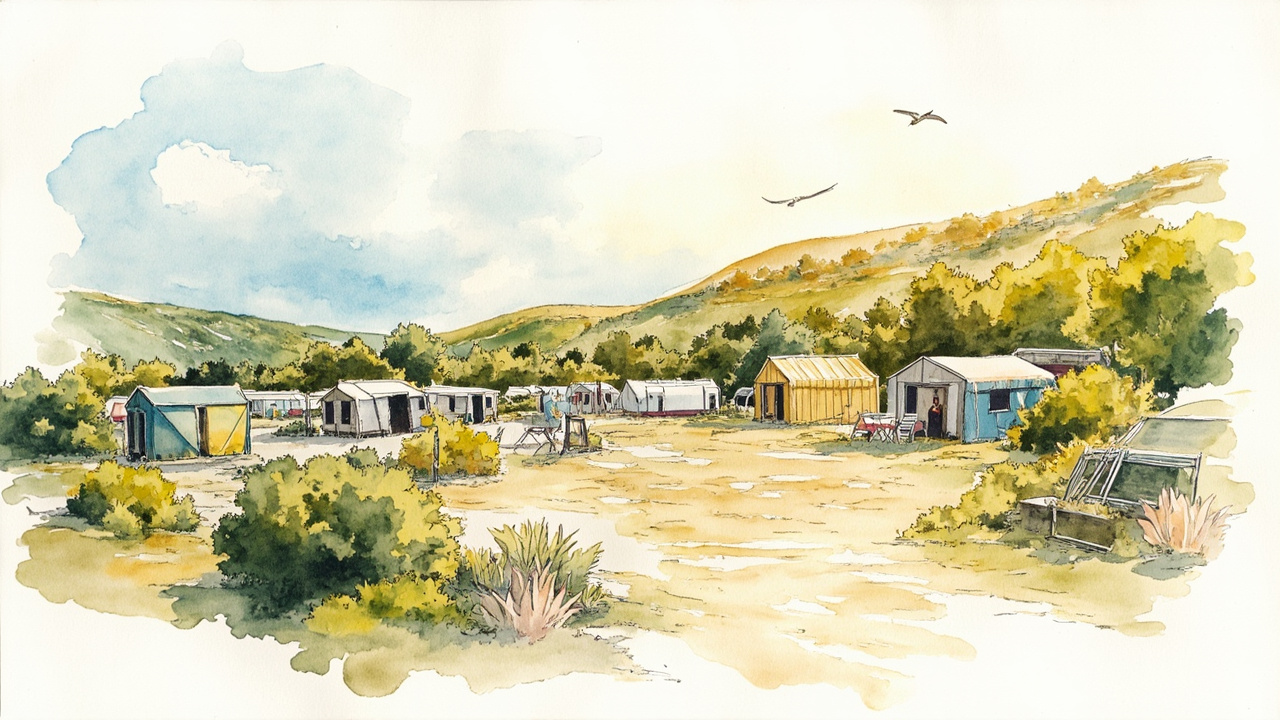
The Valdoviño City Council now has specific urban planning regulations for tourist campsites, after the Official Gazette of the Province of A Coruña published the regulations of the Specific Modification No. 13 of the Subsidiary Planning Rules, definitively approved by the Minister of Housing and Infrastructure Planning on December 2, 2025. The regulation, which occupies announcement 2026/7217 of issue number 214 of the gazette, dated November 9, 2026, determines in which lands of the municipal district this use can be implemented, with what surface and building limits, and which sectoral restrictions must be addressed. The publication comes after the General Directorate of Urbanism officially registered the document in the regional planning registry.
The text entered into force following its definitive approval, which was made public through a resolution of the General Directorate of Urbanism on December 5, 2025, and appeared in the Official Gazette of Galicia number 243, dated December 17, 2025. The registration in the Registry of Land Management and Urban Planning of Galicia was carried out by resolution on October 26, 2026, under number ROTPG/P/86/2026 (Section II, Book I, Volume VI, registration sheet no. 25), a legal requirement to be able to publish the regulations in the provincial gazette. The mayor, Alberto González Fernández, signed the announcement in Valdoviño on November 4, 2026.
The modification adds a complete Title VII to the Subsidiary Rules, containing articles 138 to 176, dedicated to the tourist campsite use, which refers to Decree 159/2019 on the regulation of tourist campsites, Law 2/2016 on the land of Galicia, and sectoral regulations on coasts, environmental assessment, and heritage. According to the document, the planning maps of the modification itself are indicative in nature.
Permitted in rural, rural nucleus, and consolidated urban areas
The regulation allows the use in rural land, in rural nuclei, and in consolidated urban areas subject to the ordinances “Extensive residential zone. Single-family housing” and “Tourist-hotel use zone,” as well as under the regime of provisional work or use in non-consolidated urban areas with those same ordinances. Outside of these cases, tourist campsites are prohibited.
Express prohibitions on implementation include:
- Lands of the Continuous Intertidal and Coastal Protection Areas and the Discontinuous Corridor Areas, Spaces of Interest, and Network of natural spaces of Galicia of the Coastal Planning Plan.
- Zones 1 and 2 of the Master Plan of the Natura 2000 Network and the Conservation Plan of the protected wetland Laguna y Arenal de Valdoviño.
- Maritime-terrestrial public domain and hydraulic public domain, including easements and flood-prone areas.
- The impact area of the transmitter center RTGA15087005_Cedeira, the surroundings of the turbines and networks of the Parque Novo sectoral project, and the general system of open spaces to the east of the wetland.
In other soils, the municipal enabling title is conditional upon authorization or a favorable report from the competent sectoral body: Continuous Areas of Environmental and Landscape Improvement, surroundings of assets of cultural interest, land consolidation, police zones, coastal protection and transit easements, Batería de Montefaro, or the aeronautical easement of the A Coruña Airport, among others. In the area of the future A Boeira industrial estate (area code 15087011), the use is permitted only while the sectoral project is not being processed, with the obligation to cease and dismantle without compensation.
5,000 meter plot, 20% occupancy and seven meters of height
The chapter of specific conditions establishes a series of parameters that limit the size and density of the facilities:
- Minimum plot of 5,000 m² in rural land; in urban and rural nuclei, the amount necessary to comply with the chapter.
- Maximum occupancy of 20% of the plot surface and maximum camping area of 75%.
- Maximum height of 7 meters and two floors (ground floor plus one), with a minimum setback of 5 meters from boundaries.
- Stable facilities of 8 pitches maximum and 6 m² per pitch, with electricity, water, ventilation, and private toilet.
- Parking spaces of 4.5 by 2.4 meters and one per tent plot or stable facility.
- Setback of 50 meters with respect to protected forest land and factory fences of 1.5 meters maximum.
- Maintenance of the natural state in at least half of the surface destined for the campsite.
Campsites are classified from 1 to 5 stars and can be green, thematic, or for caravans and motorhomes; projects with a capacity for 500 people or more must undergo a simplified environmental assessment. The enabling title is, as a general rule, the municipal urban planning license.
Alto de Monte Agudo Viewpoint and San Andrés de Teixido Route
Landscape protection has a specific treatment. Due to the aesthetic and panoramic values collected in the Catalog of Landscapes of Galicia for the Alto de Monte Agudo viewpoint, promoters must justify in detail the compliance with the rules of adaptation to the environment. The same requirement applies to projects on lands contiguous to the viewpoint that may limit existing views and to those located next to the San Andrés de Teixido Route.
The four existing campsites maintain their activity
The sole transitional provision protects the situation of the four tourism campsites already operating in the municipality: A Lagoa, Fontesín, Valdoviño, and A Frouxeira. They may maintain the pre-existing use and activity, although only with conservation and maintenance works, and may adapt the facilities to the new regulations upon obtaining the enabling title, always in accordance with the Law 22/1988 on coasts and Royal Decree 876/2014.
The publication closes a process of years and provides legal certainty to landowners, tourism developers, and coastal residents: until now, there was no specific municipal regulation providing location and design criteria, and from now on, any project must prove compliance with these parameters and sectoral restrictions before receiving a license.
Source: Official Gazette of the Province of A Coruña, number 214, November 9, 2026, Local Administration, pp. 1-13 (official reference: 2026/7217).