BOP de A Coruña · 27 Oct 2026 · 12 vistas
Santiago reorganizes its management structure with sixteen management areas
Por FactBox Admin
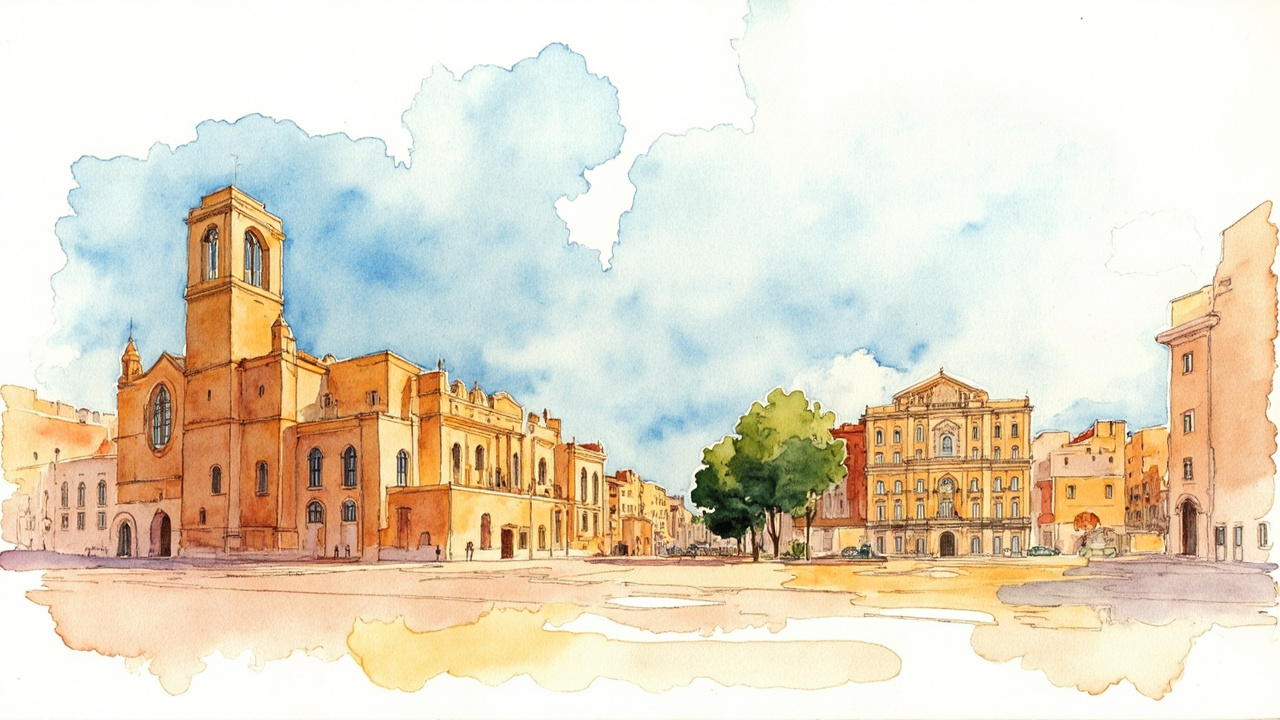
The City Council of Santiago de Compostela is reorganizing its management structure. The mayor, Goretti Sanmartín Rei, signed decree 2026/12187, dated October 20, which replaces the current organization and establishes sixteen management areas. The text is published in the Official Gazette of the Province of A Coruña, number 205, dated Tuesday, October 27, 2026, in the Local Administration section, under announcement number 2026/6886.
The regulation is issued using the powers granted in sections b), g), and k) of article 124.4 of Law 7/1985, of April 2, regulating the bases of the local regime, and under article 28 of the Organic Regulation of Government and Administration of the City Council of Santiago de Compostela. The text invokes article 130 of the same law, as amended by Law 57/2003, which regulates the superior and management bodies of municipalities subject to the large population regime of Title X, and articles 26 c) and 27.4 of the organic regulation, which reserve the creation of general coordinations, technical general secretariats, and area directorates to the Mayor’s decree.
The previous structure had been established by resolution 2023/3811, of October 4, 2023, and subsequently modified by resolutions 2024/12218, of October 16, and 2026/5729, of May 7. The seventh point of the new decree specifically replaces and nullifies the text from last May, along with any opposing provisions.
Sixteen areas under the coordination of the Mayor’s Office
The design is based on one principle: the management bodies depend hierarchically and functionally on the Mayor’s Office through the General Coordination, without prejudice to their organic integration within the delegated council departments. The structure is as follows:
- General Coordination, with possible assistance from vice-coordinations of a management nature.
- Legal Advisory, with a Deputy Directorate.
- General Secretariat of the Plenary.
- Secretariat of Municipal Administration, an assistance body for the Local Government Board.
- General Audit.
- Treasury.
- Budgetary Management and Accounting.
- Economic-Administrative Tribunal.
- Administration (personnel, training, risk prevention, and internal evaluation).
- Planning and Technological Management.
- Urban Planning (planning, licenses, discipline, and housing).
- Culture and Citizen Dynamization.
- Socio-Community Policies.
- Economic Dynamization.
- Environmental Sustainability, Services, and Infrastructure.
- Mobility and Coexistence.
The General Coordination assumes global planning, inter-administrative relations and protocol, public communication, electronic administration, regulatory proposals and internal regime, dependencies, supplies and the vehicle fleet. Its heads, as well as those of Technological Planning and Management and Culture and Citizen Dynamization, may be appointed from among civil service or contractual personnel of any public administration that meets the legal requirements.
Appointments and adaptation of the position list
The decree does not designate specific individuals: it refers the appointment to the Local Government Board, which must adopt the necessary agreements to adapt the list of job positions and, if applicable, proceed with the appointments. This agreement will establish the administrative units of each area, their hierarchical level, internal structure, and staffing.
The heads of the governing bodies are considered high-ranking officials and are subject to the incompatibility regime of Law 53/1984, of December 26, the limitations of Law 3/2015, of March 30, regulating the exercise of high-ranking positions, and article 75.7 of Law 7/1985. The appointed public employees will move to the corresponding administrative or contractual status.
The decree must be reported to the Local Government Board and the Plenary, and notified to all delegated council offices, area directorates, agencies, companies, and heads of administrative units.
Substitutions and dependent entities
As a general rule, the temporary substitution of the governing bodies corresponds to the General Coordination, unless the Mayor’s Office designates another body. Exceptions include the Legal Advisory, the General Audit, and the Treasury, substituted respectively by the Deputy Directorate of Legal Advisory, the Vice-Audit, and the Vice-Treasury.
The organization also distributes the entities of the municipal public sector among the areas: the Society for the Promotion of Innovative Business Initiatives M.P., S.L. in General Coordination; the Auditorio de Galicia and XADE in Culture; Turismo de Santiago and Mercagalicia in Economic Dynamization; the Animal Shelter Foundation in Environmental Sustainability; and TUSSA in Mobility and Coexistence.
A pending fiscal transition
The transitional provision maintains that, as long as the Municipal Economic-Administrative Tribunal is not constituted, draft fiscal ordinances will continue to be submitted for a report from the Legal Advisory. Until now, this function did not have its own constituted body.
The reorganization directly affects the citizenry because it defines who leads the areas managing urban planning, social services, mobility, culture, and budget management, and because it enables the creation of new high-ranking positions whose cost will be specified in the adaptation of the staff establishment. The document does not quantify this economic impact nor identify the future holders, so the real scope of the change will depend on the agreements adopted by the Local Governing Board in the coming months.
Source: Official Gazette of the Province of A Coruña, no. 205, October 27, 2026, Local Administration, pp. 1-8 (official reference: 2026/6886).