Boletín Oficial de Bizkaia · 24 Sep 2026 · 12 vistas
Provincial Decree 5511/2026 formulates the environmental report for the Lezama-Txorierri bicycle path
Por FactBox Admin
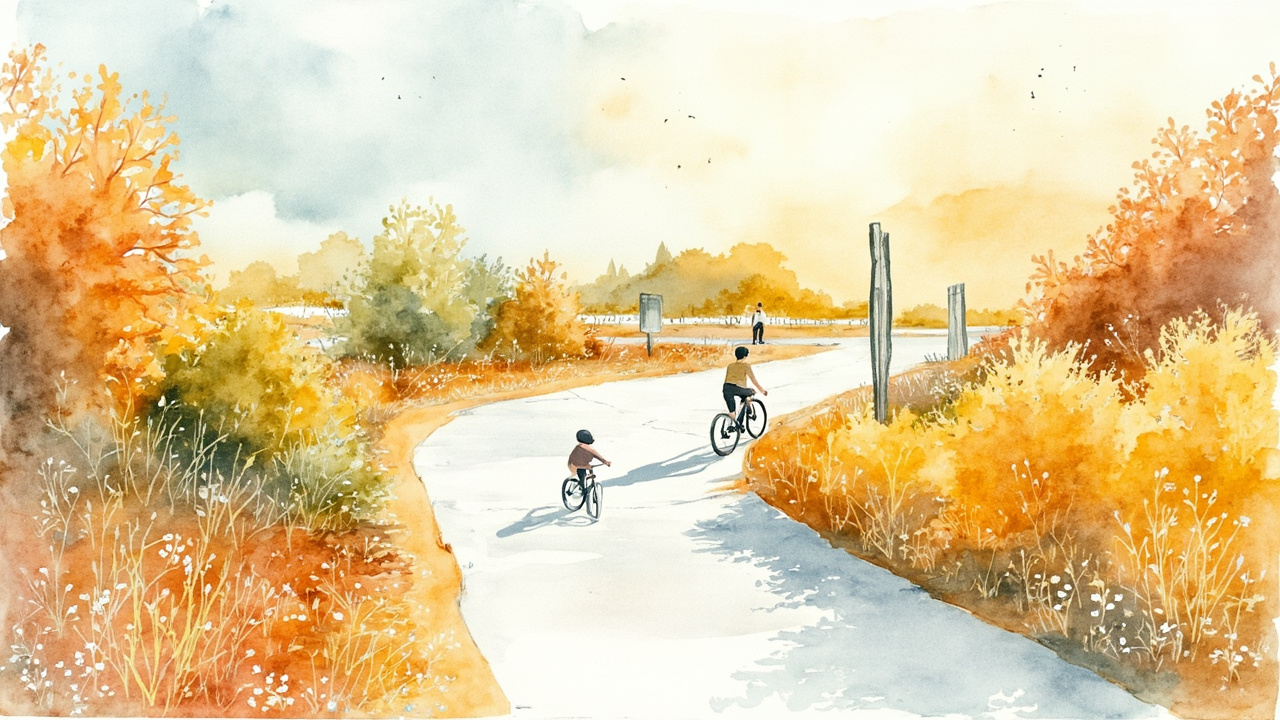
The Deputy General of Natural Environment and Agriculture of the Provincial Council of Bizkaia, Arantzazu Atucha Lejarreta, signed Provincial Order 5511/2026 on September 16, to formulate the environmental impact report for the Lezama section of the Txorierri bicycle path (2nd line). The order was published in the Official Gazette of Bizkaia on September 24, 2026, in issue number 183, section I, with the official reference BOB-2026a183-(I-1080). The conclusion of the report is that the project does not have any significant harmful effect on the environment, provided that the conditions are strictly met, and therefore does not need to be submitted to a standard environmental impact assessment.
The purpose of the project is to define the works for the implementation of a 3,255-meter pedestrian and bicycle path crossing Lezama, from the municipal boundary between Zamudio and Larrabetzu, and the largest part of the route is planned as a parallel layout attached to the BI-3738 road. The background is extensive: on March 12, 2026, the Dirección General Foral de Innovación y Gestión Viaria made an inquiry regarding the environmental assessment, and Provincial Order 2148/2026 of March 26 directed the project to a simplified environmental impact assessment, extending the deadline for issuing the report until the identified gaps were corrected. On May 8, that directorate sent additional documentation, and among the analyzed documents are the draft project and the Environmental Document of April 24, 2026.
Technical characteristics of the route
- A total of 3,255 meters, crossing Lezama from the boundary between Zamudio and Larrabetzu.
- General width of 5.5 meters: 3.0 meters for bicycles, 2.0 meters for pedestrians, and a 0.5-meter separator strip.
- Wider strip in rural sections: 3.5 meters up to the Iberresko roundabout and 4.0 meters until the end of the layout.
- 2,371 m3 of borrowed material are required, and 4,598.5 m3 of soil and stone are not usable for fills; 20-25% of the excavation may be vegetative soil and can be reused within the work itself.
- The execution period is 12 months and the base tender budget, including VAT, is 6,573,800.20 euros.
Environmental conditions: riverbanks, trees, and invasive flora
The report establishes several binding conditions. Riverbank vegetation and native trees must be preserved, and the project cannot touch protected flora; therefore, it has been decided not to occupy the roadside between points 2+900 and 3+000, as there is a mention of the species Himantoglossum hircinum in that area, in the “Rare” category. The planned dismantling between points 1+900 and 1+980 must be minimized to avoid cutting down the large Quercus robur and Fraxinus excelsior specimens located there.
The expansion of the crossing over the Asúa river, at point 2+582, must be removed from the project, as it affects the riparian vegetation and the river’s service areas; as an alternative, the expansion of the shared use of the tunnel at the Lezama crossing is proposed. Invasive exotic flora must be removed and replaced by planting native species, and the machinery used in the works must be kept clean to avoid transporting invasive seeds. In the area of the European mink management plan, works must be carried out from August 1st to March 15th, and on dry land.
Cultural heritage and environmental monitoring
- The layout must be changed around the Santo Cristo de Lezama hermitage, so as not to degrade the image and environment of the building.
- At least 1% of the budget must be used to protect, enrich, and disseminate cultural heritage, according to Article 76 of Law 6/2019.
- The construction management must have an environmental director, and specialized consultancy during the construction and warranty periods.
- A monitoring report must be sent to the environmental body every three months during the works and annually during the operation phase.
- The report has a validity of four years; if the project is not approved within that period, it will lose its validity.
Consultations and responses
The environmental body consulted several administrations and organizations: Servicio de Patrimonio Natural, Dirección General de Cultura, Sección de Planeamiento Municipal, Sección de Ordenación Territorial, URA, IHOBE, Consorcio de Aguas Bilbao Bizkaia, Lezama City Council, Lezama Bizirik and Ekologistak Martxan, among others. The Consorcio de Aguas Bilbao Bizkaia pointed out that the layout conflicts with its infrastructure and that permission for the works must be requested; the Confederación Hidrográfica del Cantábrico made no observation. Furthermore, the report reminds that the compensation measure established in a previous project (Boroa-Erletxe-Larrabetzu)—an overpass for fauna crossing the AP-8, the bike path, and the N-634—has still not reached the environmental body.
The report is mandatory and binding, according to Article 79 of Law 10/2021, and shall not be subject to any appeal, except for appeals against the project’s authorization. For Lezama and the entire Txorierri region, the order makes it clear that the future of the bike path is not automatic: to move forward, the project must respect the riparian trees, the environment of the Asúa river, and the heritage surrounding the hermitage, and citizens and ecological organizations will have the opportunity to monitor the progress of the works.
Source: Official Gazette of Bizkaia (Boletín Oficial de Bizkaia), number 183, September 24, 2026, Section I, pp. 1-13. (official reference: BOB-2026a183-(I-1080)).