Butlletí Oficial de les Illes Balears · 24 Oct 2026 · 4 vistas
The Council of Mallorca initiates the protection of the Can Marc community center
Por FactBox Admin
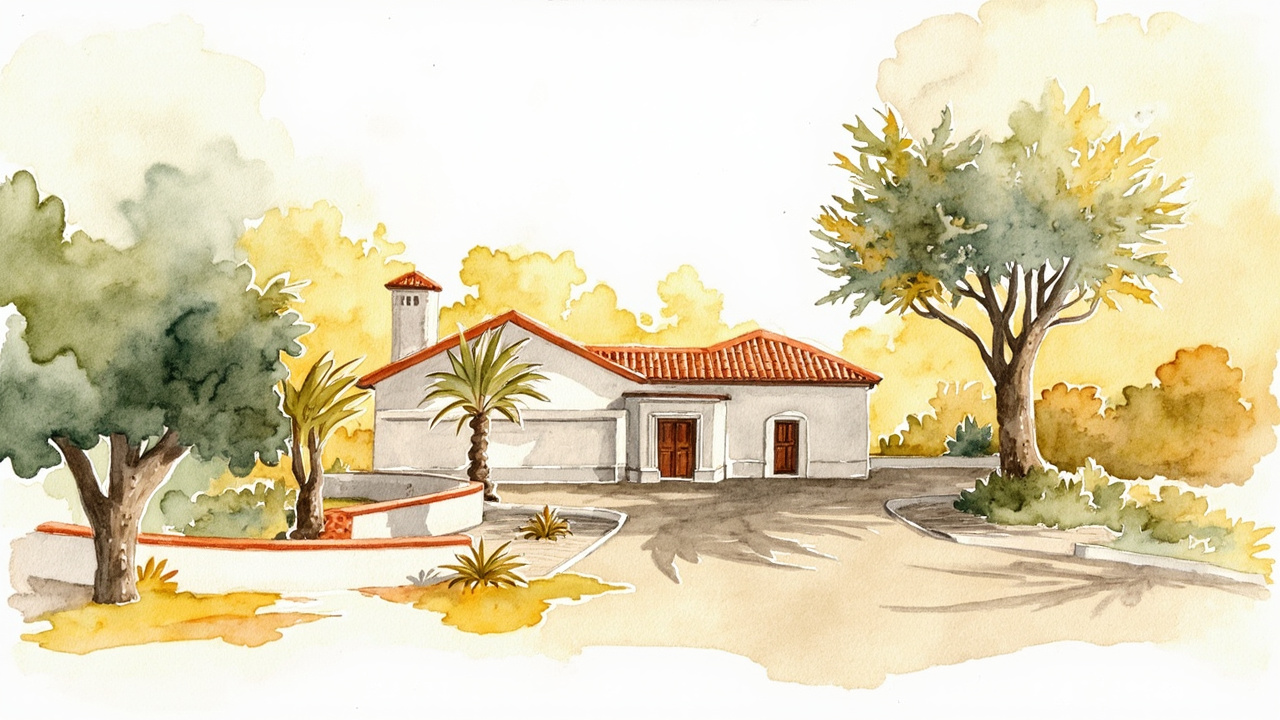
The Insular Commission of Historical Heritage of Mallorca has agreed to initiate the proceedings to declare the property of Can Marc, located at Pere Estruch Street, 22, in Binissalem, as an Asset of Cultural Interest (BIC), with the category of monument. The agreement was adopted in the session of July 28, 2026, bears the electronic signature of October 22, 2026, and is published in the Official Gazette of the Balearic Islands (BOIB) no. 136, of October 24, 2026, with document number 10623. The initiation immediately activates, and throughout the entire process, the protection regime inherent to assets already declared.
The agreement is framed within Law 12/1998, of December 21, on the historical heritage of the Balearic Islands, which in Article 45 regulates the inclusion of linked movable assets and in Article 8.2 extends the protection regime to the initiation phase. The delimitation of the asset coincides with the cadastral delimitation of the plot (reference 6636507DD8963N0001LK), with a total area of 2,708 m², as established in the technical report of July 20, 2026, which is attached to the agreement and forms an integral part of it. The document rules out delimiting a protection environment because the conservation of the values of the complex is safeguarded by the delimitation of the asset itself, already included within the Historic Center of Binissalem.
Suspended licenses and works subject to authorization
The initiation has immediate effects on any intervention in the affected area. While the procedure lasts:
- Municipal licenses for subdivision, construction, and demolition are suspended, as are the effects of licenses already granted.
- Any work in the affected area must be previously authorized by the Insular Commission of Historical Heritage of Mallorca.
- The removal of movable assets remaining in the property is prohibited without the prior and mandatory authorization of the same commission.
- The suspension will remain in effect until the resolution of the procedure or until its expiration.
A manor house linked to the viticulture of the Raiguer
The property is one of the most outstanding examples of urban manor houses preserved in Binissalem, historically linked to the Salom de la Torre family. The construction chronology is situated between 1720 and 1744, with a substantial academic-style renovation around 1770, according to the studies of historian Aina Pascual (1997) included in the file. The complex maintains the functional unity between the dwelling and the productive facilities: cellar, vats, stables, barns, courtyard, garden, and water wheel.
The preserved elements include five joined vats, several presses, four stone tubs, a well with a live stone neck, and a stable with four groin vaults supported by a central octagonal column. The report emphasizes that, unlike other manor houses in the municipality affected by segregations or renovations, Can Marc retains practically all the elements that allow for an understanding of an agro-residential wine-growing operation. The previous protection was grade A of the Catalogue of elements of artistic, historical, environmental interest and architectural heritage of the urban center of Binissalem, definitively approved on February 15, 2008.
Twenty months to resolve and publication in the BOE
The calendar and procedures are established in the same agreement:
- The declaration agreement must be adopted within a maximum period of twenty months from the initiation.
- If the procedure expires, it cannot be restarted in the following three years, unless requested by the owner of the asset (article 10.6 of Law 12/1998).
- The resolution must be notified to the interested parties, the Binissalem City Council, and the Government of the Balearic Islands.
- The agreement must be published in the BOIB and the Official State Gazette, and must be recorded in the Insular Registry of Assets of Cultural Interest of Mallorca, with communication to the autonomous community for its registration in the autonomous and state registries.
The file records that the Binissalem City Council acquired the complex in 2025, at which time the property was in a good state of physical conservation, with wear and tear typical of use and the passage of time and without known recent additions. The protection also affects the original furniture, domestic utensils, and ethnological elements integrated into the architecture, which must be preserved in their original location and state.
The decision turns Can Marc into an asset protected by the most demanding route of Balearic heritage and limits from now on any change of use or renovation to the estate. For the owners and for the municipality, this means that any intervention—including accessibility, sanitation, or climate control improvements—will only be possible if it respects the heritage values of the complex and does not distort its elements.
Fuente: Butlletí Oficial de les Illes Balears (BOIB), núm. 136, 24 d’octubre de 2026, Secció III, pàg. 58771-58779 (referència oficial: 10623 / doc. 1231123).