Diário da República · 12 Oct 2026 · 12 vistas
APA approves management regulation for the coastal beaches between Caminha and Espinho
Por FactBox Admin
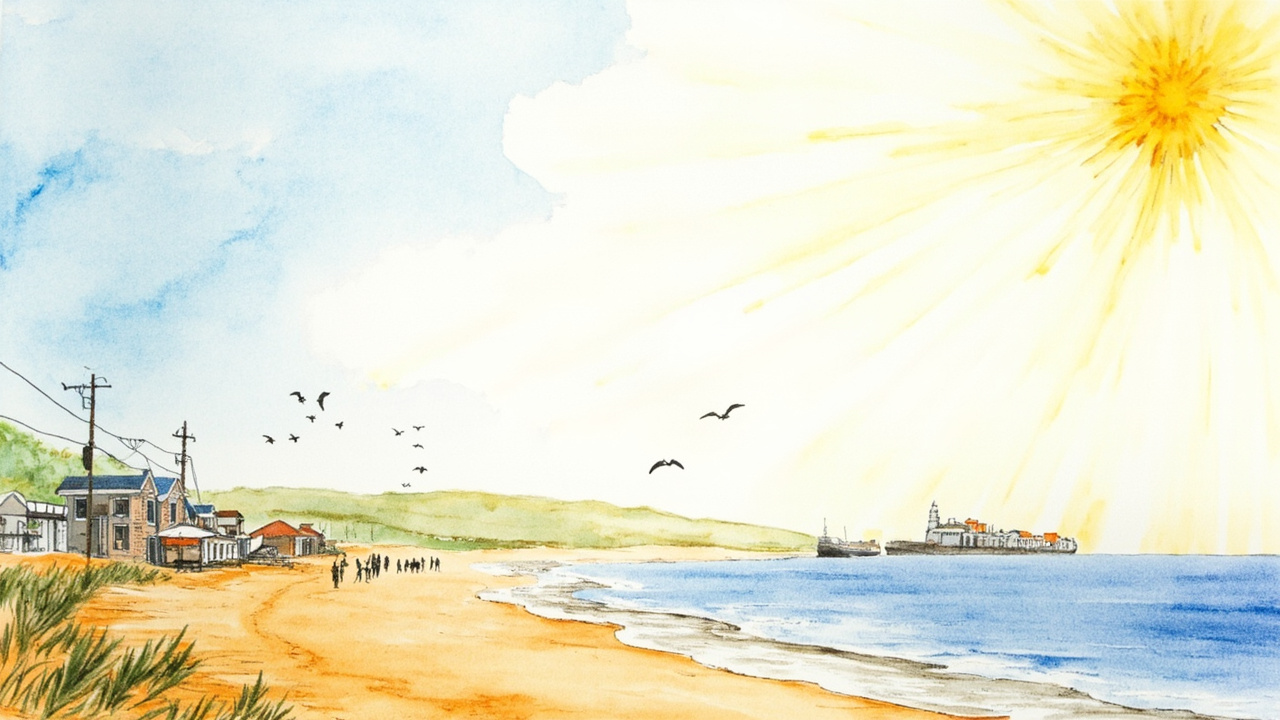
The Portuguese Environment Agency, I. P. (APA, I. P.) has approved the Management Regulation for the Maritime Beaches of the Caminha–Espinho stretch, published in the Diário da República on October 12, 2026, via Notice no. 25040/2026/2. The decree establishes the planning of maritime beaches and zones contiguous to the water domain integrated into the Coastal Zone Program between Caminha and Espinho (POC-CE) and enters into force on the day following its publication, October 13, 2026.
The regulation was approved by a resolution of the Board of Directors of APA, I. P. on September 17, 2026, under article 139 of the Code of Administrative Procedure, approved by Decree-Law no. 4/2015 of January 7, and develops paragraph 3 of article 44 of Decree-Law no. 80/2015 of May 14, which allows the management rules of special programs to be converted into a specific regulation. It also applies Decree-Law no. 159/2012 of July 24, and the POC-CE, approved by Council of Ministers Resolution no. 111/2021 of August 11. The notice is signed by the president of the Board of Directors of APA, I. P., José Pimenta Machado, on September 23, 2026, and the text was subject to public participation.
The scope covers the maritime beaches of nine municipalities — Caminha, Viana do Castelo, Esposende, Póvoa de Varzim, Vila do Conde, Matosinhos, Porto, Vila Nova de Gaia, and Espinho —, identified in Annex I, which classifies them into six typologies: Type I (urban), Type II (peri-urban), Type III (semi-natural), Type IV (natural), Type V (restricted use), and Type VI (forbidden use).
Sandy area planning and carrying capacity
The maximum percentage of the sandy area occupied by the concessionaire with buildings, equipment, furniture, awnings, and huts, including intervening corridors, is 50%. The beach front allocated to awnings and huts cannot exceed 50% of the total length, a value that rises to two-thirds for beaches with less than 100 meters of frontage. The areas subject to concession or license must be between 50 and 100 meters in length and exclude the Critical Areas of the POC-CE, wetlands, dune areas, and risk areas.
The carrying capacity is calculated by different formulas per typology: in Type I, C = (concessioned useful area/7.5 m²) + (non-concessioned useful area/15 m²); in Type II, the divisors are 15 m² and 25 m²; in Type III, 15 m² and 30 m². The number of parking spaces (E) results from E = (C/3.5/2)/2 in Type I, E = C/3.5/2 in Type II, and E = C/3.5 in Type III, considering 3.5 people per vehicle.
Beach supports, constructions, and infrastructures
Beach supports and equipment have maximum useful areas for covered and uncovered construction fixed in Annex V:
- Minimum beach support (APM): 50 m².
- Simple beach support (APS): 115 m².
- Complete beach support (APC): 230 m².
- Equipment with beach support functions (EAP): 500 m².
- Beach support for sports practice (APPD): 50 m² removable non-infrastructure, 195 m² removable infrastructure, and 230 m² fixed.
- Recreational support (AR): 25 m²; bathing support (AB): 8 m².
Construction rules limit the building to one floor above the threshold level, with a maximum height of 4 meters, and prohibit basements. Only removable constructions are permitted on the sandy area; on the forebeach, removable or lightweight ones; on the marginal promenade, fixed constructions are also permitted, with a minimum clearance of 0.5 meters from the ground and 1 meter in dune systems. Connection to the public water, sewage, and underground electrical networks is mandatory for type I and II beaches, with removable toilets allowed up to 20 m² of covered useful area, provided they are outside the sandy area.
Prohibited uses, sports, and fishing centers
During the bathing season, the presence and circulation of animals are prohibited on type I to III beaches and on type IV beaches classified as bathing waters, except for certified assistance dogs. Camping outside of campsites, the use of drones for photographing and filming without authorization, the overnight stay of motorhomes in parks and parking areas, and overflights by motorized aircraft below 1,000 feet are also prohibited.
The practice of sporting activities on the associated water plane may be prohibited for up to 70% of the beachfront allocated to the bathing zone, and access channels for nautical means cannot exceed 30% of the supervised zone. The bathing zone has a minimum width of 60% of the supervised zone and a maximum distance of 50 meters from the beachfront, and the associated water plane is 300 meters wide.
The regulation identifies 18 fishing centers, including Vila Praia de Âncora (Caminha), Caxinas (Vila do Conde), Foz do Douro (Porto), and Silvalde (Espinho), and provides for the enhancement of maritime and land infrastructures and the separation of fishing activity areas from bathing zones.
Parking and adaptation of titles
Parking in the maritime public domain outside the urban perimeter is only permitted in the locations indicated in the intervention plans, with one space reserved for inspection, another for ambulances and emergency services, and another for loading and unloading, in addition to spaces for two-wheeled vehicles and people with reduced mobility. In areas with more than 100 spaces, natural or artificial shading should be prioritized.
Holders of beach facilities and equipment may request changes to adapt to the POC-CE, which implies a revision of the water domain use title; this revision does not alter the term of the title, except by exceptional authorization from the competent entity. Requests for licensing removable terraces on the sand must be submitted 30 days before the start of the bathing season.
The new regulation now directly binds private individuals and public entities in the management of one of the most urbanized coastal strips in the country, with clear rules on sand occupation, beach facilities, parking, and prohibited uses. For concessionaires, municipalities, and shoreline users, the text published in the Diário da República on October 12, 2026, is the binding reference as of October 13, 2026.
Source: Diário da República, 2nd series, no. 197, of October 12, 2026, Environment and Energy (official reference: Notice no. 25040/2026/2).