Diario Oficial de la República de Chile · 22 Oct 2026 · 3 vistas
Housing opens a 200,000 UF call in Coquimbo against xylophagous insects
Por FactBox Admin
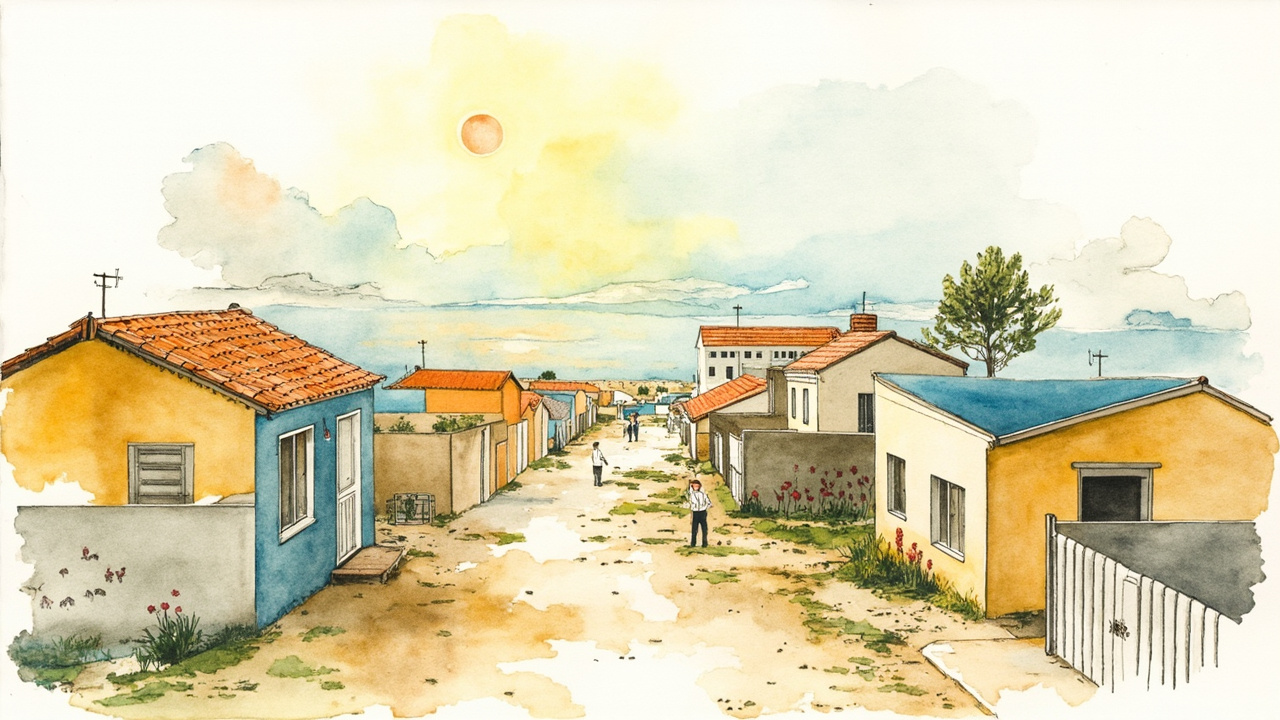
The Regional Ministerial Secretariat of Housing and Urbanism of the Coquimbo Region has opened a call for applications under special conditions to repair homes affected by xylophagous insect pests, with a maximum of 200,000 UF (Unidades de Fomento). The call was formalized through Exempt Resolution No. 947, dated October 19, 2026, an extract of which was published in the Official Gazette No. 44,580, on Thursday, October 22, 2026, Section I, General Norms, with official reference CVE 2889364.
The call corresponds to Chapter Two “Housing Projects” of the Housing and Neighborhood Improvement Program, regulated by DS No. 27 (V. y U.), of 2016, and is charged to the 2026 resources. Prior authorization was granted by the Minister of Housing and Urbanism, Iván Slavko Poduje Capdeville, through Exempt Resolution No. 1,554, dated October 6, 2026, published in the Official Gazette No. 44,574 on October 15, 2026 (CVE 2884221), which set the resource ceiling and ordered the Seremi to issue the regional resolution within 10 business days. The act bears the signature of the Regional Ministerial Secretary, Pablo Cuadra Corrales.
A demand dragging on since 2024
According to the recitals of the extract, the Seremi and Serviu Coquimbo Region reported an organized demand of approximately 800 families who have applied since 2024 without being selected, to which a new estimated demand of 1,200 families is added. The largest affected universe is concentrated in homes built in the 1980s and early 1990s; therefore, the call focuses on buildings erected before 1995, specifically up to and including 12.31.1994.
The problem is located mainly in the conurbation of the communes of Coquimbo and La Serena, where there are homes built totally or partially with wooden structural systems whose deterioration compromises safety, stability, and habitability. The national authorization warns that individual intervention does not guarantee the control of propagation, so strategies coordinated by housing groups are prioritized.
Collective application by polygons and regional scoring
The call requires collective application of entire sectors—blocks, continuous and semi-detached housing—within previously approved polygons, and admits individual application only to complete blocks partially selected in previous calls that could not be executed for that reason. The central criteria are:
- Distribution of resources by commune and polygon, in proportion to the estimated amount of subsidies for the established demand, with successive reallocation of balances within the polygon, the commune, and the region.
- Regional score of up to 100 points added to the national score from Article 80 of DS Nº 27, also capped at 100; the weighting is 70% for the regional score and 30% for the national score, published separately.
- Prioritization by degree of affection, construction characteristics, age of the buildings, and socioeconomic characterization of the households.
- Representation of the group through a neighborhood council with current legal personality, neighborhood committees, or a functional social organization.
- Maximum tax appraisal of 1,500 UF, calculated as of January 1, 2026.
Amounts, deadlines, and eligible works
The base subsidies and their increments were fixed in the act: 183 UF for structural works, 20 UF for home maintenance, and 341 UF for the replacement of wooden second floors. With the increments for regularization (37 UF) and pest treatment (18 UF for subterranean termites and 8 UF for drywood termites), the maximum amounts reach 238 UF, 38 UF, and 396 UF, respectively.
- The review and qualification stage may not extend beyond December 30, 2026, the date from which selection begins.
- The start of works must occur within 90 calendar days from the publication of the selection resolution.
- The validity of the subsidies will be 24 months from that publication.
- Technical inspection of works by Serviu will apply to projects whose amount exceeds 7,500 UF.
- Drywood termites (Neotermes chilensis, Cryptotermes brevis), dampwood termites (Porotermes quadricollis), and subterranean termites (Reticulitermes flavipes) are recognized.
Additionally, as the Coquimbo Region is under a Constitutional State of Exception of Catastrophe due to public calamity—declared by DS Nº 112, dated July 20, 2026, from the Ministry of the Interior—the call incorporates an increment for complementary works of 40 UF for minor damage, 70 UF for moderate damage, and 100 UF for major damage, according to the Basic Emergency Form and Form 2 of Minvu.
The closing: the call orders the delivery of resources by polygon to gradually advance in a gap that exceeds 2,000 families between historical and new demand, and transfers the task of organizing the application before December 30, 2026, to the sponsoring entities and neighborhood councils.
Source: Official Gazette of the Republic of Chile, No. 44,580, Thursday, October 22, 2026, Section I, General Norms, pp. 1-2 (official reference: CVE 2889364).