BOP de Sevilla · 28 Oct 2026 · 3 vistas
Villamanrique definitively approves its Municipal Housing and Land Plan
Por FactBox Admin
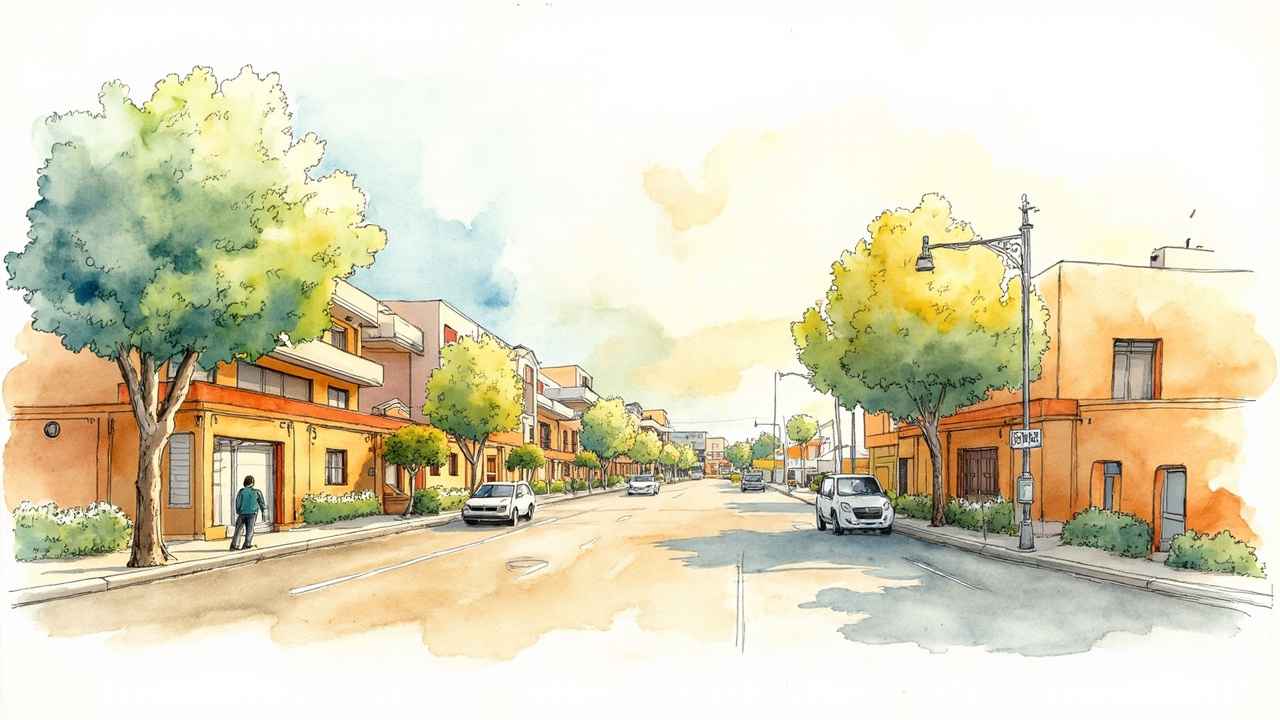
The City Council of Villamanrique de la Condesa has definitively approved its Municipal Housing and Land Plan (PMVS), the instrument that will govern municipal housing and land policy in the coming years. The resolution is published in the Official Gazette of the Province of Seville number 209, dated October 28, 2026, section I (Local Administration), with the official reference CVE: BOP-SE-2026-209034. The process concludes without any allegations presented during the public exhibition period.
The municipal Plenary initially approved the Plan in the session of July 20, 2026, and the document was submitted for public information via an announcement in the Official Gazette of the Province of Seville number 146, dated July 30, 2026, and on the Municipal Notice Board. The full technical text was also available to residents on the City Council’s Transparency Portal from that same date.
Following the expiration of the public exhibition period without claims or suggestions, according to the certification issued by the Acting Secretariat-Audit under number 2026-0211, dated September 16, 2026, the Plan has been definitively approved in accordance with the initial plenary agreement, without the need for a new express pronouncement. The case file is 1237/2025 and the announcement appears signed by the mayor, Francisco Javier Domínguez Ponce.
A sectoral plan with a five-year horizon
The PMVS is based on Law 5/2025, of December 16, on Housing of Andalusia, and is coordinated with Law 7/2021, of December 1, for the Promotion of Territorial Sustainability of Andalusia (LISTA) and with the Advance of the General Municipal Zoning Plan (PGOM). It is not an urban planning instrument nor does it modify the determinations of the general planning, but it is binding for municipal public action regarding housing.
The document combines two time scales:
- A strategic horizon of 20 years to identify structural housing and land needs.
- An operational horizon of 5 years to program concrete actions and intervention priorities.
The technical drafting was commissioned by Sevilla Activa, M.P., S.A.U., of the Provincial Council of Seville, to the Territorio y Ciudad SLP team, led by Manuel Ángel González Fustegueras. Among the municipal technical references are the mayor, the Councilor for Urban Planning and Finance, Isabel María Jiménez Pérez, and the municipal architect, José Antonio Pérez.
The diagnosis: mismatch, not housing shortage
The Plan is based on a population of 4,655 inhabitants (IECA 2024) and a stock of 2,175 dwellings according to the 2021 Census, of which 525 are listed as vacant, representing 24.1% of the total. Analysis of electricity consumption from the INE reduces this figure: only 51 dwellings show very low or null consumption compatible with effective vacancy, while 188 have sporadic use.
The key figures for the housing stock and demand are:
- 49 public rental dwellings and 22 protected dwellings under a sales regime.
- 15 active registrations in the Municipal Public Registry of Protected Housing Applicants in January 2025, out of 168 applications and 116 historical registrations.
- 93% of applicants with incomes equal to or lower than 1 IPREM and 71% of households consisting of one or two members.
- 317,302.18 euros coming from the Municipal Land Heritage and at least 5 plots with 8,617 m² and a cadastral value of approximately 324,949.27 euros.
The technical conclusion is that the municipality’s residential problem is not an absolute lack of housing, but rather a mismatch between the existing stock—old and poorly accessible—and the real needs of the population, with a very limited rental offer.
Between 38 and 129 new dwellings and sufficient urban land
For the five-year operational cycle, the Plan estimates a gross demand of 209 to 300 dwellings according to the low, intermediate, and trend scenarios. From this figure, the absorption capacity of the existing stock is deducted, estimated at 171 dwellings: 51 effectively vacant, approximately 100 releasable due to the death of owners, and 20 recoverable from ruined properties.
The result is a net need for new housing of 38 dwellings in the low scenario, 81 in the intermediate, and 129 in the trend scenario. The PGOM Advance grants consolidated and non-consolidated urban land the capacity for 150 to 200 dwellings, meaning the need can be met without new developable projects or land reclassification.
For the intermediate scenario, the following distribution of new development is recommended:
- Between 35% and 45% as rent-to-own.
- Between 15% and 25% as protected sales.
- 10% under a free market regime.
- Mobilization of the 97 municipal plots and the Public Land Heritage as support for affordable rental and institutional housing.
Citizen participation and monitoring through indicators
The participatory process was organized around a public session held on May 28, with 11 attendees, featuring the mayor, the Councilor for Urban Planning, two technicians from the drafting consultancy, and a representative of the opposition. Doubts focused on the scoring and awarding criteria for protected housing, the updating of the applicants’ registry, and financing possibilities.
The Plan incorporates a system of execution, outcome, and impact indicators, with annual and five-year goals: mobilization of 50 vacant homes, intermediation of 20 rental contracts, granting of 50 rental subsidies, activation of three VPO (protected housing) execution units, and activation of 25 plots. The document does not generate automatic spending obligations and is proposed as a framework to attract regional, state, and European funds.
An administrative appeal may be filed against the final approval before the Administrative Litigation Section of the Court of First Instance of Seville within a period of two months from the day following the publication of the announcement, in accordance with Article 46 of the Law on Administrative Litigation Jurisdiction. For residents, the Plan opens the way to protected developments and affordable rental actions within already urbanized land, and converts the registered demand into an operational criterion to decide what is built and where.
Source: Official Gazette of the Province of Seville, no. 209, October 28, 2026, section I (Local Administration), page 138 (official reference: CVE: BOP-SE-2026-209034).