Registro Oficial del Ecuador · 19 Oct 2026 · 3 vistas
Sucúa creates municipal subsidy to prevent school dropout in rural areas
Por FactBox Admin
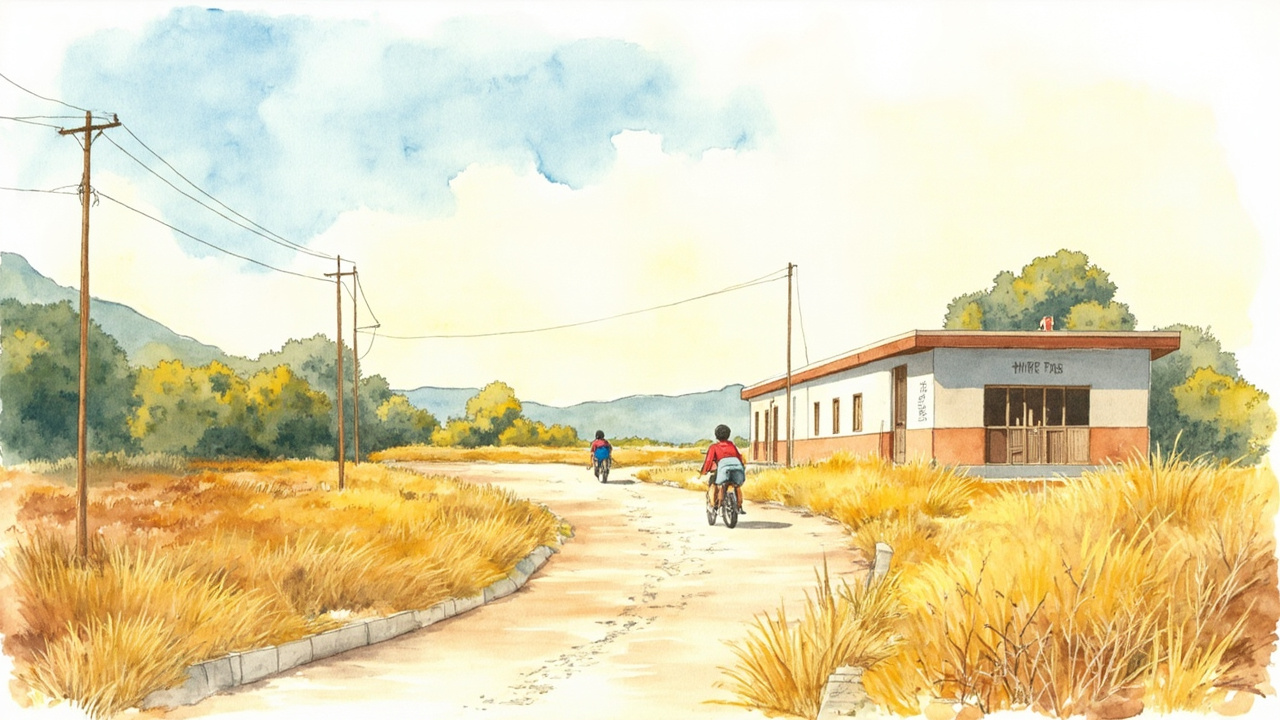
The Municipal Council of the Decentralized Autonomous Municipal Government of the Sucúa canton approved the ordinance that creates and regulates the Municipal Social Protection Program intended to remove economic barriers to the educational permanence of students in situations of socioeconomic vulnerability from the urban and rural sectors. The regulation was approved in its second and final debate on September 24, 2026, and sanctioned on the same day by Mayor Raúl Sebastián Rodríguez Pacheco. Its text was published in the Official Registry, Special Edition No. 1702, on Monday, October 19, 2026, within the municipal ordinances section.
Processing and Regulatory Support
The ordinance was discussed in the first debate on September 17, 2026, and approved in the second debate during the ordinary session on September 24, 2026, according to the certification of the general and council secretary, Diana Marina Espinoza Palacios. The sanction and the publication order were signed in Sucúa on September 24, 2026, in accordance with Article 322 of the Organic Code of Territorial Organization, Autonomy and Decentralization (COOTAD).
The text is supported by Articles 26, 27, 35, 44, 45, and 347 of the Constitution of the Republic of Ecuador, the Organic Law of Intercultural Education, and the Code for Children and Adolescents. The municipality clarifies that the measure does not assume educational leadership nor replace the Ministry of Education: it is defined as a complementary and focused social protection intervention.
Four Modalities of Support
The program may be executed through the following modalities:
- Direct provision of school supplies, kits, and materials, acquired by the Municipal GAD of the Sucúa Canton.
- Direct provision of food intake, with technically defined nutritional and sanitary conditions.
- Annual economic incentive for outstanding high school and university students for good academic achievement.
- Individual economic support for educational permanence, directed exclusively at students from the rural sector.
Economic support is delivered via bank transfer to the account of the legal representative at the end of each quarter of the school period, with three annual disbursements planned. Before each payment, the representative must present the certificate of permanent class attendance and the invoices justifying the expenses.
Resources may cover transportation to and from the educational institution, books from the list of teaching materials not covered by other programs, uniforms and necessary clothing, and payments for enrollment and monthly tuition. Any expense that legally corresponds to the State under the principle of free public education is excluded.
Selection by Score and Expenditure Control
The selection of beneficiaries will be carried out using a Social Evaluation and Prioritization Matrix of up to 100 points, which weights household income and economic capacity, number of members and students, economic dependency, housing, basic services, distance and transport cost, disability, orphanhood, membership in indigenous peoples and nationalities, social risk factors, and risk of dropout. No authority may modify the score discretionarily.
The Technical Qualification Committee will be chaired by the highest municipal authority and composed of the directorates of Culture, Social Development and Inclusion; Finance; Planning; and the Syndic Attorney’s Office. A designated official will act as secretary, with a voice but no vote.
The conditions include:
- A single benefit per student, with a prohibition on duplication between modalities.
- One beneficiary student per family, except in cases of extreme vulnerability.
- Loss of the benefit due to fraud, false information, misuse of resources, or definitive abandonment of the educational system.
- Publication of beneficiaries, executed amounts, and educational retention indicators.
Financing and deadlines
The program will be financed with resources from the municipality’s institutional budget and may be part of the allocation of at least 10% of non-tax revenues provided for in Article 249 of the COOTAD for social programs for priority attention groups. The Financial Directorate must issue the budget certification before any expenditure commitment.
The ordinance does not fix amounts or the number of beneficiaries: both will be determined annually in the budget planning and in the application regulations, which the highest municipal authority must issue within a maximum period of 30 days from the approval in the second debate. The regulation repeals the previous regulation for economic support to students in situations of vulnerability and children of permanent workers, effective from the entry into force of the new regulations.
The impact for the families of Sucúa is direct: for the first time, the municipality has a permanent and verifiable framework to sustain the educational continuity of rural households, where distance and transport costs are the main cause of dropout. The actual scope will depend on the allocation assigned in the next fiscal year and the regulations issued in the coming weeks.
Source: Official Registry, Special Edition No. 1702, October 19, 2026, Section I (Decentralized Autonomous Governments – Municipal Ordinances), p. 20 (official reference: Ordinance of the Municipal GAD of the Sucúa canton, September 24, 2026).