BOP de Sevilla · 30 Sep 2026 · 24 vistas
Seville creates a restricted traffic area on the Puñonrostro-El Duque axis
Por FactBox Admin
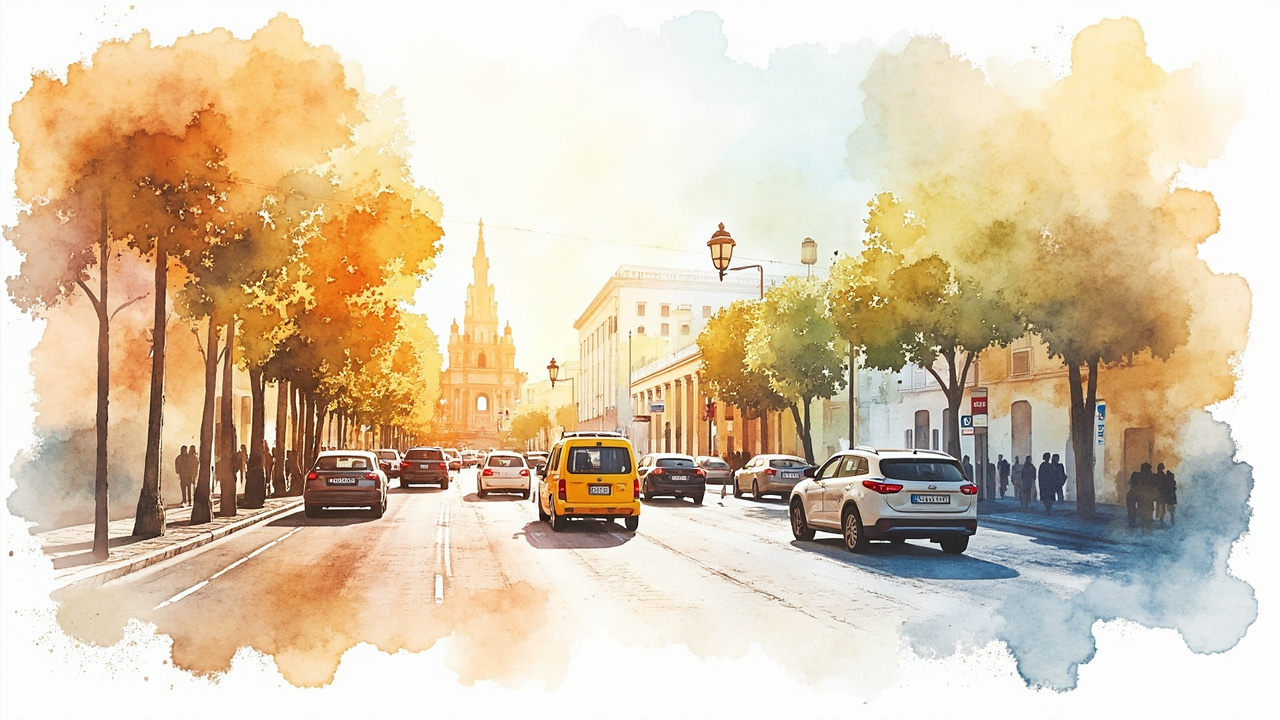
The Seville City Council has approved the creation of a Restricted Traffic Area on the Puñonrostro-El Duque axis, with access control via license plate recognition at five points, affecting approximately thirty streets in the historic center. The decision is formalized in Resolution number 642, dated September 28, 2026, from the Deputy Mayor Delegated for the Area of Cartuja, Innovative Parks, Mobility, Economy, and Trade, published in the Official Gazette of the Province of Seville number 190, dated September 30, 2026 (CVE: BOP-SE-2026-190036). The date for the electronic control to enter service will be set in a subsequent resolution.
The regulatory framework and the reason for the measure
The file is processed under Article 6 of the Traffic Ordinance of the City of Seville, Article 25.2 g) of Law 7/1985, of April 2, regulating the Bases of Local Regime, and Article 7 of Royal Legislative Decree 6/2015, of October 30, which approves the consolidated text of the Law on Traffic, Motor Vehicle Circulation, and Road Safety. The competence of the delegated council member derives from Mayoral Resolution 921, of September 30, 2024.
The text justifies the restriction based on the implementation of the segregated bus lane, which makes it necessary to reorganize private traffic and prioritize public transport and road safety. The resolution approves the delimitation of the zone and the applicable regime, incorporated as an annex.
32 affected streets and five control points
The annex lists the roads included in the restricted area:
- Puñonrostro, Puerta del Osario, Escuelas Pías, Jáuregui, and Plaza Ponce de León.
- Santa Ángela de la Cruz, Alcázares, Jerónimo Hernández, and Plaza Padre Jerónimo de Córdoba.
- Matahacas, Sol, Bustos Tavera, Peñuelas, Gerona, and Doña María Coronel.
- Juan de Mesa, Almirante Apodaca, Plaza San Pedro, Imagen, Laraña, and Martín Villa.
- La Campana, Plaza Duque de la Victoria, Alfonso XII, Orfila, and Javier Lasso de la Vega.
- Santa María de Gracias, Tarifa, Amor de Dios, Trajano, San Miguel, and Aponte.
Control will be carried out through license plate capture and cross-referencing with the management system at five points along the axis, divided into two types:
- Type 1, restricted access road of special protection: Almirante Apodaca – Juan de Mesa.
- Type 2, restricted access road: Puñonrostro, Puerta del Osario, Imagen, and Plaza del Duque – Trajano.
Who may access and under what requirements
The resolution details fourteen exception scenarios. Among those that do not require prior registration are:
- Motorcycles and mopeds (categories L1, L1e, L3, and L3e), authorized by type 1 and type 2 points.
- Bicycles, cycles, pedal-assist cycles, and personal mobility vehicles.
- Public passenger transport vehicles.
- Emergency and healthcare assistance vehicles, if their use is indicated in the last two digits of the technical data sheet classification code.
Prior registration or authorization is required for, among others, residents of the old town (Type A accreditation) and users of garage spaces in restricted zones (Type B), who must register with the Municipal District; vehicles linked to the economic activity of companies located inside (Type C); goods transport vehicles over 12,000 kg (category N3); and those transporting or picking up persons with reduced mobility, limited to one vehicle per accredited user within the zone.
Vehicles transporting emergency patients may regularize their access within the following 72 hours. Access is also provided for educational centers, hotel establishments, public parking lots under a rotation system, municipal services, funeral vehicles, assistance tow trucks, and cash-in-transit vehicles.
Deadlines and appeals
The effective implementation will be detailed in a resolution to be published in the provincial bulletin, which will set the start date of the electronic vehicle access control system. Against this act, which ends the administrative process, an optional appeal for reversal may be filed within one month, or a contentious-administrative appeal may be filed before the Contentious-Administrative Section of the Court of First Instance of Seville within two months.
Impact
The measure changes the way of circulating and parking in the heart of the historic center: residents and businesses must be accredited to enter, visitors may only do so if their destination is a rotation parking lot or a hotel establishment, and motorcycles, bicycles, and public transport maintain free passage. License plate control turns every access into an administrative record, with the management burden that this entails for residents and businesses in the area.
Source: Official Bulletin of the Province of Seville, no. 190, September 30, 2026, Local Administration, p. 188 (official reference: BOP-SE-2026-190036).