EUR-Lex · 02 Oct 2026 · 20 vistas
Romania's Bere Sadu lager enters three-month European Union opposition window
Por FactBox Admin
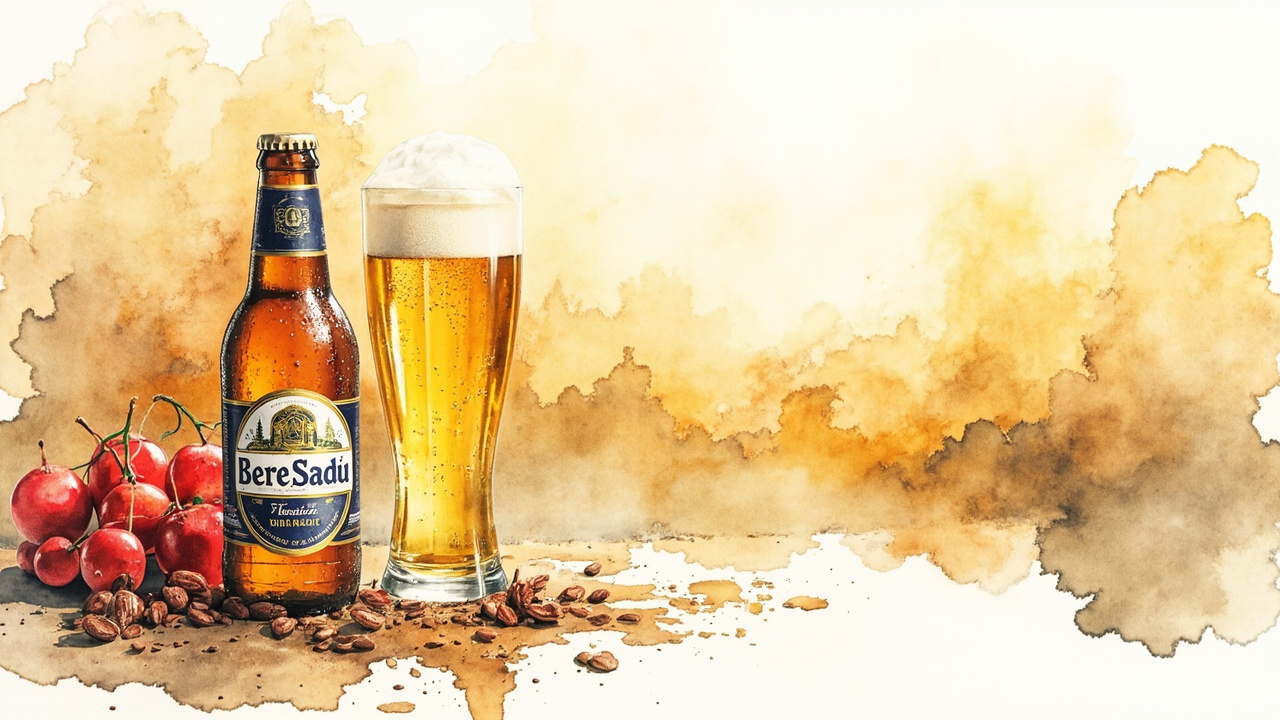
The European Commission has published the application to register ‘Bere Sadu’, an unpasteurised Romanian lager, as a protected geographical indication, opening a three-month opposition window. The single document appeared in the Official Journal of the European Union, C series, of 2 October 2026, under reference C/2026/5131. The application carries EU number PGI-RO-03386 and is dated 24 December 2024.
The publication is made under Article 15(4) of Regulation (EU) 2024/1143 of the European Parliament and of the Council of 11 April 2024 on geographical indications for wine, spirit drinks and agricultural products. Under Article 17 of the same regulation, the authorities of a Member State or of a third country, and natural or legal persons with a legitimate interest established or resident in a third country, may lodge an opposition with the Commission within three months of publication. The product specification is published by the Romanian authorities.
A lager defined by its valley water
‘Bere Sadu’ is a lager beer obtained by alcoholic fermentation of malt wort made from water, barley malt, hops and brewer’s yeast, classified under Combined Nomenclature heading 2203. It is produced in two varieties, traditional blonde and brown, and is marketed unpasteurised and unfiltered, retaining the fine yeasts of natural fermentation.
- Blonde: bright golden-yellow colour, light fresh fruity aroma, moderate bitterness, dense creamy foam; original gravity 11.0-12.5 °P, 4.5-5.2 % vol., 7-14 EBC, 20-26 IBU.
- Brown: copper-brown colour, caramel aroma, roasted malt taste, thick cream-coloured foam; original gravity 11.0-12.5 °P, 4.5-5.2 % vol., 22-30 EBC, 22-28 IBU.
The element traditionally associated with brewing in the town is water. The water used comes exclusively from mountain springs in the administrative territory of the municipality of Sadu, Sibiu County, in the Sadu river basin; it is soft and low in mineral content, and its mineral composition may not be artificially altered. Malt, hops and yeast may come from outside the area. The spring is not exclusively owned by the Association for the Promotion of Sadu Beer and remains publicly accessible to any future producer complying with the specification.
A name documented since 1912
The application rests solely on the product’s reputation. Brewing in Sadu is documented from 1912-1913, when a facility was set up to exploit local mountain water, and the brewery founded by Thomas Binder operated under the name Bere Sadu after 1945. Volker Wollmann, in Patrimoniu Preindustrial și Industrial în Romania, Vol. III, records that the plant continued as Fabrica de Bere Sadu S.A., was nationalised in 1948 and expanded after investments from 1979. Production ceased in 2007 and resumed in 2017. The Astra Museum in Sibiu, in a 2015 volume, lists ‘Bere Sadu’ among the beers produced by the local brewery.
Packaging and labelling
All essential production steps, from sorting and crushing the malt to fermentation and maturation, must take place in the defined area, and packaging must be completed there before transport. The beer is sold in brown or green glass bottles of 0.5 l and in oak-veneered stainless steel barrels of 5, 10, 30 and 50 l, filled isobarically at 0-5 °C. Labels must carry the name ‘Bere Sadu’, the words ‘Indicație Geografică Protejată’ or the abbreviation IGP, and the EU graphic symbol for protected geographical indications.
The registration would give the Sadu producers a protected name across the single market and a formal shield against imitation, while the three-month window leaves the file open to challenge until early January 2027.
Source: Official Journal of the European Union, C/2026/5131, 2 October 2026, C series (official reference: C/2026/5131).