Federal Register · 03 Nov 2026 · 7 vistas
PHMSA proposes first broad LNG safety overhaul in two decades
Por FactBox Admin
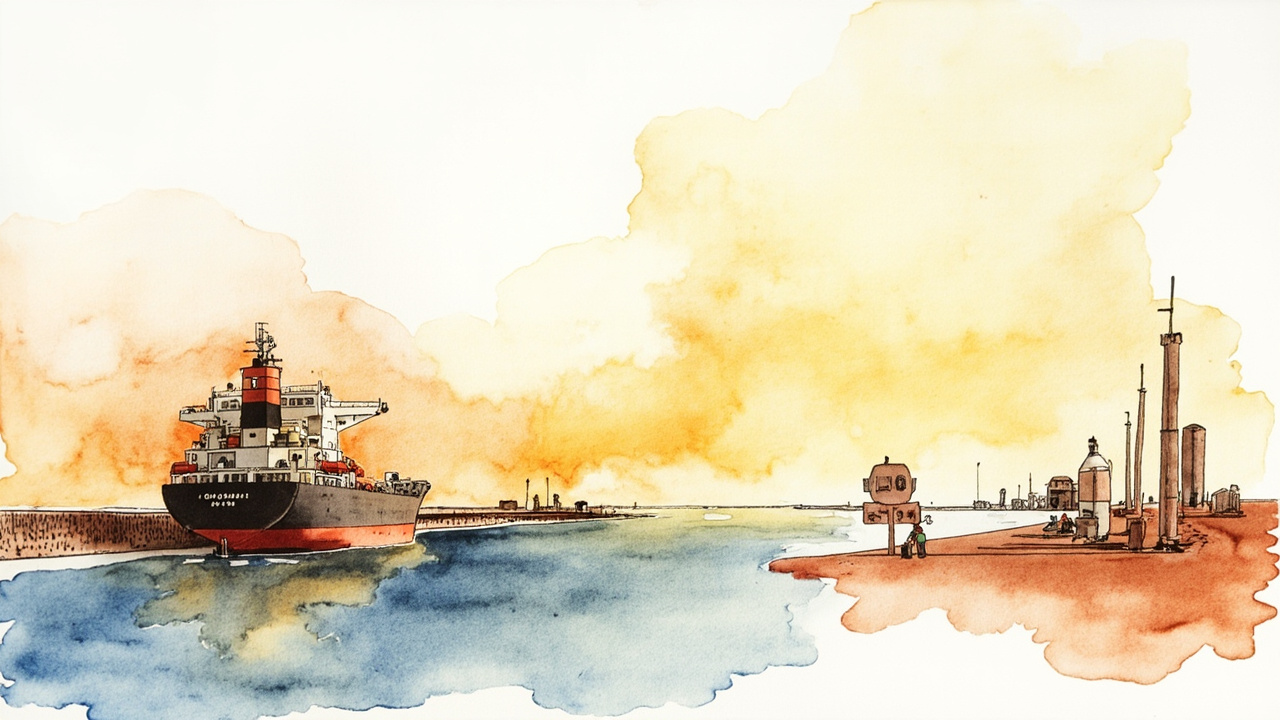
The Pipeline and Hazardous Materials Safety Administration (PHMSA), an agency of the Department of Transportation, proposed on 3 November 2026 a comprehensive revision of its liquefied natural gas safety regulations, covering 49 CFR parts 191 and 193. The notice of proposed rulemaking, published in the Federal Register under Docket No. PHMSA–2019–0091 and RIN 2137–AF45, incorporates the 2026 edition of NFPA 59A and sets a comment deadline of 4 January 2027. The proposal was issued under authority delegated in 49 CFR 1.97 and signed by Paul Roberti, Administrator of PHMSA.
PHMSA has regulated LNG facility safety for more than five decades, but its part 193 rules rest largely on the 2001 edition of NFPA 59A and have not been updated since 2006. The agency states that the 2001 standard is now seven editions out of date, that oversight has “not kept pace” with technical change, and that multiple stakeholders and the Government Accountability Office have called for an update. The proposal also responds to congressional mandates: section 27(b) of the PIPES Act of 2016 on permanent, small-scale LNG facilities and section 110 of the PIPES Act of 2020 on risk-based operations and maintenance.
Membrane tanks and pipe-in-pipe systems enter the rulebook
PHMSA proposes to incorporate by reference the 2026 edition of NFPA 59A, published 9 December 2025, and to delete references to the 2001 and 2006 editions. Chapter 8 of the standard imposes requirements for additional storage technologies, including ASME containers and membrane tanks — described in the notice as a thin cryogenic steel inner liner inside a load-bearing concrete outer tank.
Two technologies receive specific treatment:
- Membrane containment tanks gain layout considerations in chapter 6 (section 6.3.2) and storage requirements in chapter 8.
- Cryogenic pipe-in-pipe (PIP) transfer systems gain design, construction, installation and testing rules in chapter 10 (section 10.13), with impoundment requirements adapted to PIP in chapter 13 (section 13.7).
- A new § 193.103(b) would codify a one-inch hole design spill for all PIP transfer systems regardless of diameter, replacing the assumptions in table 5.3.2.3 of NFPA 59A–2026. PHMSA cites the failure of such a system in the 2022 Freeport incident as evidence that PIP releases remain possible.
Siting overhaul and risk-based alternatives
The proposal rewrites subpart B siting requirements, replacing the chapter 2 framework of the 2001 standard with chapter 5 of NFPA 59A–2026 as the default prescriptive approach, supplemented by targeted PHMSA provisions on hazard modeling and exclusion zones. Operators could instead elect a quantitative risk analysis (QRA) alternative under a new § 193.107, based on chapter 19 of the standard.
PHMSA also proposes:
- A new subpart D for permanent, small-scale LNG facilities, incorporating chapter 17 of NFPA 59A–2026.
- A new subpart F offering a risk-based operations and maintenance programme for FERC-jurisdictional LNG facilities.
- A delayed compliance date of five years after publication of any final rule for the updated siting requirements.
- Broader incident and safety-related condition reporting covering all “hazardous fluids,” not LNG alone, including during initial startup.
Costs, industry scale and the comment window
PHMSA estimates annualized cost savings of about $98 million, discounted at three percent, while acknowledging that many compliance costs and savings could not be quantified. The preliminary regulatory impact analysis is filed in the docket, and the agency is seeking public data on it.
The rulemaking lands on a transformed industry. As of 2025 there were 69 peak-shaving plants, 32 satellite plants, 43 mobile or temporary facilities and 9 import terminals with 14.934 Bcf/d of import capacity, alongside eight operational PHMSA-jurisdictional export terminals providing about 17.0 Bcf/d. Comments must be filed by 4 January 2027 through regulations.gov or by mail to the Docket Management System; a public meeting of PHMSA’s statutory advisory committees will be held on a date to be announced in the Federal Register. The agency contact is Brianna Wilson of the Standards and Rulemaking Division.
The rule would be the most substantial rewrite of LNG facility standards since 1980 and would govern siting, design, construction and operation for terminal builders and operators now expanding U.S. export capacity. It also shifts part of the regulatory burden from case-by-case permits and waivers toward codified, standard-based requirements, potentially lowering compliance costs while changing the assumptions on which exclusion zones and hazard footprints are calculated.
Source: Federal Register, Vol. 91, No. 211, 3 November 2026, Proposed Rules, p. 69314 (official reference: 2026-22396; Docket No. PHMSA–2019–0091).