Diario Oficial El Peruano · 09 Oct 2026 · 22 vistas
New regulation forces the agricultural sector to manage poultry litter, slurry, and waste
Por FactBox Admin
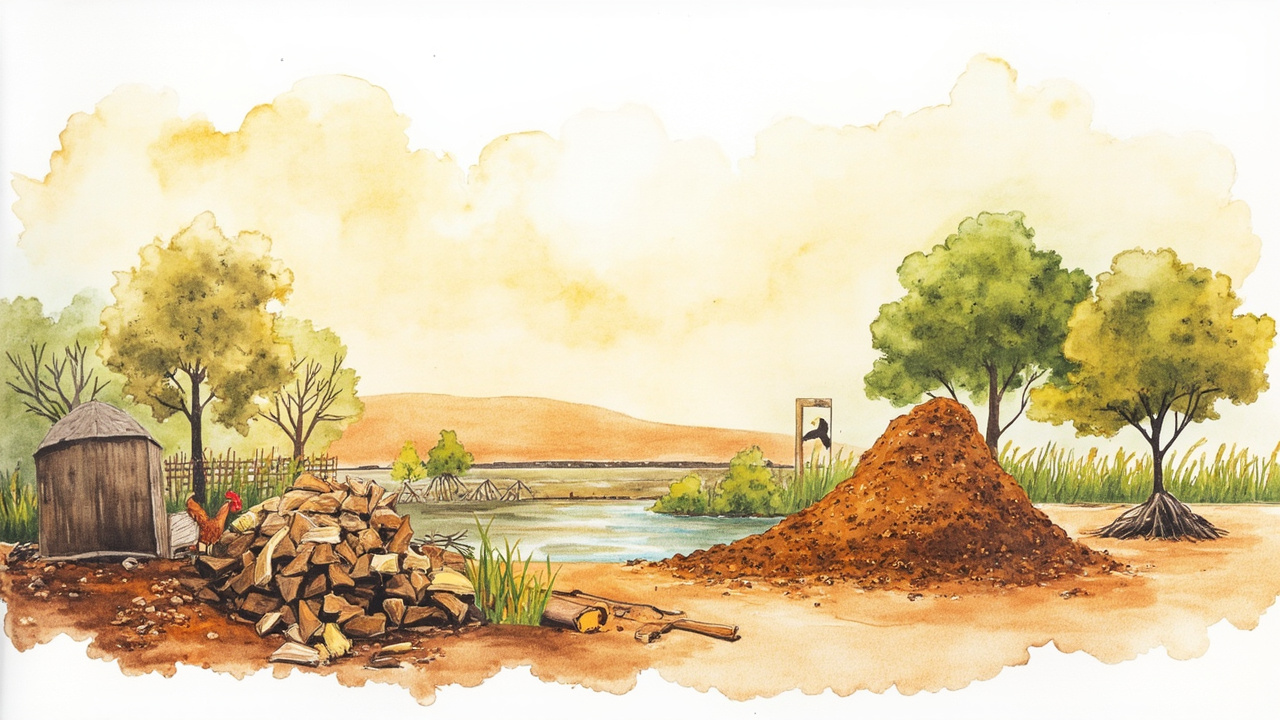
The Executive Branch approved the Comprehensive Solid Waste Management Regulation for the Agrarian and Irrigation Sector through Supreme Decree No. 011-2026-MIDAGRI, published this Friday, October 9, 2026, in the Legal Norms section of the Official Gazette El Peruano. The regulation mandates agricultural, livestock, and agro-industrial producers nationwide to properly manage poultry litter, chick litter, slurry, and discard material, and repeals Supreme Decree No. 016-2012-AG, which had been in effect since 2012.
The instrument was endorsed by the President of the Republic, Keiko Sofía Fujimori Higuchi, and by the Minister of Agrarian Development and Irrigation, Marco Antonio Vinelli Ruiz, and is dated October 7, 2026, at the Government House. The regulation consists of five titles, 46 articles, four final complementary provisions, two transitory complementary provisions, and four annexes.
This adjustment responds to the Eighth Transitory Complementary Provision of Legislative Decree No. 1278, the Comprehensive Solid Waste Management Law, which requires sectoral authorities to update their regulations in coordination with the Ministry of the Environment (MINAM). MIDAGRI, through the General Directorate of Agrarian Environmental Affairs (DGAAA), remains the sectoral authority responsible for regulating the comprehensive management and handling of these wastes.
Scope: from the field to agro-industry
The regulation applies to the three levels of government and to all natural and legal persons executing projects or activities of the Agrarian and Irrigation Sector within the national territory. The scope includes:
- Agricultural and grazing lands, forest lands, and wasteland with agrarian aptitude.
- Agriculture and livestock.
- Forest resources and their sustainable utilization.
- Wild flora and fauna.
- Water resources, irrigation, and agrarian infrastructure.
Annex II identifies usable discard material as including, among others, poultry litter, chick litter, and pig manure; whey; skin, leather, and rawhide scraps from tanneries; stubble and pruning remains; rice husk and cereal straw; and the solid or semi-solid fraction of excretions mixed with wash water, i.e., slurry.
Obligations, prohibitions, and deadlines
Generators must segregate waste at the source, store it according to Peruvian Technical Standard 900.058:2019, and develop a Solid Waste Minimization and Management Plan (PMMRS). Additionally:
- Annually register the Annual Declaration on Minimization and Management of Non-Municipal Solid Waste in MINAM’s SIGERSOL.
- Communicate, as a one-time action via sworn declaration, the generation of waste material to the environmental authority and the supervisory entity.
- Deliver up to 145 kg daily of municipal-like waste to the municipal service; above this threshold, a differentiated fee applies.
- Return the signed Hazardous Solid Waste Manifest (MRSP) within 15 calendar days following receipt.
- Perform the mandatory triple washing of agricultural pesticide containers.
The regulation prohibits the burning of sector solid waste, the direct feeding of animals with organic waste, and the abandonment or dumping of waste in public spaces, public domain assets, protected natural areas, and water bodies.
Valorization, supervision, and sanctions
The regulation prioritizes material and energy valorization over final disposal. Annex III allows for composting, vermicomposting, biodigestion with biogas and biomethane generation, bioconversion, co-incineration, co-processing, production of pellets and biochar, among other alternatives.
Supervision and enforcement will be the responsibility of the competent entity, and the Environmental Evaluation and Enforcement Agency (OEFA) must adapt the classification of infractions. Fines may not exceed 10% of the offender’s annual gross income, except in cases of recidivism or activities in prohibited zones. The National Water Authority (ANA) will sanction the disposal of waste in water bodies.
Implementation will be financed through the institutional budget of the involved entities, without demanding additional resources from the Public Treasury. For producers, the change implies moving from a 2012 waste management regulation to a circular economy scheme with traceability of waste material, sworn declarations, and effective environmental supervision.
Source: Official Gazette El Peruano, Legal Norms, Friday, October 9, 2026, p. 10 (official reference: D.S. N° 011-2026-MIDAGRI).