Registro Oficial del Ecuador · 04 Nov 2026 · 6 vistas
New instructional guide regulates the transport of mineral concentrates and doré bars
Por FactBox Admin
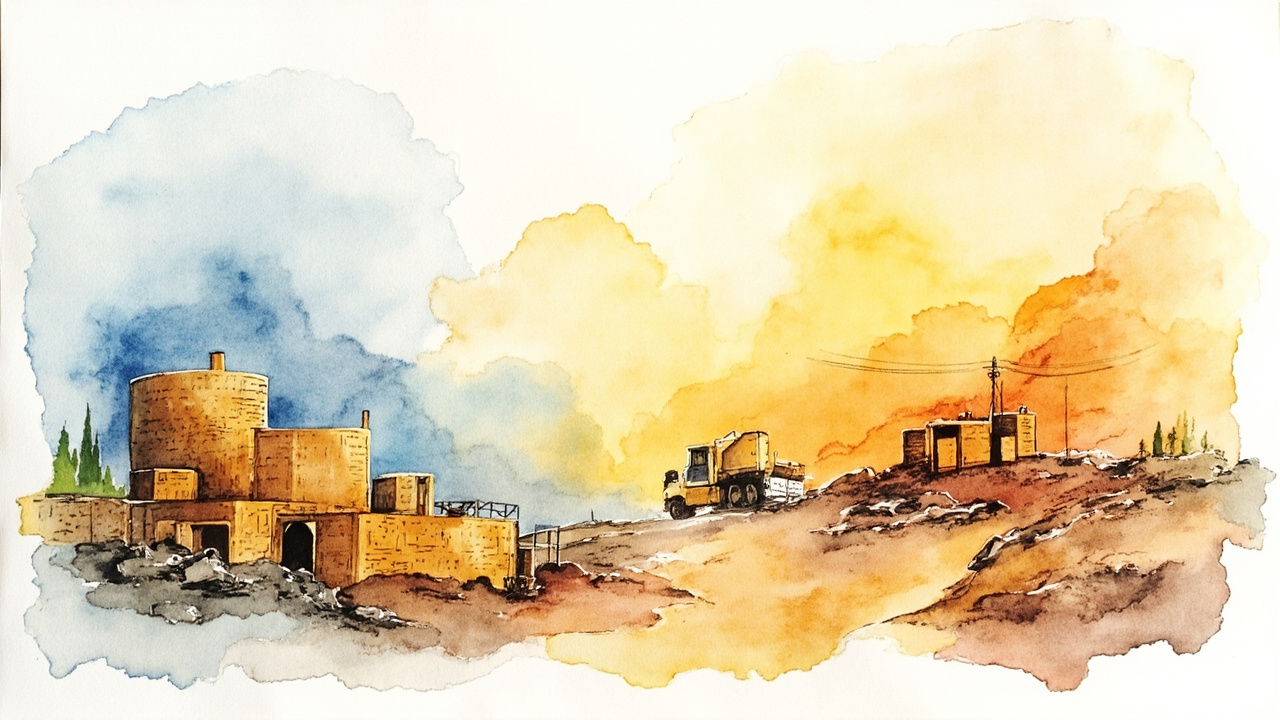
The Ministry of Environment and Energy issued Agreement No. MAE-MAE-2026-0106-AM, which establishes the technical, operational, and security requirements for the loading, packaging, transport, storage, and unloading of mineral concentrates and doré bars originating from medium and large-scale mining. The decision is contained in the Second Supplement No. 402 of the Official Registry, published on Wednesday, November 4, 2026, and was signed by Minister Juan Carlos Damián Blum Baquero on October 20, 2026, in Quito.
The new regulatory body replaces Agreement No. MEM-MEM-2025-0012-AM of May 19, 2025, which was limited to copper concentrates. Technical report SMI-DMIEET-2026-24-I justified the reform based on the need to cover other concentrates—including gold-bearing and polymetallic—and doré bars, “considering their physical and chemical characteristics and the risks associated with their handling and transport.”
Prior to its issuance, the project was published for seven days on the Ministry’s portal, and contributions were received from EcuaCorriente S.A., the Association of Mining Engineers of Ecuador (AIME), and the General Legal Coordination, as stated in report SMI-DMIEET-2026-73-I. The regulation is effective from its signing, regardless of its publication.
Obligations for cargo generators
The instructional is mandatory for Cargo Generators in the medium and large-scale mining regimes. Its scope extends from exploitation areas and processing plants to the transfer and delivery at port facilities, airport facilities, or other authorized points.
Each operator must maintain an approved Design Plan for loading, packaging, transport, storage, and unloading, including engineering, a risk matrix, security protocols, and environmental control measures. Additionally, they must maintain a “Transport Report” with daily records validated by a responsible technician.
The text establishes specific controls on moisture content: for concentrates susceptible to liquefaction and subject to bulk maritime transport, compliance with the International Maritime Solid Bulk Cargoes Code (IMSBC Code) and the Transportable Moisture Limit (TML) must be verified.
Authorized means of transport
Article 25 enables, among others, the following systems:
- Metal containers with liners or internal coatings and a valid approval plate in accordance with the International Convention for Safe Containers (CSC).
- Flexible packaging such as Big Bags (FIBC), with demonstration of technical suitability through manufacturer specifications.
- Land transport by road using authorized trucks and tractor-trailers.
- Mineroducts for concentrate pulp and rail lines with wagons or containers.
- For doré bars: armored vehicles, aircraft authorized for the transport of valuables, and high-security containers with active satellite tracking.
The bars must be individually identified with a unique serial number engraved by micro-percussion, packed in security boxes with numbered tamper-evident seals, and undergo prior verification of weight and purity.
Traceability, deadlines, and sanctions
Traceability will be conducted by batches and cargo units for concentrates and by individual identification for doré bars, utilizing satellite tracking, tamper-evident electronic seals, and documentary records of each transfer of custody. The notification of new seal codes to the Mining Regulation and Control Agency (ARCOM) must be made within 24 hours when required.
The central deadlines are:
- 24 months from publication for operators in the production phase to migrate to the planned transport systems.
- 6 months to present the logistics chain diagnosis and the roadmap toward certifications such as The Copper Mark, IRMA, or LBMA schemes.
- 120 days for ARCOM to form an inter-institutional technical team.
- 10 business days of each month to report the previous month’s operations to the originating Regional Coordination.
During the transition, obligations that depend on migration or the approval of the Design Plan will not be enforceable nor will they lead to sanctions. Repeated non-compliance or serious infractions may result in the temporary suspension of activities, in accordance with Article 58 of the Mining Law, with fines ranging from 20 to 500 unified basic remunerations plus 0.1% of the investment.
ARCOM will conduct inspections on a quarterly basis and may demand additional security measures, while the Ministry of Environment and Energy retains the authority to issue complementary regulations and agreements with control authorities.
The instructional guide arrives at a time of expansion for medium and large-scale mining projects and turns the mining logistics chain into an explicit object of state control: any operator exporting concentrates or doré bars must demonstrate not only the legality of the mineral, but also how it is mobilized, who custodies it, and with what documentary evidence. For communities and environmental authorities, the text incorporates for the first time containment, sealing, and monitoring standards applicable to the entire route, from the mine mouth to the port.
Source: Official Registry, Second Supplement No. 402, Wednesday, November 4, 2026, p. 1 (official reference: Agreement No. MAE-MAE-2026-0106-AM).