Boletín Oficial del Principado de Asturias · 03 Nov 2026 · 9 vistas
New decree regulates coastal beach bars and sets quotas per beach
Por FactBox Admin
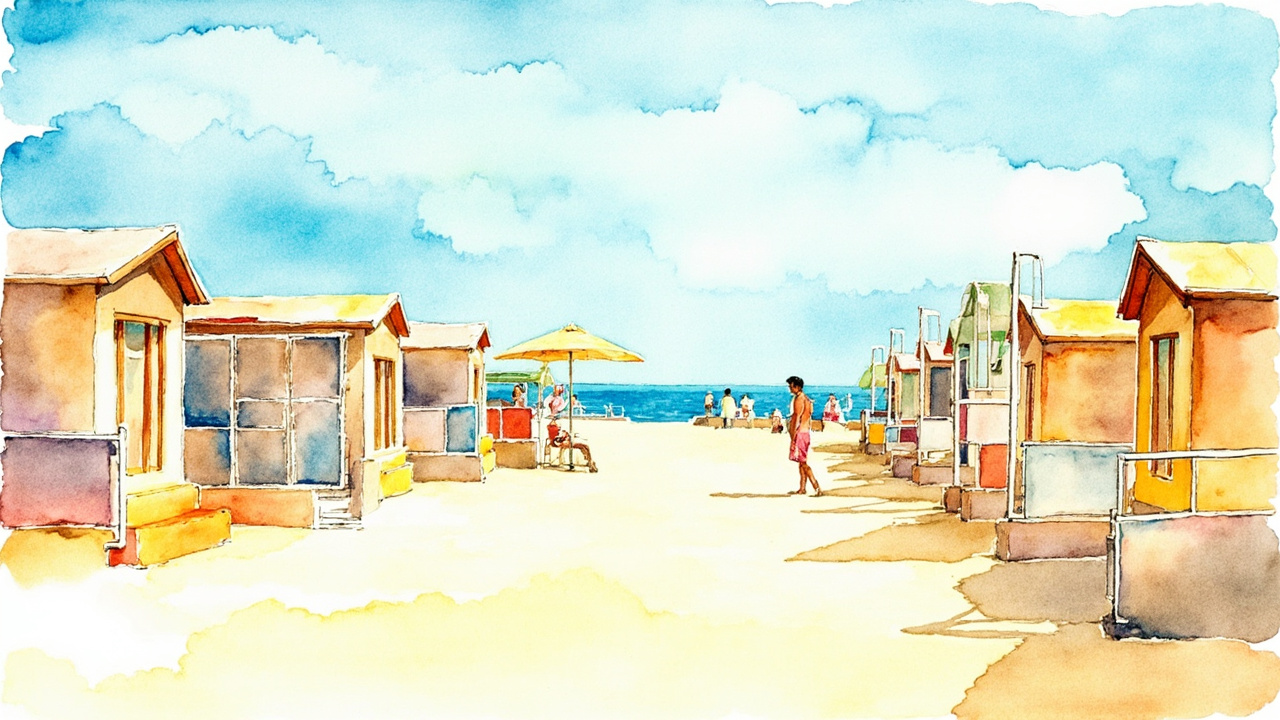
The Governing Council of the Principality of Asturias approved on October 29 Decree 80/2026, regarding the authorization of services on the coastline, which replaces the regulations in effect since 2013 and jointly organizes seasonal services on beaches and permanent services on the coast. The regulation, signed by President Adrián Barbón Rodríguez and Councilor Ovidio Zapico González, is published in the Official Gazette of the Principality of Asturias (BOPA) no. 212, dated November 3, 2026, with the reference 2026-09050. It enters into force on November 4, one day after its publication, so that applications for the 2027 season are processed according to the new regime.
The text was promoted by the Department of Territorial Planning, Urbanism, Housing and Citizen Rights and repeals Decree 93/2013, of October 30, which regulated seasonal services on beaches for more than twelve years. The preamble justifies the change based on the “exacerbation” of the effects of climate change, coastal regression, and the increase in tourism and hospitality pressure, which extends “beyond the areas of influence of the beaches.” The new regulation is based on the Special Territorial Plan for the Planning of the Asturian Coast (POLA) and the Special Territorial Plan for Non-Urbanizable Coastal Land (PESC), which organize the approximately two hundred square kilometers of coastline delimited in Asturias, and adds a guiding principle: services must be implemented preferably on land with the lowest environmental value.
Typologies and occupancy ceilings
The decree divides seasonal services into four typologies and sets for each a minimum program, mandatory universal accessibility conditions, and a surface area ceiling:
- Food establishments: 50 m² of closed installation, plus 15 m² for toilets and up to 100 m² of terrace, with a kitchen and permanent service staff.
- Beverage establishments: 20 m² closed, plus 15 m² for toilets and up to 100 m² of terrace; stalls without a terrace, such as ice cream stands, are limited to 10 m².
- Establishments for sports and recreational activities: 25 m² plus 15 m² for toilets and 20 m² of outdoor open space.
- Parking lots: occupancy calculated with a module of 35 m² per vehicle and a control movable asset of 4 m² maximum.
In all cases, tents and fixed enclosures are prohibited; public toilets not restricted to customers, selective collection containers with daily emptying, and hidden and provisional piping are required; furniture must comply with the RAL color chart in Annex 1. Establishments serving beaches outside urban environments will have a maximum schedule from 8:30 to 00:30 from Sunday to Thursday and until 01:30 on Fridays, Saturdays, and eves of holidays.
Quotas per beach and priority in case of competition
The maximum number of authorizable services on each beach will be set by resolution of the Department according to the type of beach, rescue services, access points, and carrying capacity. For the most crowded beaches, Annex 2 establishes the ceiling for parking spaces, which is subtracted from those already existing to obtain the seasonal ones: Rodiles (1,200), San Pedro de Bocamar (800), Penarronda (750), Verdicio-Carniciega (700), La Griega (600), Vega-Berbes (600), Borizu-Troenzo (600), or La Espasa (550), down to beaches with barely twenty spaces such as Castello (20) or Vidiago (20).
When applications exceed the needs of the beach, the following criteria will be applied in this order: the absence of final sanctions for serious infractions in the previous four seasons, the location most consistent with the POLA, the use of land with lower protection according to the PESC, the improvement of accessibility, the most efficient management of water and waste, and the most sustainable construction solutions. Local entities have priority: city councils apply during the month of November and private individuals in December, only if the municipal initiative proves insufficient, a fact that will be announced in the BOPA. The resolution must be issued within a maximum period of three months, with negative administrative silence, and the authorization lasts one year, extendable up to four.
Season of nearly six months and off-season extension
The summer season now spans from May 1 to October 15, compared to the shorter summer period of the previous regulation. Services must remain open continuously at least in July and August, be installed in the month following the start of the season, and be dismantled within fifteen days after their closure. The off-season extension, which in the past was used to evade the dismantling obligation, is now limited: it must be requested before August 1 and will only apply to sports establishments with year-round activity, bars and restaurants in beach parks that prove opening through utility bills and personnel contracts, and complementary services of already established economic activities. First-time holders must present a commitment to open, and the extension will be granted on a precarious and revocable basis.
Motorhomes and permanent services
The decree incorporates rest areas, parking areas linked to viewpoints and lighthouses, and special reception areas for motorhomes in transit as permanent services, a modality that Asturian regulations did not regulate in detail. The latter will only be authorized outside the protection easement, on land that the POLA or the PESC declare suitable for parking, with paved vehicular access, an area of less than 2,000 m², and a basic category; overnight stays are permitted for a maximum of 48 hours. City councils may call for public tenders to choose their location while specific planning does not exist.
The regulation directly affects hoteliers, concessionaires, and coastal city councils, who face the upcoming season with an advanced application schedule—November for the councils and December for the entrepreneurs—stricter occupancy ceilings, and a criterion regarding sanctioning history that may decide who retains the authorization in the most sought-after sandy areas. Procedures already initiated will continue to be governed by the previous regulations, and current titles will remain valid until their expiration.
Source: Official Gazette of the Principality of Asturias (BOPA), no. 212, of November 3, 2026, Section I. General Provisions, page 1 (official reference: 2026-09050).