Diario Oficial (Colombia) · 14 Oct 2026 · 5 vistas
New decree rewrites the port concession regime and creates the Rucop
Por FactBox Admin
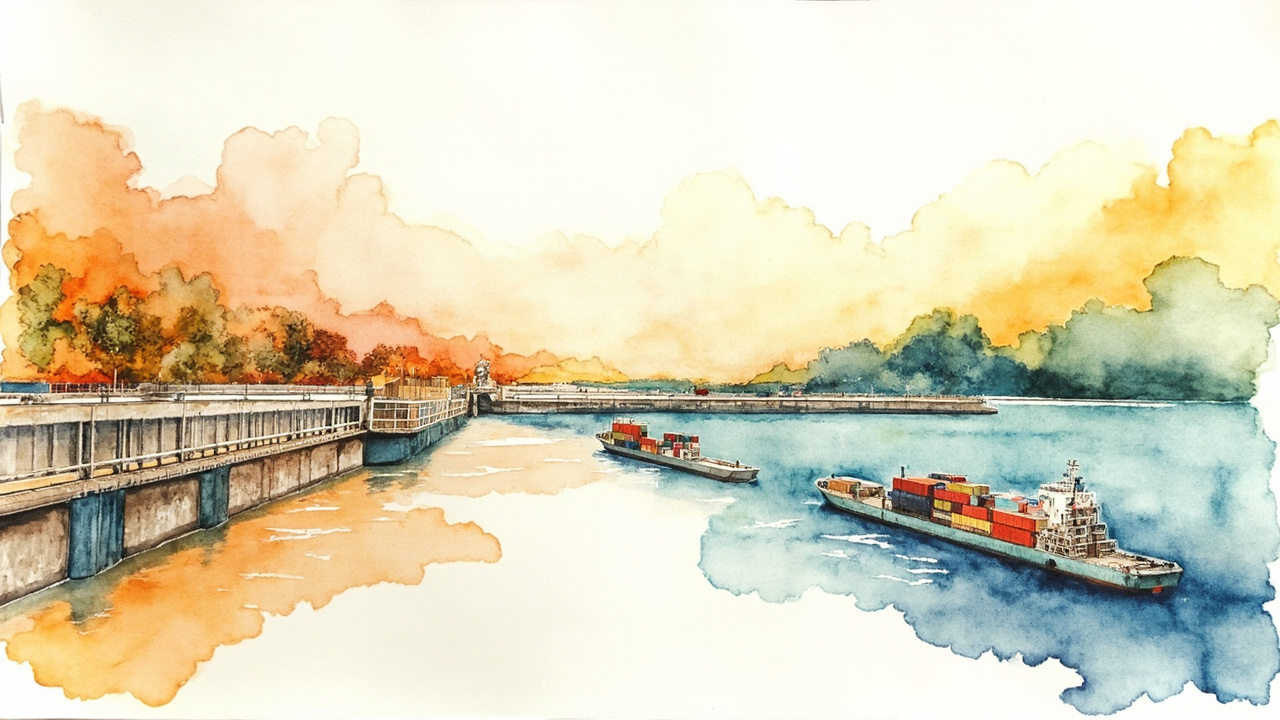
The National Government issued Decree number 1529 of 2026, which modifies and adds articles to the port concession regime, creates the Single Registry of Port Concessions (Rucop), and establishes new rules for reversion and environmental and social investments. The regulation was published in the Official Gazette, edition 53,658 of Wednesday, October 14, 2026, in the Ministry of Transport section, and takes effect the day following its publication.
The decree modifies Chapter 3 of Title 3 of Part 2 of Book 2 of Decree number 1079 of 2015, the Single Regulatory Decree for the Transport Sector, in development of Laws 1 of 1991 and 1242 of 2008 and the guidelines of Conpes Document 4118 of 2023, adopted via Decree number 2125 of 2023. It consists of 20 articles and was signed by President Abelardo de la Espriella and the Minister of Transport, Elsa Margarita Noguera De la Espriella.
The Ministry of Transport justified the measure by stating that several current provisions “were designed in an institutional, technological, and economic context different from the current one” and today present limitations regarding the technical, financial, environmental, and territorial complexity of contemporary port projects. The project was published for comments between June 25 and July 9, 2026, with an adjusted version on October 6 and 7. The Superintendency of Industry and Commerce provided a competition advocacy opinion (filing 26-419183-5 of October 7, 2026) and the Administrative Department of the Civil Service issued a favorable opinion (filing 20265010395661 of October 7, 2026).
A single registry for ports, piers, and wharves
The Rucop is created as a general consultation database, managed by the Ministry of Transport, which will consolidate information on concession contracts for ports, piers, and wharves in the country, distinguishing between their maritime or fluvial scope. It will cover everything from the application and granting to the execution, modification, termination, asset reversion, and liquidation.
- Financial models for applications and modifications shall remain confidential, along with the classified or reserved information under articles 18 and 19 of Law 1712 of 2014.
- The Ministry of Transport will regulate its operation through a resolution and will articulate it with the Port Repository managed by the Superintendency of Transport.
- The database will be built using open and interoperable formats, in accordance with the Digital Government Policy and the guidelines of the Ministry of Information and Communication Technologies.
- Until the Rucop becomes operational, procedures shall be filed solely with the granting entity, which will publish them on its designated platform.
Reversion, residual value, and strategic investments
The decree regulates the free reversion to the Nation of constructions, equipment, and properties by destination at the end of the initial term of the concession, in a good state of conservation, maintenance, and operation. Private plots of the Adjacent Services Zone that the concessionaire has voluntarily incorporated into the investment plan will also revert, which will acquire the status of fiscal assets.
The figure of the residual value of unrecovered investments is added: once at least 70% of the concession term has elapsed, the concessionaire may present new non-recoverable investments for study and approval by the granting entity. Recognition may consist of their inclusion in the new investment plan of the same holder or payment by the new holder, without conditioning it on the utility of the investments in the new concessionaire’s project.
Strategic environmental investments include decarbonization and energy transition assets—quay electrification (shore power), electrical substations, fixed solar panels, and infrastructure for low-carbon alternative fuels—and climate change adaptation works, such as coastal protection, dikes, or quay elevation. These must be additional, voluntary, and exceed the required regulatory compliance.
Terms, competencies, and transition regime
The competence to grant concessions and carry out the procedures corresponds to the State through the National Infrastructure Agency, the Regional Autonomous Corporation of the Magdalena Grande River (Cormagdalena), and the Government of the Archipelago Department of San Andrés, Providencia, and Santa Catalina, within their respective jurisdictions.
- Oppositions and alternative proposals: two months from the last publication of the notice of intent.
- Guarantee for alternative proposals: 3% of the value of the investment plan, valid for two years.
- Observations to the evaluation report: five business days; final report, ten business days.
- Single opportunity for the holder to match or improve the best alternative proposal: fifteen business days.
- Decision of the granting entity: reasoned resolution within five months following the submission of the request.
- Regulatory resolutions of the Ministry of Transport: six months from the date of entry into force.
Pending requests will continue under the legislation in effect at the time of their filing, but those that have not completed the public hearing stage must adjust to the new decree in the remaining stages. Pending license requests for quays and piers must likewise adjust to the new regulation.
Impact
The decree reorganizes the Colombian port concession model at a time of high demand for the country’s foreign trade and logistics: it centralizes and digitizes public information regarding concessions, provides explicit rules for the transition between concessionaires, and seeks to incentivize private investment in the final stage of the contracts. For port companies, granting entities, and coastal and river communities, the change implies new deadlines, guarantees, and publicity obligations, the effective application of which will depend on the regulatory resolutions that the Ministry of Transport must issue within the next six months.
Source: Official Gazette, edition 53,658 of October 14, 2026, Ministry of Transport section, p. 27 (official reference: Decree number 1529 of 2026).