Diário da República · 16 Sep 2026 · 6 vistas
New Level Crossing Regulation revokes 1999 regime and reinforces safety
Por FactBox Admin
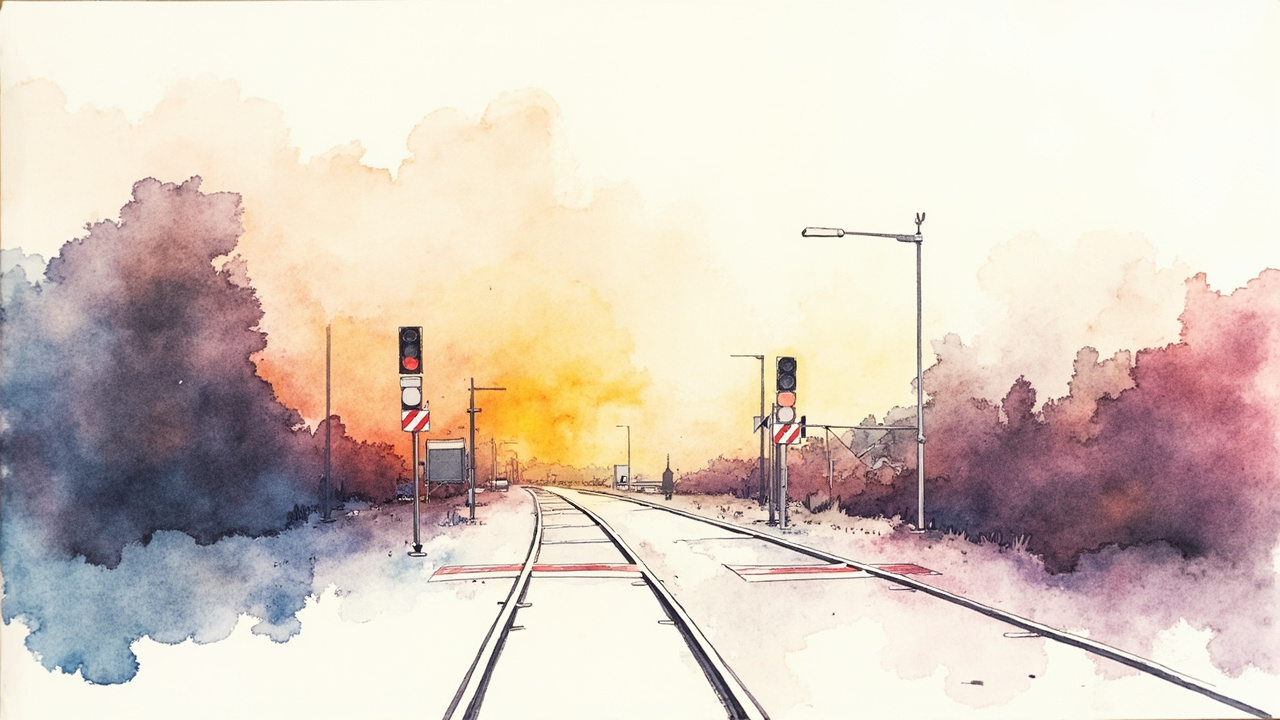
The Government has approved the new legal regime for level crossings (LC), through Decree-Law no. 183/2026, of September 16, published in the Diário da República, 1st series, no. 180. The diploma approves the new Level Crossing Regulation (RPN), published as an annex, and repeals Decree-Law no. 568/99, of December 23, as amended by Decree-Laws nos. 24/2005 and 77/2008.
Approved in the Council of Ministers on May 21, 2026, promulgated on August 3 by the President of the Republic António José Martins Seguro and countersigned on August 4 by the Prime Minister Luís Montenegro, the diploma enters into force on the first day of the sixth month following its publication. The new regime abandons the vision based primarily on reducing the number of LCs or reinforcing their equipment, moving toward a more comprehensive approach that integrates risk analysis and the environment of the road and rail systems.
Prohibition of new crossings and precarious licenses
The crossing of railway lines by new road infrastructures must now be grade-separated, and the establishment of new LCs is prohibited. Exceptionally, the railway infrastructure manager (GIF) may issue crossing licenses on a precarious basis, for a period never exceeding three years and non-renewable, subject to a risk assessment approved by the GIF and a favorable opinion from the National Railway Safety Authority (ANSF) and the National Road Safety Authority.
- Licenses subject to a bond and costs borne by the holder;
- Relocation of LCs permitted only up to 700 m (350 m for pedestrian LCs);
- The existence of LCs is prohibited on sections with railway traffic exceeding 140 km/h.
Suppression program with a five-year horizon
The diploma creates an LC suppression program, with a maximum horizon of five years, which the GIF must update by January 31 of each year and send to the ANSF. Included in the program are LCs that have recorded two or more significant accidents in the last five years, those located on sections with speeds exceeding 140 km/h, those with an average daily traffic exceeding 2,000 or a circulation moment exceeding 24,000, and those that cross more than two railway tracks.
Grade-separated crossings and connecting paths constructed are integrated into the municipal, regional, or national road, pedestrian, and cycling network, with the local, regional, or central administration responsible for ensuring their maintenance, lighting, and signaling. The National Association of Portuguese Municipalities, Infraestruturas de Portugal, S. A., railway companies, the Aircraft and Railway Accident Investigation Office, and the National Road Safety Authority were consulted.
Administrative offenses and fines
Violation of the RPN constitutes an administrative offense, sanctioned and processed under the general regime of administrative offenses. Infractions are punishable by fines ranging from €165.00 to €3,500.00 for individuals and from €5,000.00 to €40,000.00 for legal entities, covering the failure to use safety signs and equipment, non-compliance with paving and signaling rules, and crossing without special authorization.
Supervision is the responsibility of the Institute for Mobility and Transport, I. P. (IMT, I. P.), the ANSF, the GIF, and the ANSR. The proceeds from the fines are distributed as follows: 15% to the issuing entity, 15% to the entity applying the fine, 10% to the Environmental Fund, and 60% to the State.
The new regime responds to safety recommendations issued since 2016 by railway accident investigation offices and aligns national legislation with community guidelines, in a sector where the density of LCs per kilometer is already below the European average and active LCs constitute the majority. For municipalities and users, the decree implies new maintenance responsibilities and a suppression schedule that should reduce conflict points between road and rail traffic.
Source: Diário da República, 1st series, no. 180, September 16, 2026 (official reference: Decree-Law no. 183/2026, of September 16).