BOP de A Coruña · 26 Oct 2026 · 2 vistas
Malpica approves the ordinance for the sustainable use of its ten beaches
Por FactBox Admin
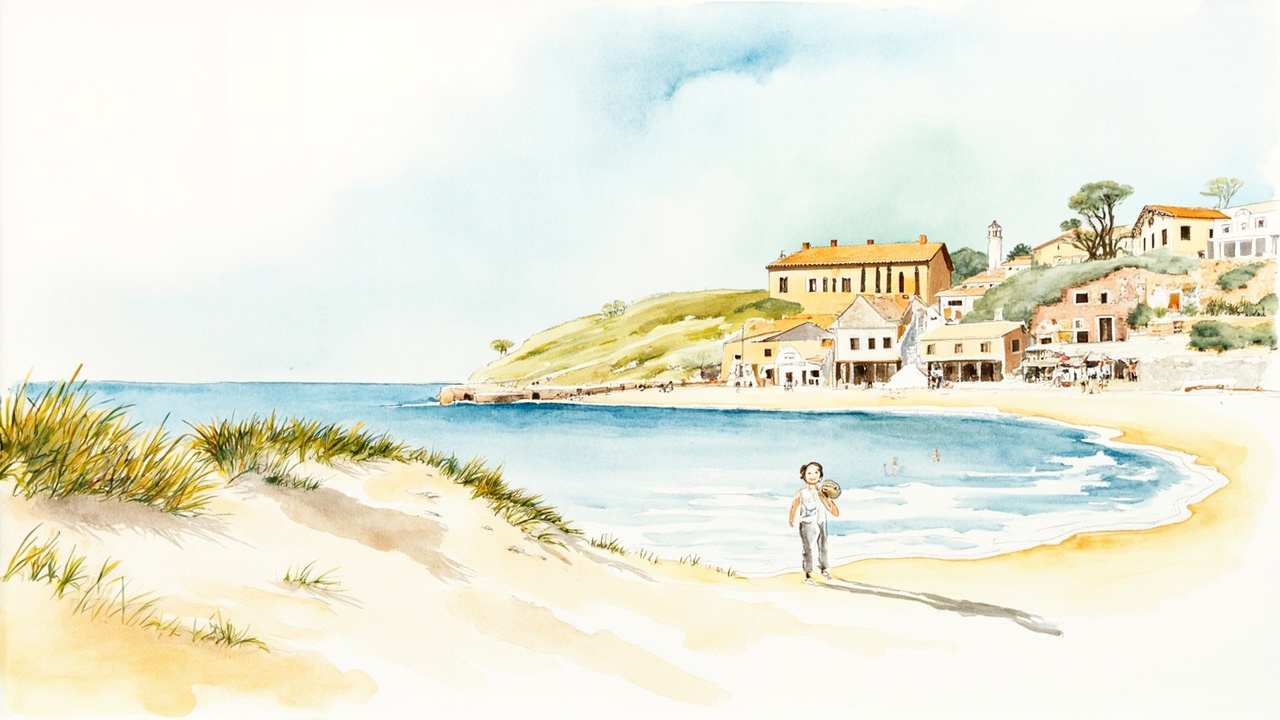
The City Council of Malpica de Bergantiños has a new ordinance regulating the rational and sustainable use of its beaches, after the Official Gazette of the Province of A Coruña published the full text this Monday, October 26, in issue number 204, under announcement 2026/6866. The regulation, initially approved by the municipal Plenary in an ordinary session on July 30, 2026, enters into force upon its publication after the file passed the public information process without claims or suggestions. The text occupies fourteen pages of the gazette and bears the signature of the mayor, Eduardo J. Parga Veiga, dated October 21, 2026.
The processing followed the procedure of article 49 of Law 7/1985, regulating the Bases of the Local Regime, and the prior consultation of article 133 of Law 39/2015, published on the website and the municipal electronic office on March 18, 2026, with a period of twenty business days that received no contributions. Entry into force occurs once the period of article 65.2 of the same law has elapsed, after the text was sent to the State Administration and the Autonomous Community of Galicia on September 25, 2026. A contentious-administrative appeal may be filed against the ordinance before the High Court of Justice of Galicia within two months from the day following publication.
Ten beaches on a protected coast
The scope of application covers the beaches listed in annex I of the text, all of them within the municipal boundary:
- Area Maior and Canido, the two urban beaches, linked to the town center and tourist activity.
- Seaia, Seiruga, and Seiruga pequena or Area Pequena, with dune systems of ecological interest.
- Beo, sheltered from northeast winds.
- Barizo or Praia do Porto, in the parish of Barizo.
- San Miro, As Torradas, and Riás, exposed to the open sea.
The preamble justifies the regulation due to the belonging of the Malpica coast to protected areas of the Natura 2000 Network, mainly the SAC Costa da Morte ES1110005 and, in some cases, also the Special Protection Areas for Birds. The ordinance refers to Law 22/1988, on Coasts, Law 4/2023, on the integrated management and planning of the Galician coast, and Royal Decree 1341/2007 on the quality of bathing waters. It also creates a Beach Management Committee, chaired by the department with environmental competencies and with a minimum annual meeting, in which surf clubs, sports associations, and a representative of the fishermen’s guild may participate.
Prohibitions that change the use of the beach
The text prohibits, throughout the year and at any time, the installation of tents, camping, and bivouacking on the beaches, as well as reserving space by leaving objects when the owner is not present. Municipal staff or the Local Police may remove irregularly installed elements and deposit them in municipal facilities.
Fire and grills, gas cylinders, recreational pyrotechnic devices, unauthorized street vending, disruptive sound devices, advertising without a permit, and the parking or circulation of vehicles on the beach—except for emergency, cleaning, and people with functional diversity—are also banned. Fishing from the shore and breakwaters is prohibited between 10:00 and 22:00 during the bathing season, and underwater fishing between sunset and sunrise. In unmarked sections, the bathing zone is understood as a contiguous strip of 200 meters of sea on beaches and 50 meters on the rest of the coast.
Dunes, dogs, and smoke-free beaches
In dune systems, whether marked or not, no use is permitted, including walking or staying, and cleaning must be done exclusively by hand and selectively so as not to alter the vegetation or the profile of the area. The circulation or presence of dogs and other domestic animals is prohibited during the bathing season without time exceptions, although the council may enable signaled spaces, and the presence of rescue, aid, and assistance dogs is authorized.
The text allows for the declaration of “smoke-free beaches” and the prohibition of tobacco and nicotine products there, with signage on the beach itself and on the municipal website. Regarding safety, bathing is prohibited when the red flag is hoisted, it is recommended not to venture more than 50 meters from the shore, and abandoned navigation equipment must be removed within 24 hours. In the event of stranded wildlife, citizens must notify the lifeguard service or 112.
Fines from 100 to 3,000 euros
The sanctioning regime, which applies in the absence of specific sectoral regulations, establishes three scales:
- Minor infractions: from 100.00 to 750.00 euros.
- Serious infractions: from 751.00 to 1,500.00 euros.
- Very serious infractions: from 1,501.00 to 3,000.00 euros.
Minor infractions expire after six months, serious ones after two years, and very serious ones after three, while the sanctions expire after one, two, and three years respectively. The procedure must be resolved and notified within a maximum period of six months from its initiation.
The regulation replaces the municipal provisions that regulated these matters and arrives with a tight schedule: the 2027 bathing season will be the first to be managed entirely under the new framework. For residents, the hospitality industry, and tourism, the main change is that the conditions for the use of the coastline no longer depend on scattered criteria and are now fixed in a single text, with a closed list of beaches, specific schedules, and quantified sanctions.
Source: Official Gazette of the Province of A Coruña, no. 204, October 26, 2026, Local Administration, pp. 1-14 (official reference: 2026/6866).