Boletín Oficial de la Comunidad de Madrid · 22 Oct 2026 · 3 vistas
Madrid declares transhumance, a still-living activity, an Asset of Cultural Interest
Por FactBox Admin
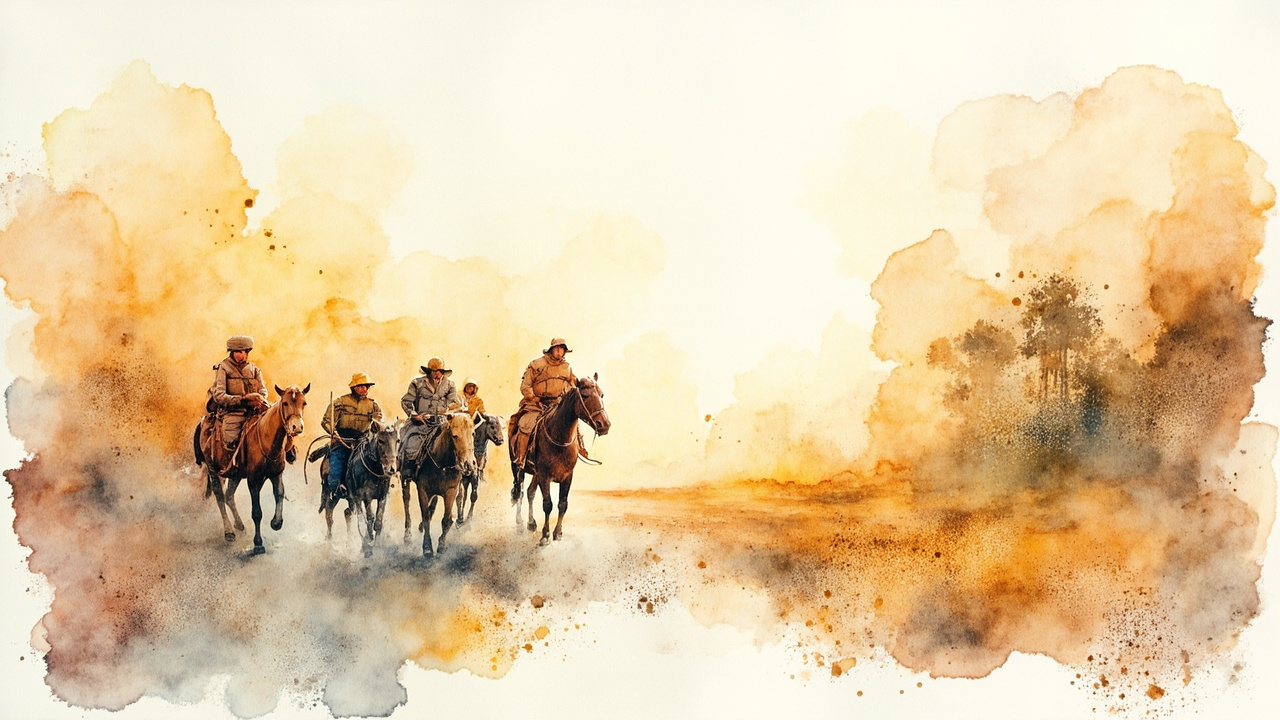
The Governing Council of the Community of Madrid declared transhumance as an Asset of Cultural Interest of Intangible Heritage on October 21 through Decree 87/2026, published in the OFFICIAL GAZETTE OF THE COMMUNITY OF MADRID no. 252, of October 22, 2026 (pp. 87 to 100). The declaration, which takes effect this Friday, October 23, provides legal protection to an activity that no longer covers long distances on foot but continues to be practiced in the region through trasterminancia. The text bears the signature of President Isabel Díaz Ayuso and the Councilor for Presidency, Justice, and Local Administration, Miguel Ángel García Martín, acting on behalf of the head of Culture, Tourism, and Sport.
A seven-month process without objections
The process began with the Resolution of March 6, 2026, from the General Directorate of Cultural Heritage and the Spanish Language Office, which initiated the proceedings under Law 8/2023, of March 30, on Cultural Heritage of the Community of Madrid. The one-month public information period opened with the publication in the regional gazette on March 24, and there is no record of any objections being filed.
The Plenary of the Regional Council of Cultural Heritage gave its unanimous approval in the session of March 25, 2026. Neither the Madrid Institute for Rural, Agricultural, and Food Research and Development (IMIDRA) nor the Department of Ecology of the Autonomous University of Madrid issued a report; therefore, both were considered favorable in accordance with Article 20.3 of the law. The asset was preventively registered with codes PI0031839 and RBIC-I-2026-000001, and the decree orders its registration in the Registry of Assets of Cultural Interest and in the Cultural Heritage Catalog, with notification to the Ministry of Culture.
Four royal livestock routes and 4,104 kilometers of livestock paths
The annex of the regulation frames the manifestation within four of the categories of Article 17 of Law 8/2023: traditions and oral expressions; social practices, rituals, and festive events; knowledge and practices concerning nature; and traditional craftsmanship and gastronomy. Its current scope is concentrated in the northern region, with its southern limit at the Casa de Campo, and encompasses the Sierra Norte, the Guadarrama Basin, and the Upper Manzanares Basin.
The Community of Madrid is the autonomous community with the highest density of livestock paths, which occupy 1.6% of its territory:
- 4,104 kilometers of layout, with only nine of the 179 municipalities lacking livestock paths.
- Cañadas (royal routes) 75 meters wide, cordeles 37.5, veredas 20, and smaller coladas.
- Four major routes: Cañada Real Segoviana, Cañada Real Galiana, Cañada Real Soriana Oriental, and Cañada Real Leonesa Oriental.
These routes are protected by Law 8/1998, of June 15, on Livestock Routes of the Community of Madrid, which prohibits hunting, advertising, extractive activities, dumping, paving, and the unauthorized transit of motor vehicles along its path.
The last herds: from Los Apisquillos to La Pedriza
The file documents the examples that keep the practice alive. The Los Apisquillos Agroforestry Cooperative moves about 450 sheep of the Negra Colmenareña breed every May from the Casa de Campo to Puebla de la Sierra, in a twenty-day journey that also serves as natural brush clearing against fires. Livestock farmer Javier de los Nietos Delcán carries out two annual routes with 300 goats crossed with the native Guadarrama breed, one of them to the mountains of El Atazar as part of the “firefighter herds” program.
In the west, cattle drives persist between El Escorial and Los Molinos, and the Avileña Negra Ibérica breed herds from Moralzarzal, El Boalo, and Manzanares el Real go up to graze in La Pedriza between June and October. The text also recognizes the shepherdesses of Berzosa and Serrada for the incorporation of women into the trade.
Risks and safeguards
The decree identifies the lack of generational renewal, the shortage of labor, the hardship of the tasks, the scarce association among livestock farmers, and sanitary restrictions as the main threats. The Community participates, through IMIDRA, in the Transhumance Safeguard Plan directed by the Ministry of Culture, and maintains the Intangible, Ethnographic, and Industrial Heritage Database.
The declaration is based on precedents such as the inclusion of transhumance in 2023 on the UNESCO Representative List of the Intangible Cultural Heritage of Humanity and its status as a representative manifestation of intangible cultural heritage, granted by Decree 385/2017, of April 8, within the framework of Law 10/2015, of May 26.
Protection arrives when long-distance transhumance is already residual, but it directly affects those who still practice it: livestock farmers, city councils with livestock routes in their jurisdiction, and owners of land crossed by cañadas (drovers’ roads). The decree converts this historical network into protected cultural heritage and obliges administrations to coordinate with the bearer communities to conserve it, a task that the text itself links to fire prevention, biodiversity, and the identity of the Sierra Norte.
Source: OFFICIAL GAZETTE OF THE COMMUNITY OF MADRID, no. 252, of October 22, 2026, section I.C “Other Provisions”, pp. 87-100 (official reference: BOCM-20261022-20, Decree 87/2026).
Fuente: Boletín Oficial de la Comunidad de Madrid · Boletín Oficial de la Comunidad de Madrid de 2026-10-22