BOP de Ciudad Real · 12 Nov 2026 · 12 vistas
Llanos del Caudillo implements the TNR method to regulate its feline colonies
Por FactBox Admin
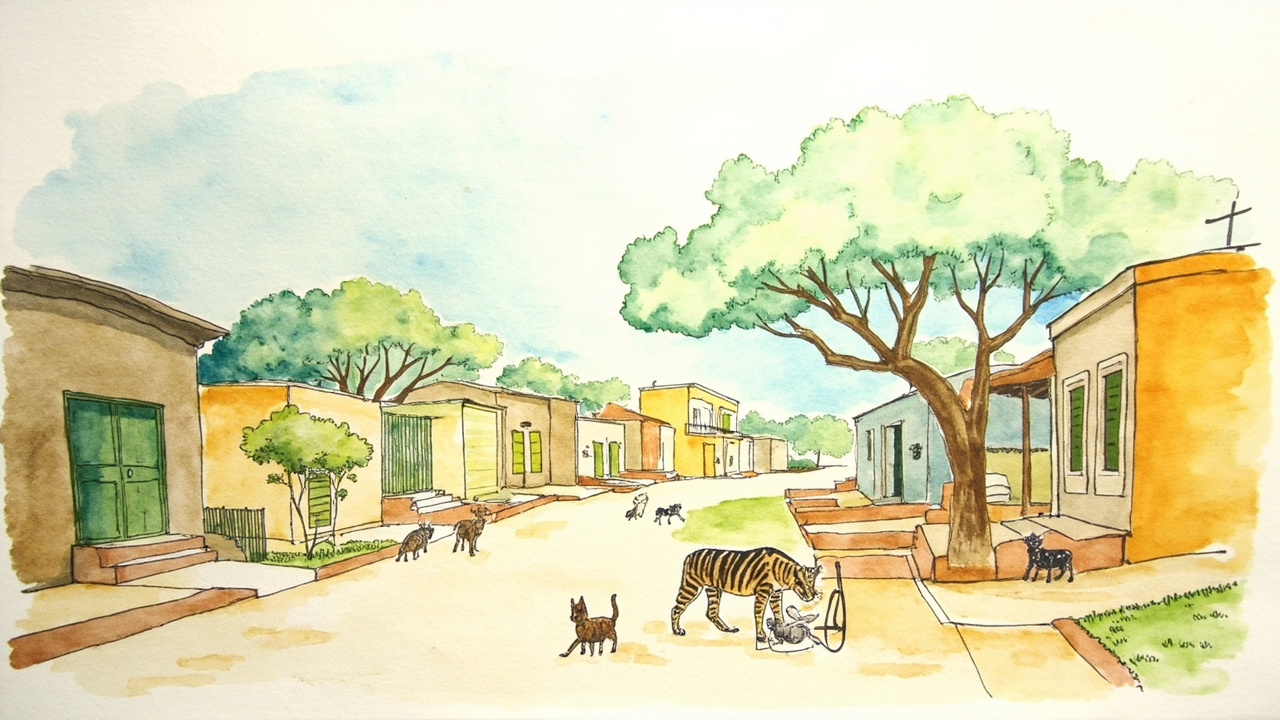
The City Council of Llanos del Caudillo has finalized the Ordinance regulating the management protocol for feline colonies using the TNR method (trap, neuter, and return), the full text of which is published in the Official Gazette of the Province of Ciudad Real number 219, dated November 12, 2026, in the CITY COUNCILS section (announcement number 3693, page 10892). The agreement was reached without any claims or suggestions during the public information process and was signed by the mayor, Andrés Arroyo Valverde, on November 10, 2026. The regulation establishes obligations for individuals who feed the cats and for the general public, turning the management of the colonies into an organized municipal competence.
The origin of the regulation lies in the agreement of the Plenary Session on July 30, 2026, which initially approved the ordinance. The notice of public exhibition was published in the Official Gazette of the Province of Ciudad Real number 195, dated September 9, 2026, and opened a period of thirty business days for allegations, which remained vacant. Since no claims were filed, the agreement is finalized and the full text is published in accordance with Article 17 of the TRLHL, entering into force once the regulation is published in full according to Article 70.2 of Law 7/1985, regulating the bases of the local regime.
Sterilize at least 75% of each censused colony
The central objective is to achieve the sterilization of at least 75% of the cats in each censused colony, acting continuously and, as far as possible, with massive annual trapping programs. The ordinance classifies the colonies into three levels based on that percentage:
- Uncontrolled colony: less than 50% of individuals sterilized.
- Colony under control: between 50% and 75%.
- Controlled colony: more than 75%.
The City Council will contract, depending on the available budget, a trapping, sterilization, and release service for feral cats that will be made available to authorized managers. The use of this service will require the prior approval of the coordinator and the awarded company, who will set the calendar and the order of preference for the sterilizations. The regulation also mandates the annual submission of a report detailing the number of sanitary actions per colony, the degree of control achieved, and a comparison between the initial budget and the final cost.
Accredited volunteers with identification cards
The network of volunteers is divided into three roles: the coordinator, the action managers, and the management support staff. The areas of action are trapping and return, social networks, adoptions, and education, awareness, and civility campaigns. All act voluntarily and without remuneration.
To obtain authorization, it is necessary to be of legal age, submit the application from Annex I with the approval of the competent Mayor’s Office or Council, and sign a responsible declaration stating that there are no reports of animal abuse. The authorization is associated with specific colonies and is accredited by a card, physical or digital, which identifies the person to the Police and security forces.
The revocation regime includes:
- A prior hearing of twenty days before resolving.
- Total inactivity for six months as a cause for revocation.
- Reopening of the application one year after revocation.
- Prohibition of new authorization after a second revocation.
Feeding points: dry food, 20 meters and 80 centimeters
Colonies may only be located on municipal land or public domain; the City Council will not authorize any in private spaces. Feeding points must be located more than 20 meters from educational, cultural, sports, or health centers, may not be installed in parks or children’s play areas, and, if they are on the sidewalk, must leave a minimum passage of 80 centimeters free. On residential facades, written authorization from the owner or the community will be required.
Only authorized persons may feed the cats, and only dry food and water will be permitted at the designated points, with an express prohibition of homemade food. Each colony will have a unique number and a standardized plasticized DIN A3 size sign, and its data will be entered into a digital database accessible to the public, in compliance with Organic Law 3/2018 on data protection.
Fines of up to 1,500 euros and six months to adapt
The sanctioning regime classifies as minor infractions the breaking or damaging of signs, feeders, and waterers, as well as any action aimed at preventing the settlement of the authorized colony. Fines reach 750 euros in the case of minor offenses and range between 750.01 and 1,500 euros for serious offenses, a category to which the third minor offense of the same nature in one year is moved. The sanction is compatible with the restoration of the altered situation and compensation for damages.
The procedures for capture, sterilization, and release are referred to the tender specifications and Law 9/2017 on Public Sector Contracts, while the animal protection regime is based on Law 7/2023, of March 28, on the protection of the rights and welfare of animals. Existing colonies that do not meet the requirements will have a maximum period of six months to adapt, and an administrative appeal may be filed against the agreement before the Administrative Litigation Chamber of the High Court of Justice of Castilla-La Mancha, based in Albacete, within two months.
The ordinance transforms a previously informal practice, the feeding of stray cats, into a regulated activity with identified responsible parties and sanitary controls. For residents, it provides clear rules on where feeding stations can be located and who may use them; for the City Council, it establishes the obligation to maintain a sterilization service and to report annually on the evolution of the feline population.
Source: Official Gazette of the Province of Ciudad Real, no. 219, November 12, 2026, CITY COUNCILS section, page 10892 (official reference: announcement number 3693, CVE D6EddHU/JNNsnE6L6TNy).