BOE · 30 Oct 2026 · 14 vistas
The Pretori Tower of Tarragona, declared a Site of Democratic Memory
Por FactBox Admin
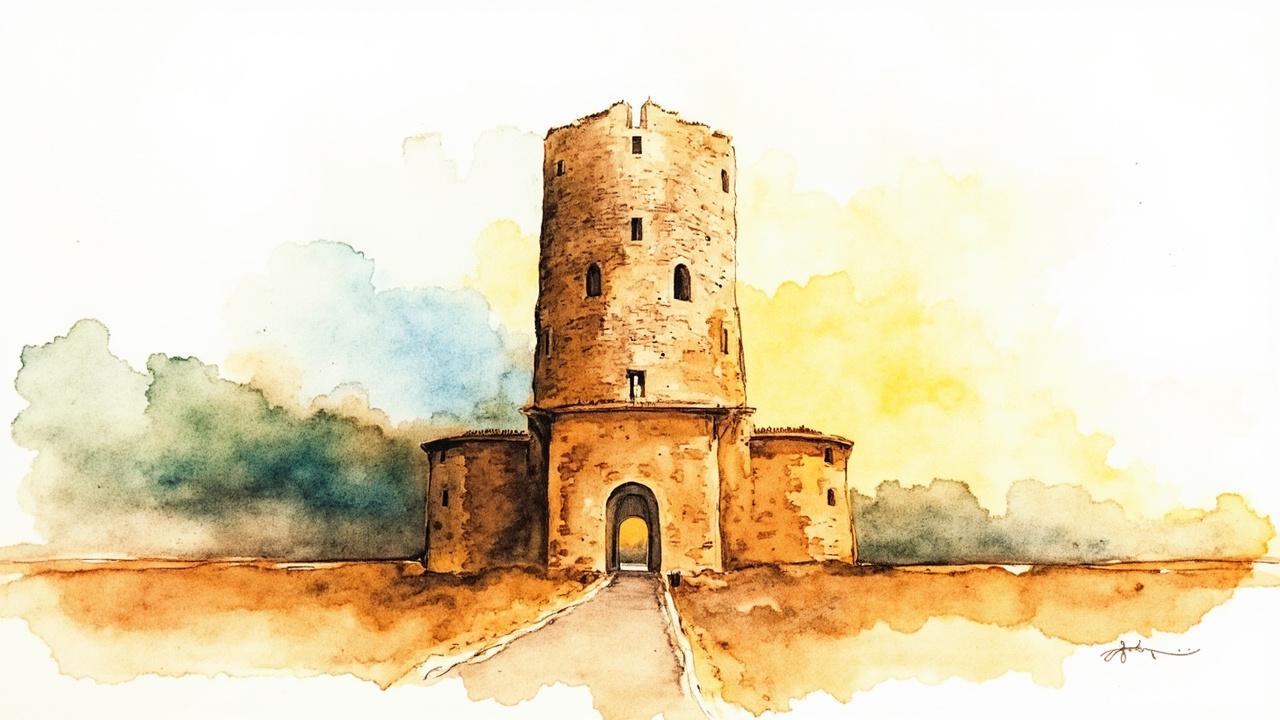
The Secretary of State for Democratic Memory has declared the Pretori Tower a Site of Democratic Memory. The former provincial prison of Tarragona was converted into a center for political repression following the Francoist occupation of the city, through which more than 6,900 people passed between 1939 and 1948. The resolution, signed on October 21, 2026, by the Secretary of State Fernando Martínez López, is published in the Official State Gazette (BOE) no. 270, of October 30, 2026, Section III, page 145649, with the official reference BOE-A-2026-22777.
The declaration is agreed upon under article 50.4 of Law 20/2022, of October 19, on Democratic Memory, at the proposal of the competent General Directorate on the matter, and in accordance with Law 39/2015, of October 1, on Common Administrative Procedure. The proceedings were initiated by Agreement of November 14, 2025, of the Secretary of State for Democratic Memory, published in the BOE of November 22, 2025, and in February 2026, the General Directorate for the Promotion of Democratic Memory opened the mandatory public information period.
The text locates the asset in the upper part of Tarragona and describes its municipal ownership: the geographic coordinates are 41° 6’ 59.4’’ N, 1° 15’ 28.8’’ E, and ownership corresponds to the Tarragona City Council. The declaration shall take effect from the date of publication of the resolution, and the asset will be registered in the Inventory of Sites of Democratic Memory.
From Roman tower to the “Presó de Pilats”
The resolution recalls that the tower was built between the end of the 1st century BC and the beginning of the 1st century AD as a stair-tower for the provincial forum of Tarraco, capital of Hispania Citerior, and that it connected the Roman circus with the forum’s representation square. In the Middle Ages, it was transformed into a fortress and later into a royal residence, the Castell del Rei or Palau Reial, and between the 16th and 18th centuries, it assumed administrative and military functions.
From the 19th century and during much of the 20th century, the building was adapted as the provincial prison of Tarragona, popularly known as the “Presó de Pilats”. With the outbreak of the Spanish War, it passed into Republican hands and, after the occupation of Tarragona by Francoist troops on January 15, 1939, it became a political prison of a repressive nature.
More than 1,300 inmates in a building for one hundred
The official account estimates that more than 6,900 people passed through its cells between 1939 and 1948, mostly Republicans, trade unionists, teachers, militiamen, or civilians linked to the defeated side. The actual capacity was about 70 to 100 prisoners, but it came to house more than 1,300 inmates simultaneously, according to data from the Municipal Archive of Tarragona.
The conditions described are those of overcrowding, lack of ventilation, food shortages, and outbreaks of diseases such as scabies or lice. At least 70 prisoners died due to prison conditions, and more than 650 were taken from the tower to be executed at the nearby Muntanya de l’Oliva, one of the main execution sites of Francoism in Tarragona. Many inmates were tried in summary courts-martial or disappeared without a trace.
The building continued to function as a provincial prison until 1953, when the new prison was inaugurated on Avenida República Argentina in Tarragona. Since then, it has undergone restorations and today exhibits Roman remains; it is incorporated into the Museu d’Història de Tarragona and forms part of the Tarraco archaeological ensemble, declared a World Heritage site by UNESCO in the year 2000.
Dissemination, signage, and appeal process
The resolution does not establish specific protection measures other than general guarantees of durability, but it does include a package of dissemination and interpretation measures for commemorative, honorary, didactic, and reparative purposes:
- Explanatory audiovisual and digital resources promoted by the General State Administration.
- Installation of plaques, panels, or an interpretive memorial marker.
- Signage of a point of recognition for the victims with public interest data regarding the events.
- Geolocation and a file with photographs and audiovisuals on the web portal of the Secretary of State for Democratic Memory.
- Institutional mechanisms to integrate the site into similar international circuits for the construction of democratic memory.
Against the resolution, which ends the administrative process, an optional appeal for reversal may be filed before the same body within one month of its publication, or a contentious-administrative appeal may be filed before the Contentious-Administrative Chamber of the National Court.
The declaration comes after years of demands from local authorities and historical memory associations, and transforms a heritage building visited by tourists into a space of official recognition for the victims of Francoism in Tarragona. The State thus assumes the obligation to signpost, document, and disseminate what occurred within its walls, and enters the property into the state inventory of places of democratic memory.
Source: Official State Gazette, no. 270, of October 30, 2026, Sec. III. Other provisions, p. 145649 (official reference: BOE-A-2026-22777).