BOP de Burgos · 28 Sep 2026 · 7 vistas
La Horra approves the rural roads ordinance and its sanctioning regime
Por FactBox Admin
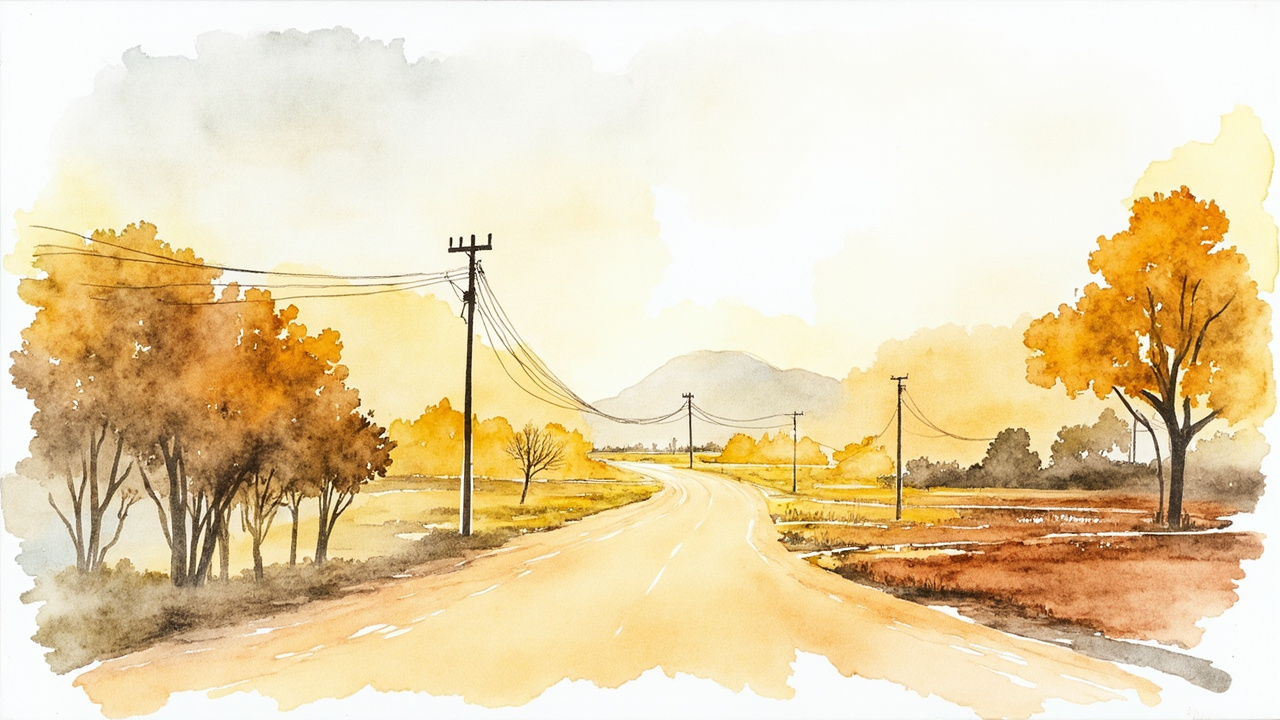
The City Council of La Horra has definitively approved the regulatory ordinance for municipal rural roads, the text that establishes the use, enjoyment, maintenance, and respect of the roads, paths, and public ways of the town. The agreement of the Plenary was adopted on June 26, 2026, and is published in full in the Official Gazette of the Province of Burgos number 184, dated September 28, 2026, section III. Local Administration, with the official reference BOPBUR-2026-03976.
The approval is definitive because no claims were filed during the public exhibition period, which automatically elevated the provisional plenary agreement to definitive status. The Plenary adopted it unanimously, in accordance with articles 22.2.d) and 49 of Law 7/1985, of April 2, regulating the Bases of the Local Regime. The text is issued under the protection of articles 133 and 140 of the Spanish Constitution and articles 25.2 d) and 106 of the aforementioned Law 7/1985, and consists of 23 articles distributed across four chapters, in addition to an additional provision. The announcement is signed by the mayor, Jesús Daniel Ronda Esteban, in La Horra on September 15, 2026.
Common use, with limits on heavy traffic
The ordinance defines rural roads as municipal public domain assets, inalienable, imprescriptible, and exempt from seizure, and establishes that their utilization is for general common use, equally for all citizens. Proper uses are recognized as communication with bordering towns, access to estates, the movement of agricultural vehicles and machinery, and livestock transit, along with agricultural, livestock, forestry, or leisure activities located within the municipal district.
- General prohibition of transit for vehicles over 30 tons, except with special permission from the city council.
- Mandatory municipal permit for special uses, with a bond to answer for possible damages.
- Maximum duration of the special use authorization: six months.
- Possibility of temporary occupations and the installation of water pipelines, sanitation, electricity, telecommunications, lighting, or irrigation, with a fee and bond.
- Financing through allocation in the municipal budgets and, where applicable, special contributions from direct beneficiaries, particularly the owners of adjacent estates.
Mandatory distances for plowing, fencing, and irrigation
The chapter on the protection of the public domain details the obligations of the owners of adjacent estates, which are the core of the regulation for the agricultural sector.
- Plowing: minimum distance of one meter from the outer edge of the road; 50 centimeters if a ditch exists.
- Prohibition of turning vehicles or machinery on the road during agricultural activities.
- Fencing and constructions: no less than three meters from the outer limit of the road; five meters from the axis when the limit is not defined.
- Tree plantations: prior municipal authorization if located less than six meters from the outer edge.
- Irrigation: minimum distance of one meter, using sector sprinklers or components that prevent the road from flooding.
- New accesses: minimum width of 5 meters for a single estate and 8 meters if shared, with a pipe of minimum diameter of 40 centimeters.
- Prohibition of depositing materials, stones, crop residues, or containers on the roads and their ditches.
Fines of up to 10,000 euros
Infractions are classified as minor, serious, and very serious, and the competent body to resolve the sanctioning procedure is the mayor. Fines range from 100 to 1,000 euros for minor offenses, 1,001 to 5,000 euros for serious offenses, and 5,001 to 10,000 euros for very serious offenses. Among the most penalized behaviors are the alteration of milestones and boundary markers, unauthorized works, unauthorized breaking or planting on the road or its affected area, and the obstruction of inspection work.
The offender must also repair the damage caused within a period not exceeding six months, and the city council may impose coercive fines of 10% per month, up to a maximum of ten monthly payments, if the cost of the repair is not paid. The statutes of limitations are six months for minor offenses, one year for serious offenses, and two years for very serious offenses. Appeals for reversal may be filed against the Mayor’s resolutions within one month, and contentious-administrative appeals within two months; against the agreement itself, an appeal may be filed before the Contentious-Administrative Chamber of the High Court of Justice of Castilla y León based in Burgos, within two months from the day following publication.
The regulation arrives with the stated objective of guaranteeing the conservation of a road network essential for the agricultural and livestock activity of the municipality. For farmers, livestock breeders, and owners of adjacent estates, the ordinance represents a clear framework of rights and duties: it consolidates free access to the roads, but establishes distances, permits, and sanctions that will be applied from its entry into force.
Source: Official Gazette of the Province of Burgos, no. 184, of September 28, 2026, section III. Local Administration, pp. 7-17 (official reference: BOPBUR-2026-03976).