BOP de Cáceres · 08 Oct 2026 · 15 vistas
The Provincial Council of Cáceres assumes urban planning discipline for the municipality of Tiétar
Por FactBox Admin
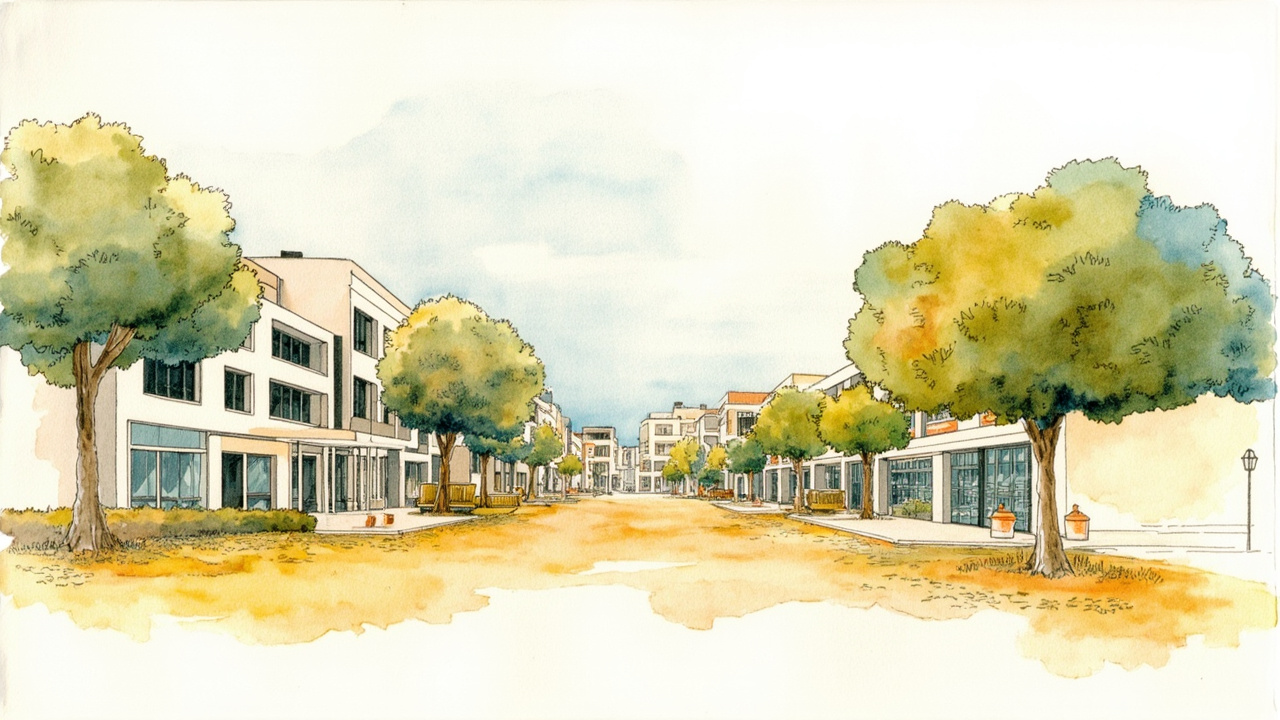
The Plenary of the Provincial Council of Cáceres unanimously accepted, in an ordinary session on September 24, 2026, the accession of the Tiétar City Council to the inter-administrative agreement that delegates the competencies of urban planning discipline to the provincial institution. The agreement is published in the Official Gazette of the Province of Cáceres number 193, dated October 8, 2026, with reference BOP-2026-4708 (pages 22960 to 22962). With this acceptance, the Provincial Council begins to process and sanction illegal urban development in the municipality.
The framework agreement was approved by the provincial Plenary on March 27, 2025, and published in the BOP on April 3, 2025. Its legal basis is the thirteenth additional provision of Law 11/2018, of December 21, on Sustainable Territorial and Urban Planning of Extremadura, introduced by Law 5/2022, of November 25, which enables Extremaduran municipalities to delegate urban inspection, the protection of legality, and sanctioning powers to their provincial council. The model is aimed at municipalities with fewer than 20,000 inhabitants.
The effectiveness of the delegation requires three steps: an agreement by the municipal Plenary, acceptance by the Plenary of the Provincial Council, and publication in the official provincial gazette. The Tiétar City Council approved its agreement in the Plenary of September 7, 2026, and the provincial agreement is also included in the summary of plenary agreements published in the BOP of October 1, 2026 (BOP-2026-4546).
Scope of the delegation
The Provincial Council assumes, with its technical and human resources, the urban inspection linked to discipline, the protection of legality, and the sanctioning power over acts of transformation, construction, building, or use of the soil or subsoil without an enabling title, or against the conditions thereof, which are incompatible with current planning and may be classified as an urban planning infraction. The delegation includes execution procedures and the resolution of any administrative appeals filed.
Excluded are ordinary urban planning control, which continues to be exercised by the City Council, as well as measures to restore legality through the legalization of the act and the initiation of procedures for the suspension and annulment of legitimizing administrative acts. If legalization is appropriate, the Provincial Council returns the file to the City Council; in municipalities with fewer than 1,000 inhabitants, the return is accompanied by the prior technical and legal reports, and the Provincial Council instructs and resolves the linked sanctioning file.
Deadlines, financing, and monitoring
The agreement model, already applied in other municipalities of the province, establishes these conditions:
- Five-year term, extendable for up to four more years, in accordance with article 23.9 of Law 3/2019, of January 22, on the guarantee of municipal autonomy of Extremadura.
- Revenue distribution: 60% of the sanctions and coercive fines collected for the Provincial Council and 40% for the delegating City Council.
- Collection: the Autonomous Body for Tax Collection and Management (OARGT) of the Provincial Council processes collection through voluntary and executive channels.
- Legal defense: the Legal Office of the Provincial Council assumes representation in court; the costs of the court representative, expert reports, and legal costs are borne by the Provincial Council.
- Monitoring: a Management and Monitoring Commission composed of the Secretary of the City Council, the Councilor for Urban Planning, and the Head of the Urban Planning Discipline Section, chaired by the Director of the Area of Finance and Assistance to Local Entities.
- Prejudiciality: if evidence of a crime appears, the Provincial Council shall notify the Public Prosecutor’s Office and the City Council.
Plenary agreement and adhering municipalities
The Provincial Council’s agreement consists of four points: accepting the delegation and approving the agreement; publishing the acceptance in the BOP; authorizing the President of the Provincial Council to sign the agreement; and warning of the two-month deadline for a contentious-administrative appeal before the Contentious-Administrative Court of Cáceres, or one month for the optional appeal for reversal. The announcement is signed by Fernando López Salazar, Director of the Areas of Presidency, Finance, and Assistance to Local Entities, and the agreement is signed by the Chief Clerk, Álvaro Casas Avilés.
In addition to Tiétar, the following have already formalized their delegation:
- Robledillo de Gata, agreement published in the BOP of September 17, 2026 (BOP-2026-4331).
- Torreorgaz, agreement published in the BOP of September 24, 2026 (BOP-2026-4416).
The change transfers the investigation and sanctioning of illegal urban planning in municipalities with fewer than 20,000 inhabitants to the Provincial Council, where the lack of own technical and legal means makes it difficult to open and resolve proceedings. For the residents of these towns, the processing of an urban planning complaint ceases to depend exclusively on the city council and passes into the hands of the provincial institution, which also retains the majority of the revenue from sanctions.
Source: Official Gazette of the Province of Cáceres, no. 193, October 8, 2026, Section I - Local Administration, pp. 22960-22962 (official reference: BOP-2026-4708).