관보 (Republic of Korea Official Gazette) · 26 Oct 2026 · 1 vistas
Korea Designates Four Buddhist Treasures, Led by Pyeongchang Sangwonsa Statues
Por FactBox Admin
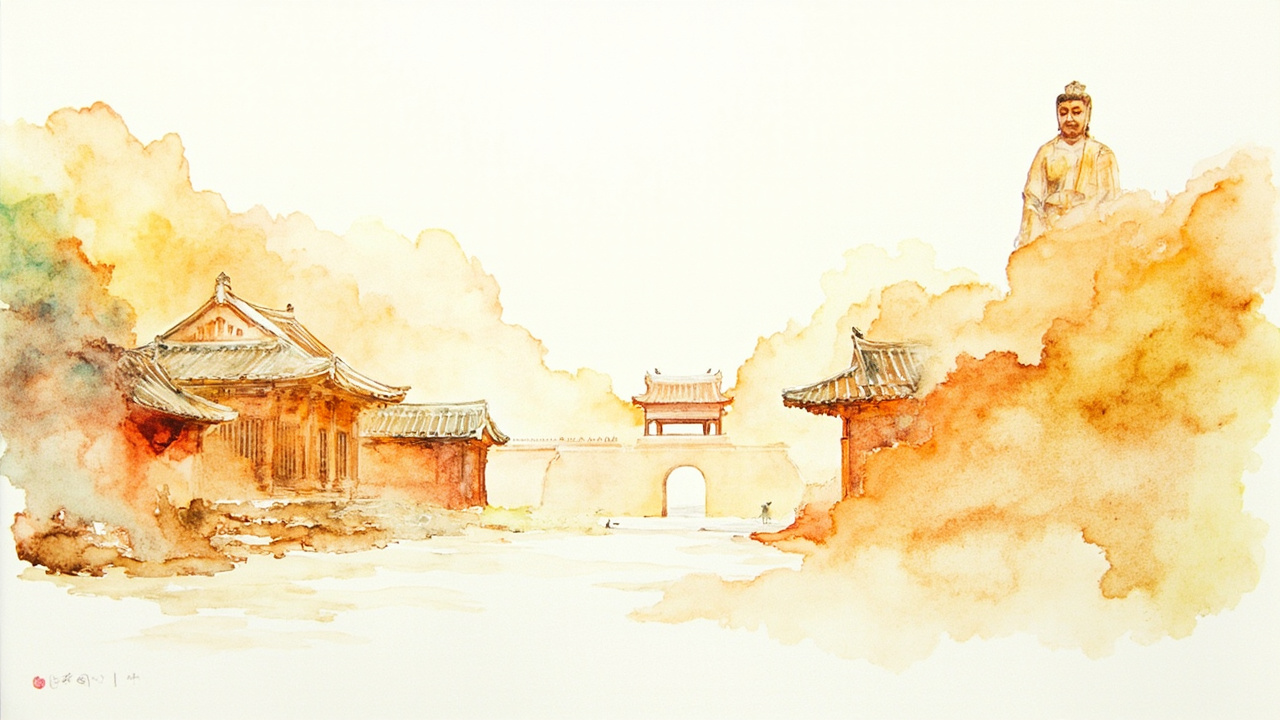
The National Heritage Administration has designated four Buddhist cultural properties as national designated cultural heritage (treasures), including the Pyeongchang Sangwonsa Buddha triad and sixteen arhat statues with their votive deposits. The designation was made by the Administrator of the National Heritage Administration and published in Official Gazette No. 21347 of 26 October 2026 as National Heritage Administration Notice No. 2026-0142. Under the notice, the designation takes effect on the gazette publication date, 26 October 2026.
The notice was issued under Article 23 of the Cultural Heritage Act, which governs designation of national cultural heritage, and Article 28, which requires public notification of such decisions. The four items had been announced in advance as candidates in National Heritage Administration Notice No. 2026-0491 of 3 September 2026, which opened a comment period of at least 30 days. The designation notice states that the total number of items designated is four, and refers readers to an annexed statement of reasons for each object. Enquiries are directed to the Cultural Heritage Policy Division of the Cultural Heritage Bureau at the National Heritage Administration in Daejeon.
Statues from Sangwonsa and their votive deposits
The largest designation covers the Pyeongchang Sangwonsa Shakyamuni triad and sixteen arhat statues together with their votive deposits, held by the Jogye Order of Korean Buddhism at Sangwonsa and curated by the Woljeongsa Sacred Treasure Museum in Jinbu-myeon, Pyeongchang County, Gangwon Special Self-Governing Province. The group comprises 21 statues and 30 votive items in 34 pieces, and was previously registered as Gangwon tangible cultural heritage on 12 August 2011.
According to the votive invocation texts, the ensemble was originally installed at Unboksa in Yecheon, North Gyeongsang Province; missing clay images were remade in wood in 1711, and the group was moved to Sangwonsa around 1885–1886 and repainted with royal privy-purse funds before being enshrined in the temple’s Yeongsanjeon hall. The clay figures share the style of late 15th-century sculpture, while a dharani printed in 1467 found inside the deposits supports that dating. The 1711 wooden images are attributed to the little-known monk-sculptor Hyeju, working with Jeonghaeng and Saeon.
A 1725 painting set from Songgwangsa
The Suncheon Songgwangsa Fifty-Three Buddhas Assembly Painting consists of seven Buddhist paintings and 17 votive items in 31 pieces, dated to 1725, the first year of King Yeongjo. Six panels are owned by the Jogye Order of Korean Buddhism through Songgwangsa and its sacred treasure museum; the sixth panel is state property held by the National Museum of Korea. The works are coloured on hemp cloth and were produced by 26 monk-painters led by Uigyeom, together with Cheojeong, Bung-an, Jeuksim and Haengjong.
The set was made for the Buddha Hall of the temple and comprises a central seven-Buddha painting flanked by two nine-Buddha paintings, two thirteen-Buddha paintings and two five-Buddha paintings. The notice cites the complete survival of the ensemble, the clarity of its date and original installation, and the rare inclusion of name labels beside each Buddha as grounds for protection.
A bronze bell and a 1485 sutra
The Gongju Magoksa bronze bell is a single cast bell 105.0 cm tall with a mouth diameter of 75.4 cm, held by the Jogye Order of Korean Buddhism at Magoksa in Sagok-myeon, Gongju, South Chungcheong Province, and previously registered as provincial tangible heritage on 8 January 1976. Its cast inscription identifies monk-craftsman Boeun as the maker in 1654, the fifth year of King Hyojong, working with Beophyeon, Minhwa, Haksun and Hakjun; the bell was originally intended for Angoksa and was moved to Magoksa when that temple closed in the mid-18th century.
The Buljeongsim Darani Sutra in Chinese and Korean vernacular is a six-volume single book held by Seoul National University and its central library in Gwanak-gu, Seoul, measuring 31.3 by 19.0 cm. The Chinese volumes were printed from woodblocks produced in 1485 under the patronage of Queen Dowager Insu, while the vernacular volumes were printed with metal type cast in 1455, the first year of King Sejo. The notice states that no comparable case of a combined Chinese and vernacular edition printed from the original plates has previously been designated.
What the designation changes
- Sangwonsa and the Woljeongsa Sacred Treasure Museum in Pyeongchang, Gangwon Special Self-Governing Province.
- Songgwangsa and its sacred treasure museum in Suncheon, South Jeolla Province, with one panel held by the National Museum of Korea.
- Magoksa and its sacred treasure museum in Gongju, South Chungcheong Province.
- Seoul National University and its central library in Gwanak-gu, Seoul.
For the four owners and managers, the change moves the objects from provincial or no protection to the national register, bringing state conservation support and stricter rules on repair, relocation and export. It also places the temples, the national museum and the university library under direct obligations in managing assets that remain, in three cases, in religious use.
Source: 관보 (Official Gazette of the Republic of Korea), No. 21347, 26 October 2026, section I (고시), p. 27 (official reference: National Heritage Administration Notice No. 2026-0142).