BOP de Cáceres · 28 Oct 2026 · 3 vistas
Electoral Board refuses to grant public space to Vox and warns City Council
Por FactBox Admin
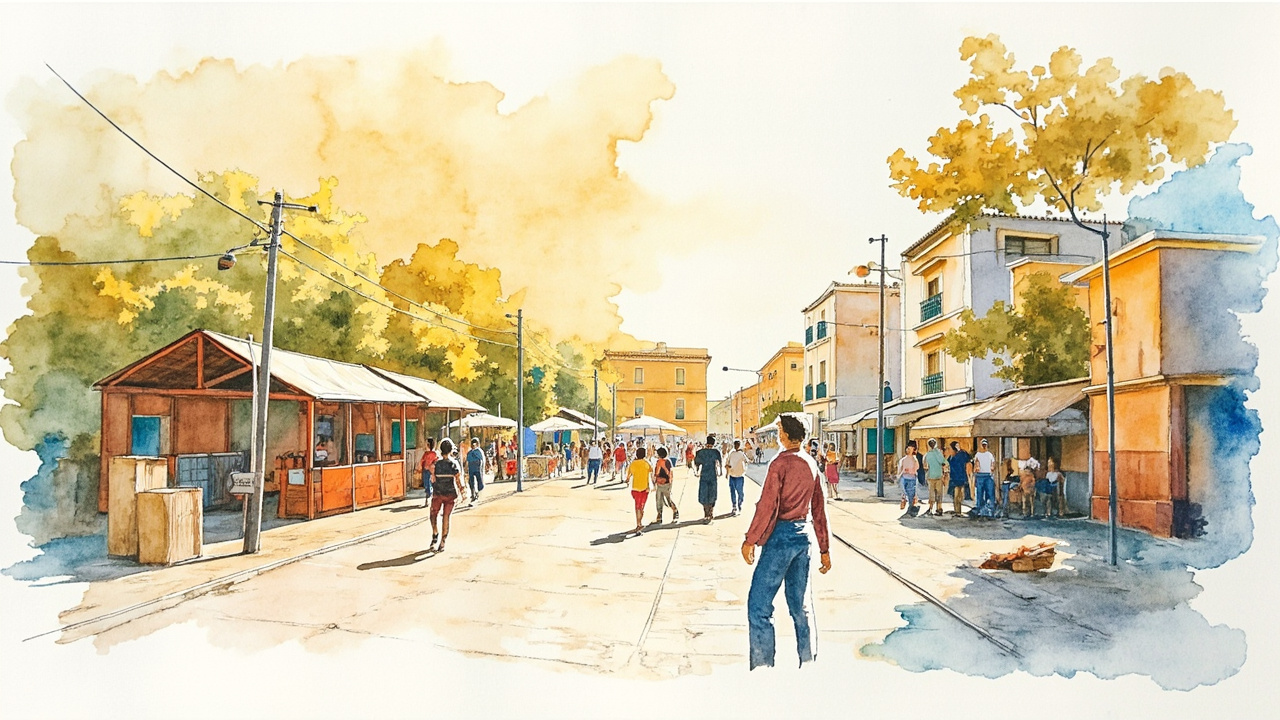
The Zonal Electoral Board of Valencia de Alcántara has declared itself incompetent to assign or deny public space to a candidacy in the period prior to the electoral campaign. The agreement, adopted unanimously and signed by the secretary María Jesús Hernández Hernando on October 22, 2026, is published in the Official Gazette of the Province of Cáceres number 0207, of October 28, 2026, Section IV (Administration of Justice), pages 24489 to 24493, with official reference CVE: BOP-2026-5044.
The origin: an information table in the Plaza de Gregorio Bravo
The resolution responds to the inquiry raised by the City Council of Valencia de Alcántara, which the secretary reported to the president of the Board on October 21. The council forwarded the request from the Vox Valencia de Alcántara party, which requested the assignment of public space to set up an information table on October 24, 2026, from 11:00 to 14:00 hours, in the Plaza de Gregorio Bravo.
The Board declares itself validly constituted in accordance with article 14 of the Organic Law 5/1985, of June 19, on the General Electoral Regime (LOREG) and within the period in which it carries out its functions (art. 15.2). Likewise, it considers that the City Council is empowered to raise the inquiry according to article 20 of the same regulation.
The electoral body emphasizes that it is in an electoral moment in which the elections have already been called—the general elections of November 29, 2026—but the electoral campaign period regulated in article 51 of the LOREG has not yet begun.
Sanctioning competence, but not to decide on space
The Board precisely delimits its scope of action. Article 19.2 of the LOREG, in relation to letters h), j), and k) of its first paragraph, grants it competence to resolve complaints, claims, and appeals, for the exercise of disciplinary power, and to sanction electoral infractions within its scope.
In contrast, it concludes that it “lacks objective competence to authorize or unauthorized the assignment of a public space outside of the campaign,” referring to articles 57 and 58 of the LOREG. What it can do is exercise electoral sanctioning power and remind of the prohibition in effect from the call until the legal start of the campaign.
The legal basis invoked is article 53.2 of the LOREG, which prohibits electoral advertising or propaganda during that interval through posters, commercial supports, or insertions in the press, radio, or other digital media, without such actions being justifiable as ordinary activity of the parties. The Board warns that such conduct may constitute the electoral crime of article 144.1 b) of the LOREG, punished by imprisonment or fine, and subsidiarily an infraction of article 153.1, punished by a fine.
What Instruction 3/2011 permits and prohibits
The agreement is based on Instruction 3/2011 of the Central Electoral Board. Its first article forbids, during the indicated period, the hiring of spaces or media for propaganda, whether in public places—gardens, squares, parks—as well as on billboards, street furniture, booths, means of transport, press, radio, television, internet, or digital media.
The list of prohibitions includes:
- The distribution of keyrings, pens, lighters, pins, and similar objects featuring the name or photo of candidates or the acronyms of the organization.
- The display of photos of candidates or posters with acronyms or party symbols on the exterior of private residences.
- Propaganda disseminated before the call for elections, which must be removed immediately.
The second article of the same instruction lists the permitted activities, provided they do not include an express request for the vote:
- Rallies and events for the presentation of candidacies or the electoral program.
- Interviews and debates in public or private media.
- Brochures, letters, and electronic media for the presentation of candidates or the program.
- Private vehicles with photos or acronyms, without any contractual agreement.
- Photos and symbols on the exterior facade of party headquarters and premises.
- Emails, SMS messages, or radio frequency transmissions without hiring third parties.
- Websites, blogs, and social networks without commercial contracting.
The Board itself recognizes the difficulty of drawing the line between such close scenarios—some prohibited in Article 1 and others permitted in Article 2—and admits that it could only prohibit in advance a properly announced electoral act, in accordance with Article 3 of the instruction.
General warning and appeal within five days
For all these reasons, the Board unanimously agrees to declare its lack of jurisdiction to assign or deny a public space to a candidacy in the current period and warns the City Council of Valencia de Alcántara, the applicant, and “all participants in the electoral process” regarding the sanctioning regime and the prohibitions contained in the resolution.
The agreement may be appealed within five days before the Provincial Electoral Board, and its publication is ordered in accordance with Article 18.6 of the LOREG, in addition to its notification to all interested parties.
The ruling leaves the material decision regarding the use of public roads in municipal hands, but extends a formal warning to all organizations participating in the elections: any propaganda contracted or disseminated before the start of the campaign may be pursued through electoral sanctioning channels, with fines and even prison sentences in the most serious cases.
Source: Official Gazette of the Province of Cáceres, no. 0207, October 28, 2026, Section IV - Administration of Justice, pp. 24489-24493 (official reference: CVE: BOP-2026-5044).