La Gaceta — Diario Oficial · 09 Nov 2026 · 36 vistas
INCOPESCA allows fishing operations by third parties on board without the owner present
Por FactBox Admin
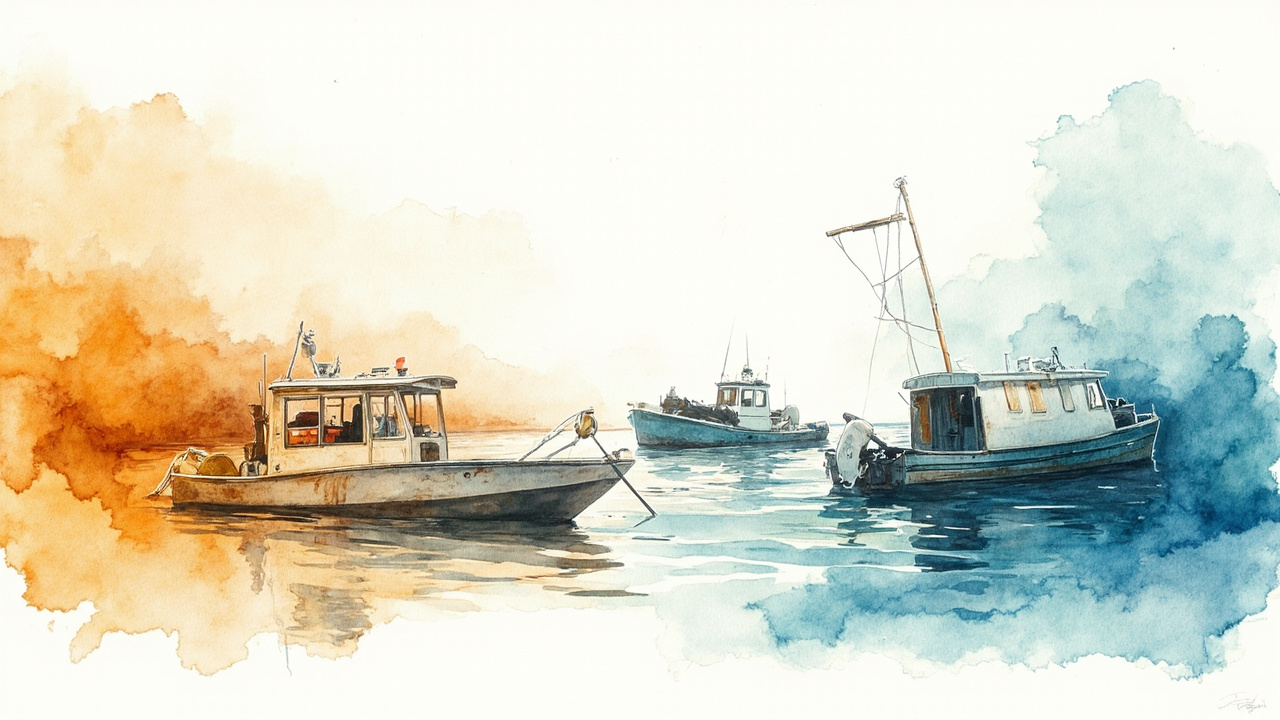
The Costa Rican Institute of Fisheries and Aquaculture (INCOPESCA) has authorized a third party to carry out small-scale commercial fishing activities aboard a permit holder’s vessel, without the latter being obliged to be present or to personally exercise the activity. The decision is contained in agreement AJDIP/235-2026 of the Board of Directors of INCOPESCA, published in La Gaceta No. 212 on Monday, November 9, 2026, on pages 50 and 51 (reference IN202601137896), and bears the signature of executive president Nelson Peña Navarro.
The invoked regulatory framework
The agreement is based on Law No. 7384, the Law for the Creation of the Costa Rican Institute of Fisheries and Aquaculture, which defines the entity as a state public body with legal personality and its own assets, subject to the National Development Plan and endowed with autonomy to decide within its scope of competence. It also invokes Law No. 8436, the Fisheries and Aquaculture Law, which grants it the status of executing authority, and articles 21 and 50 of the Political Constitution regarding democratic access to sustainable development.
The body justifies the measure on the grounds that the conditions under which small-scale artisanal fishing is practiced in the Pacific Ocean and the Costa Rican Caribbean Sea “have varied over time,” therefore considering it necessary to establish new criteria based on articles 1, 44, 103, 116, and 117 of Law No. 8436 and its regulations.
What the agreement enables
- Any permit holder with a vessel and a current fishing license granted by INCOPESCA for small-scale commercial fishing may delegate the tasks to a third party, on an occasional or temporary basis.
- The holder must be up to date with all their obligations.
- The Sworn Declaration and Authorization format is approved as Annex 1 of the agreement.
- This provision must be communicated to all competent fisheries authorities, especially the National Coast Guard Service.
Requirements and joint liability
The permit holder must submit a sworn declaration to INCOPESCA containing the name of the vessel, the registration, and the license number, as well as the name and credentials of the third party who will carry out the tasks. If that third party is replaced, a new sworn declaration must be submitted.
By enabling a third party, the holder assumes “under their responsibility the consequences that may derive from accidents suffered on board during fishing activities.” The agreement adds the joint liability of the vessel owner and license holder when current regulations are violated and the conduct is attributable to them.
The limit of permanent employees
INCOPESCA will not allow a third party to carry out fishing activities when it is verified that the license holder is a permanent salaried worker with the same employer for more than six continuous months. In such cases, the license must be administratively canceled once due process has been exhausted, and the corresponding department must perform this review during the annual permit renewal process.
The agreement also expressly repeals A.J.D.I.P./369-2019, adopted in Session No. 35 2019 of the INCOPESCA Board of Directors on July 19, 2019, and is declared final, with an order for a single publication in the Official Gazette.
Impact on the sector
The measure directly affects artisanal and small-scale fishers from both coasts, who will be able to maintain the operation of their vessels through third parties without losing license ownership, but with joint liability regarding on-board accidents and sanctions. At the same time, the filter against permanent salaried workers seeks to prevent the figure of the permit holder from being used to conceal employment relationships, a point that INCOPESCA must monitor during each annual renewal.
Source: La Gaceta No. 212, November 9, 2026, Miscellaneous Documents (Decentralized Institutions), pp. 50-51 (official reference: AJDIP/235-2026).