Diario Oficial de Castilla-La Mancha · 23 Sep 2026 · 2 vistas
Unfavorable environmental impact halts an olive grove irrigation project in Calera y Chozas
Por FactBox Admin
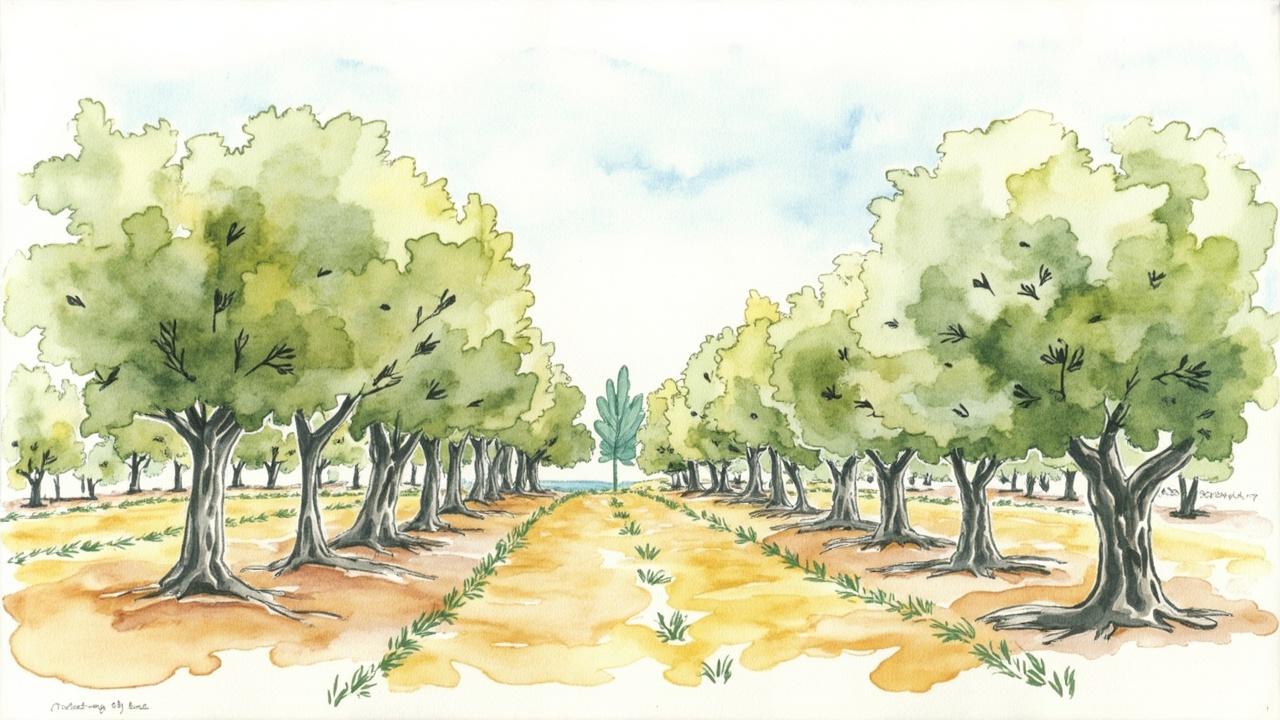
The Provincial Delegation for Sustainable Development of Toledo has issued an unfavorable environmental impact statement for the project “Transformation to irrigation for olive grove planting,” promoted by Shari Ann Sabin in the municipality of Calera y Chozas (Toledo). The resolution, signed on September 7, 2026, is published in the Official Gazette of Castilla-La Mancha (DOCM) no. 183, dated September 23, 2026, under official reference 2026/6767. The environmental body concludes that the action would cause serious deterioration of the natural values of the environment and declares it environmentally non-viable.
The decision is adopted under Law 2/2020, of February 7, on Environmental Assessment of Castilla-La Mancha, and Law 21/2013, of December 9, on state environmental assessment. The project falls under Annex I, Group 1b, of the regional regulation, which subjects irrigation transformations affecting more than 10 hectares in protected areas to ordinary assessment. The file, S478/2025/TO/00056, was received by the Delegation on February 5, 2025, and the public information period opened on December 15, 2025, with no allegations registered.
A project of 39.8 hectares across twelve plots
The initiative plans to implement super-intensive olive groves using drip irrigation over 39.8236 hectares, with a planting frame of 1.35 x 4 meters, across twelve plots of polygon 505 in the “Las Atalayuelas” area. The total area of the estate is 42.3987 hectares.
- Intakes: two existing boreholes, already registered in file SB-1263/2020, with an authorized volume of 6,706.50 m³/year for bovine and equine livestock and forage irrigation.
- New groundwater application: file C-0034/2025, with a maximum volume of 95,203 m³/year, currently being processed by the Tagus Hydrographic Confederation.
- Facilities: submersible pumps of 52 HP and 6 HP, a network of PVC and polyethylene pipes, flow meters, and a photovoltaic installation of at least 126 panels of 450 Wp.
- Discarded alternatives: traditional rain-fed olive groves (103.54 ha for the same production) and intensive irrigated olive groves (51.77 ha), compared to the 39.82 ha of the super-intensive system.
Unfavorable report from the Natural Environment Service
The Natural Environment Service of Toledo issued an unfavorable report on February 16, 2026, and reiterated it on April 17, 2026, following the allegations presented by the promoter on March 24. The service maintains that the super-intensive system is counterproductive to the conservation of the environment and that the corrective measures were chosen based solely on agricultural criteria.
The City Council of Calera y Chozas issued a favorable report on urban compatibility on April 13, 2026, and the Toledo Culture Service did so on December 5, 2025. The Tagus Hydrographic Confederation considered the project viable from a hydrological standpoint on February 2, 2026, conditional upon compliance with water control measures.
Natura 2000 Network and Threatened Fauna
The plots are located within the SAC-SPA “Llanuras de Oropesa, Lagartera y Calera y Chozas” (ES0000168) and the IBA “Llanos de Oropesa”. The report confirms the presence of protected species in the surrounding area:
- Great bustard, little bustard, pallid harrier, montagu’s harrier, common kestrel, and lesser kestrel.
- Two Iberian imperial eagle nests approximately 5 and 3 kilometers away, as well as black vulture, black stork, and short-toed snake eagle.
- Sensitive flora in temporary lagoons: Marsilea strigosa and Isoetes histrix.
The service warns that agricultural intensification would increase the verticality of the landscape, fragment the habitat, and reduce the hunting areas for raptors, contradicting the management plan for the protected area.
Water, Stream, and Nitrates
The Chiclana Stream crosses the plots, and an increase in extraction could reduce the water table of an area of temporary lagoons. Part of the project is also situated over mineral and thermal waters, in “Aguas del Soto”. The Confederation warns that drainage would flow into the surface water body “Embalse de Azután”, which is affected by nitrate pollution according to the Resolution of May 9, 2022, of the General Directorate of Water.
The resolution invokes Article 6 of Directive 92/43/EEC and Article 56 of Law 9/1999, of May 26, on Nature Conservation of Castilla-La Mancha, and determines the project’s inviability based solely on environmental effects. The document is signed by the Provincial Delegate, José Rubén Torralba Moratalla, by delegation of the General Directorate of Environmental Quality (Resolution of 05/24/2024).
The ruling closes the environmental path for an investment that aimed to mobilize more than 95,000 m³ of water per year in a region with water stress and high ecological value. The declaration is not independently appealable: it can only be challenged, via administrative or judicial channels, along with the act by which the project is authorized or denied, the decision of which the substantive body must publish in the DOCM within fifteen days.
Source: Official Gazette of Castilla-La Mancha, no. 183, of September 23, 2026, section III (Other Provisions and Acts), page 32674 (official reference: 2026/6767).