Diario Oficial (Colombia) · 01 Oct 2026 · 23 vistas
Government issues transitional health measures for earthquake victims
Por FactBox Admin
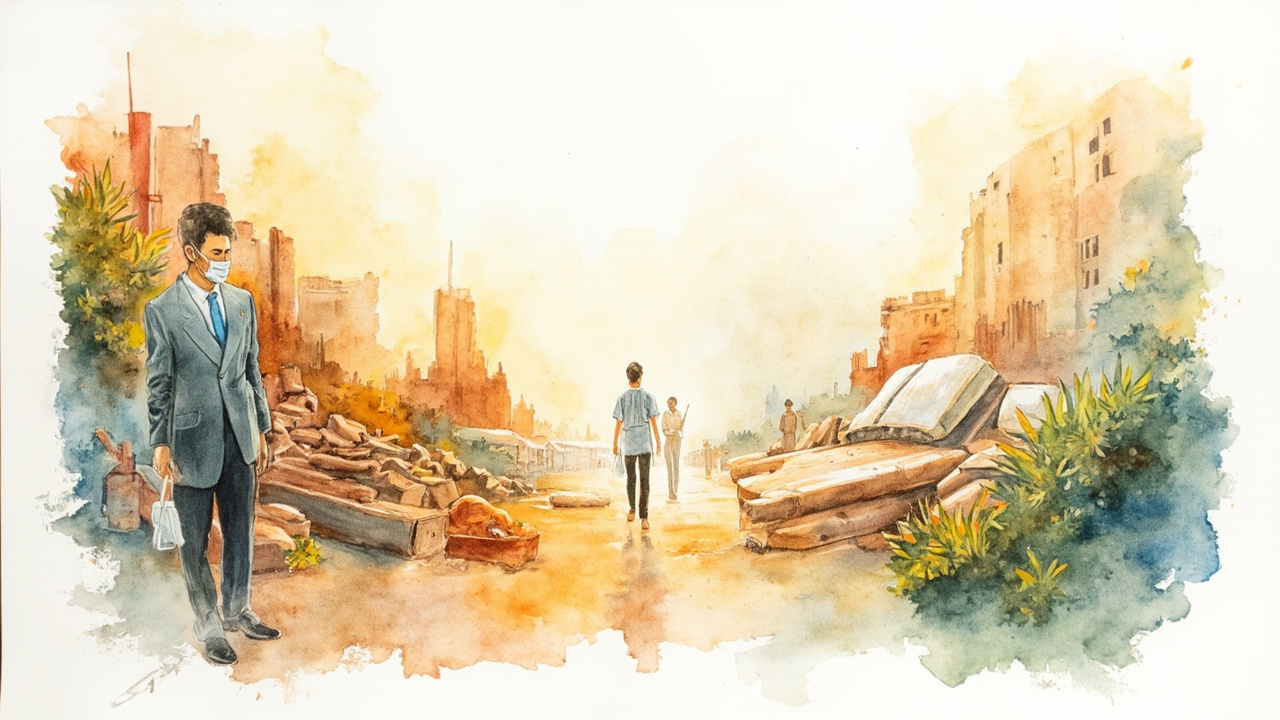
President Abelardo de la Espriella signed Decree number 1483 of 2026, published on October 1, 2026, in the Official Gazette (Edition 53,645), which establishes transitional rules for twelve months for the Administrator of the Resources of the General Social Security System in Health (ADRES) to recognize and pay for health services, indemnities, and funeral expenses to the victims of the earthquake of August 10, 2026. The measure also extends the deadlines for affected health providers to respond to billing disputes (glosas). The decree bears the signature of the Minister of Health and Social Protection, Ana María Vesga Gaviria.
The regulation is issued on the occasion of the national disaster situation declared through Decree number 1171 of 2026 for the departments of Antioquia, Caldas, Cauca, Chocó, Quindío, Cundinamarca, Risaralda, Huila, Valle del Cauca, Tolima, Putumayo, Norte de Santander, and others affected by the earthquake of August 10, 2026. The decree invokes Law 1523 of 2012, which organizes the National Disaster Risk Management System, and Article 66 of Law 1753 of 2015, which created ADRES.
The measures apply to ADRES, the National Unit for Disaster Risk Management (UNGRD), the National Civil Registry (RNEC), the National Institute of Legal Medicine and Forensic Sciences (INMLCF), health service providers, and natural persons legitimized to claim. The decree is in effect for twelve months or for the duration of the national disaster situation.
Direct access to official databases
ADRES will have access to the databases provided by the UNGRD, the National Civil Registry, the National Institute of Legal Medicine and Forensic Sciences, and the Ministry of Health and Social Protection to verify and validate victim status. This verification will replace the certificate from the Municipal Disaster Risk Management Council and, therefore, will not be required from claimants.
For recognition and payment, the victim subject to the claim must be registered in the Unique Registry of Victims (RUD) of the UNGRD or in the database designated by that unit. The information may only be processed for the legal functions of ADRES and under the personal data protection regime of Law 1581 of 2012.
Verification of deaths and kinship
For death indemnity and funeral expenses, ADRES will validate the identity of the deceased person with the Civil Death Registry and the Unique Registry of Social Protection Affiliates, in the Births and Deaths module (RUAF-ND) of the Ministry of Health and Social Protection. This verification will replace the documents required in numerals 4 and 5 of Article 2.6.1.4.3.2 of Decree number 780 of 2016.
The National Institute of Legal Medicine and Forensic Sciences will make available to ADRES the information regarding necropsies related to the claims. The kinship of the beneficiaries will be verified using the databases of the National Civil Registry, and copies of civil marriage or birth certificates will no longer be required when claims are made by spouses, children, parents, or siblings. The status of permanent partner may be accredited via a sworn statement, without the need for notary procedures.
Extended deadlines to respond to glosas
The term to remedy or object to the glosas (payment disputes) derived from the comprehensive audit of claims from providers whose infrastructure was affected will be six months, counted from the receipt of the communication from ADRES. If no information is received after this period, the glosa will be understood as accepted.
The same six-month period will apply to glosas communicated by ADRES starting June 11, 2026, to providers whose infrastructure was affected. The Infrastructure and Equipment Directorate of the Ministry of Health and Social Protection will provide ADRES with the information regarding providers affected in infrastructure and equipment.
The decree is effective from its publication in the Official Gazette and seeks to ensure that the victims of the earthquake do not bear the consequences of omissions, inconsistencies, or delays in official records, while providing affected health providers a reasonable timeframe to recover supporting documentation and exercise their defense against the glosas.
Source: Official Gazette, Edition 53,645 of October 1, 2026, Section I, p. 15 (official reference: Decree number 1483 of 2026).