Diario Oficial (Colombia) · 13 Oct 2026 · 3 vistas
Government issues decree reforming the citizen protest protocol
Por FactBox Admin
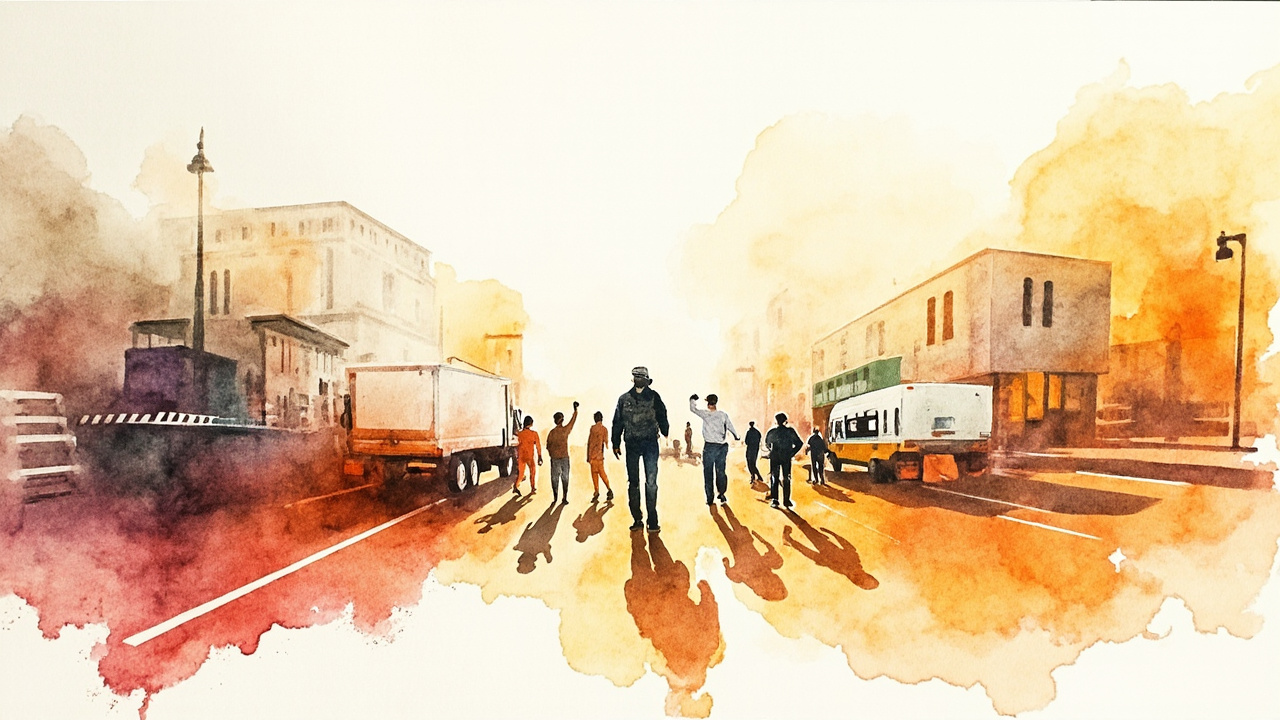
President Abelardo de la Espriella issued Decree 1525 of 2026, which modifies and adds to Decree 003 of 2021, “by which the Protocol of preventive, concomitant, and subsequent actions, called the Statute of Reaction, Use, and Verification of the Legitimate Force of the State and Protection of the Right to Peaceful Citizen Protest, is issued.” The regulation was published in the Official Gazette number 53,657 on Tuesday, October 13, 2026, and is effective as of that date.
The decree, also signed by the Minister of the Interior Rodrigo Lara Restrepo, consists of 26 articles and develops ten declared objectives, including specifying the scope of the principle of primacy of dialogue, strengthening the preventive phase, defining the rules of the Unified Command Post (PMU), and reinforcing the protection of the medical mission, the journalistic mission, public servants, girls, boys and adolescents, and pregnant or breastfeeding women. According to the recitals, the measure is supported by Article 21 of the International Covenant on Civil and Political Rights, General Comment number 37 of the Human Rights Committee, Judgment C-223 of 2017 of the Constitutional Court, and Judgment STC7641-2020 of the Supreme Court of Justice, which ordered the prevention of arbitrary intervention by public forces in demonstrations.
The text was submitted for public consultation through the Ministry of the Interior website between September 28 and October 4, 2026, and was preceded by two dialogue sessions open to the public held on September 17 and 23, 2026.
New grounds for exhausting dialogue
Article 19 rewrites Article 31 of Decree 003 of 2021 and establishes eight objective, exhaustive, and verifiable grounds for considering the stage of dialogue, interlocution, and mediation as exhausted. Among them:
- Impediment to the passage of the medical mission, ambulances, fire department, or relief agencies, or the impossibility of enabling solidarity corridors.
- Affectation of the provision of hospital or emergency services.
- Verified shortage of food, drinking water, fuel, or medicines.
- Carrying or use of firearms, explosives, or incendiary devices.
- Destruction of public or private infrastructure, or of assets intended for essential public services.
- Detention of persons against their will or absolute impediment to the entry or exit of persons from their place of residence.
- Aggression against public servants, uniformed personnel, the medical mission, or the journalistic mission.
The verification must be recorded in a minutes document signed by the person presiding over the PMU, indicating the cause, the time, the facts, and the means employed, and a copy shall be sent to the Public Ministry. The exhaustion of dialogue enables escalation, but “does not authorize in any case the generalized or undifferentiated use of force.”
Unified Command Post and Escalation of Force
Article 7 modifies Article 8 and establishes that, prior to a demonstration, the nation, department, district, or municipality will activate a PMU that will remain active before, during, and after the event. It will be composed of the Ministry of the Interior, the governor’s office, the mayor’s office, the National Police, the Attorney General’s Office, the Office of the Inspector General, the Ombudsman’s Office, the municipal Personería, and the Fire Department; Migration Colombia and the Colombian Institute of Family Welfare may be invited. The PMU will be presided over by the primary police authority and will maintain a real-time log.
Article 20 adds Article 31A, which organizes action into five successive levels: facilitation and preventive management; direct dialogue; mediation and institutional articulation; deterrence; and the restoration of order through the Riot Control Unit. Transitioning to levels 4 and 5 requires an order from the primary police authority and record in the minutes. The Ministry of the Interior and the Ministry of National Defense must issue, via joint resolution, the articulation protocol with the operational chain of command within three months following its entry into force.
Solidarity Corridors and Protection of Medical and Journalistic Missions
Article 18 adds Article 30E, which obligates territorial authorities and the National Police to ensure the enablement and maintenance of solidarity corridors and uninterrupted access to critical infrastructure and essential services. Article 5 defines the solidarity corridor as the free passage strip intended for the transit of medical missions, ambulances, firefighters, people with disabilities, elderly people, pregnant women, and children, as well as the transport of hospital supplies, medicines, and perishable foods.
Article 12 stipulates that the accompaniment device for the demonstration must be located at a minimum distance of four meters and will be composed of personnel trained in meeting management. Article 14 orders the immediate and focused intervention of the National Police in the event of aggressions against persons unrelated to the demonstration or against public servants.
Accountability and Monitoring
Article 23 adds Article 39A: within 72 hours following a day of protests with impacts, the mayor’s office or governor’s office shall publish a balance on its website including injured or deceased persons, affected assets, complaints, and arrests. Article 24 sets a 48-hour window to convene a security council when there are serious impacts, and Article 25 mandates a public explanation within a period not exceeding three months.
Article 6 creates an early warning system for social conflict managed by the Ministry of the Interior through the National System for Social Conflict Management and Social Dialogue (SINGESC), created by Decree 1130 of 2022. Once an alert is activated, the territorial authority shall convene a dialogue table within the following five business days.
The reform directly affects protesters, public forces, and the general citizenry: it converts what previously depended on the authority’s assessment into verifiable rules, mandates the documentation of every decision, and creates reporting and accountability channels. Its application will depend on the joint resolution that Mininterior and Mindefensa must issue within the next three months and on the capacity of territorial PMUs to operate with the traceability required by the regulation.
Source: Official Gazette of Colombia, No. 53,657, Tuesday, October 13, 2026, Section I (Decrees), p. 1 (official reference: Decree 1525 of 2026).