Diario Oficial de Castilla-La Mancha · 25 Sep 2026 · 6 vistas
Gálvez expands its cattle fattening facility from 255 to 450 head
Por FactBox Admin
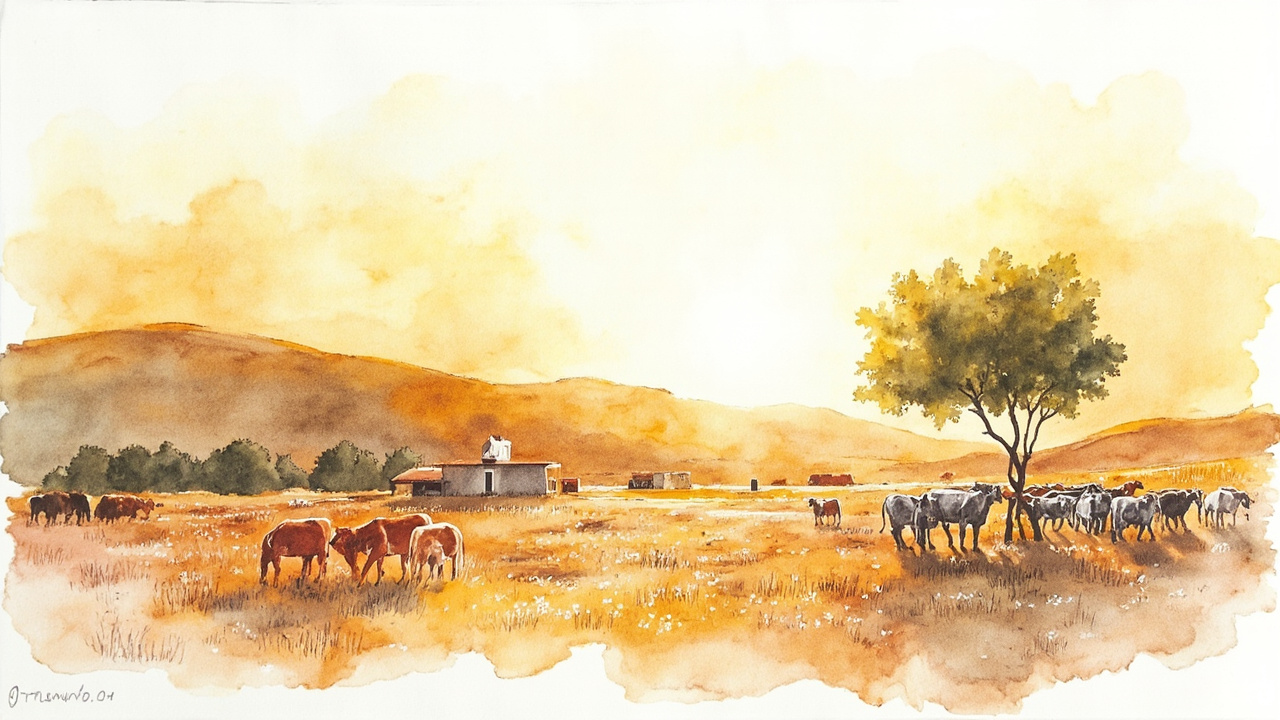
The Provincial Delegation of Sustainable Development of Toledo has formulated the environmental impact report endorsing the expansion of a beef cattle fattening operation in Gálvez (Toledo), which will increase from 255 to 450 head of cattle. The resolution, dated September 16, 2026, is published in the Official Gazette of Castilla-La Mancha (DOCM) No. 185, dated September 25, 2026, under reference 2026/6810. The project will not be subject to an ordinary environmental impact assessment as it is estimated to have no significant effects on the environment.
An expansion without ordinary assessment
The file is processed via the simplified route in accordance with Law 21/2013, of December 9, on environmental assessment, and Law 2/2020, of February 7, on environmental assessment of Castilla-La Mancha. The project falls under Annex II of the regional regulation, in the section relating to intensive livestock farms located less than 2,000 meters from residential urban land and with more than 40 LSU (Livestock Units).
The promoter is Alvaro Martín Muñoz and the Gálvez City Council acts as the substantive body. The initial application entered the Provincial Delegation on October 3, 2025, and resulted in file S478-TO-2025-00142. On January 20, 2026, prior consultations were made with the affected administrations, and on July 24, 2026, the period for the promoter to submit allegations was opened.
The operation already had a previous report: the Resolution of 10/24/2022, from the Provincial Delegation of Sustainable Development of Toledo, which authorized the activity for up to 255 head of cattle (file PRO-TO-22-3035).
Location, facilities, and production process
The activity is located in polygon 11, plot 59, in the area known as “La Palita”, with a surface area of 16,812 m² and 2,250 m² of constructions. The plot is located 1,750 meters from the urban center of Gálvez at its closest point, according to the SigPac viewer, and access is via the TO-3632 road, between kilometers 1 and 2, through the “Camino de Menasalbas”.
Existing facilities include:
- Two warehouses of 15 x 75 meters for animal housing.
- A sanitary ford 5 meters long, 2 meters wide, and 20 centimeters deep.
- A manure pit of 10 x 10 meters with a perimeter concrete wall.
The calves will follow a fattening cycle of between 7 and 10 months, with ad libitum feeding based on cereal feed, protein meals, and vitamin-mineral correctors, supplemented with wheat or barley straw. Monthly cleaning of the pens will be completed with chemical disinfection using 8% caustic soda and a one-month sanitary void.
Water, manure, and vulnerable zones
Water consumption is estimated at 6,898.50 m³ per year, with an average of 42 liters per head per day, sourced from a legalized well on the plot itself. The Tagus Hydrographic Confederation reported on February 20, 2026, that the estate is located within the catchment area of the sensitive zone “Azután Reservoir – ES030ZSENESCM495” and in the vulnerable zone “Madrid-Talavera-Tiétar – ES030_ZVULES42_5”. There is also a registered groundwater use, file SB-0888/2018, resolved on March 26, 2026, in the name of Mr. Manuel Martín Braojos.
Manure production is calculated at 2,296,350 kilograms per year, with 1.2 annual cycles and 270 fattening days. The owner must deliver it to an authorized manager and develop a Manure Production and Management Plan, in accordance with Decree 80/2025, of October 14, on zones vulnerable to nitrate pollution.
Prior requirement and environmental condition
The report from the local environmental agent, dated March 16, 2026, detected that the farm lacked a manure pit and that the sanitary ford was empty. On March 24, 2026, the owner was required to construct it within a three-month period; on July 16, 2026, the agent verified the execution of a 17 x 15 x 1 meter manure pit, waterproofed with concrete.
The resolution also establishes obligations such as:
- Perimeter fencing permeable to wildlife, with a minimum separation of 30 centimeters between vertical wires and 20 between horizontal ones.
- Respect for the livestock route, with a minimum distance of 10.45 meters from the axis of the road.
- Compliance with Royal Decree 1053/2022, which limits the maximum capacity to 850 LSU, and Royal Decree 1047/1994 on the protection of calves.
- Notification to the General Directorate of Circular Economy as a potentially atmosphere-polluting activity.
- Annual monitoring reports between January 1 and March 31 of the year following each campaign.
The report expires four years after its publication if the project has not been authorized and started, with the possibility of a two-year extension. The resolution is signed by the provincial delegate, José Rubén Torres Moratalla.
The decision directly affects the residents of Gálvez and the regional livestock sector: it consolidates an activity that the City Council considers compatible with the productive structure of the municipality, but maintains pressure on water and soil in an area already declared vulnerable to nitrates, with mandatory environmental monitoring.
Source: Official Gazette of Castilla-La Mancha, no. 185, of September 25, 2026, section III, pp. 32960-32974 (official reference: 2026/6810).