Boletín Oficial de Canarias · 28 Sep 2026 · 7 vistas
The Cabildo approves the Salinetas III solar park in Telde
Por FactBox Admin
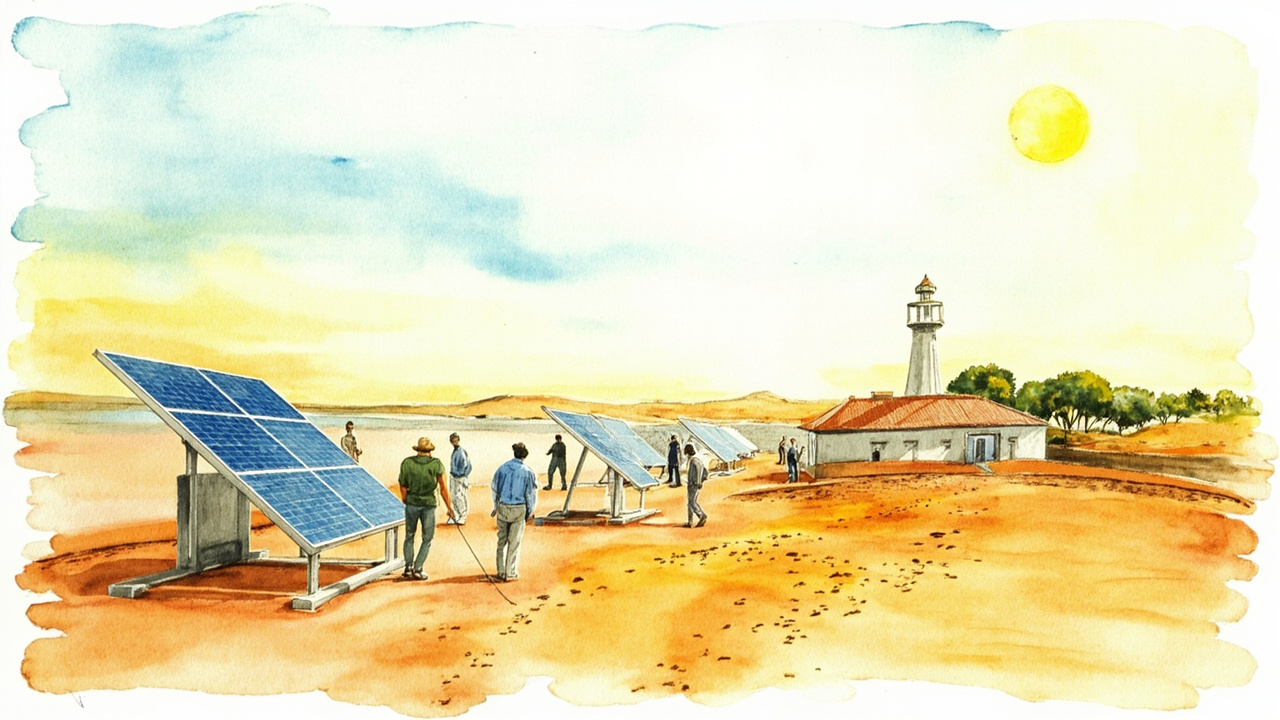
The Insular Council of Gran Canaria has declared the project known as “Installation of the Salinetas III Photovoltaic Solar Park,” in the municipality of Telde, promoted by the company Loro Parque, S.A., to be of public and social interest. The agreement was adopted unanimously by the Insular Government Council in an ordinary session on June 3, 2025, and is now published in the Official Gazette of the Canary Islands (BOC) no. 194, of September 28, 2026, within section V of announcements, under reference 3355. The resolution unlocks the municipal processing of the installation by confirming that it is not prohibited by the insular planning.
The file, identified as 22_40708 PSF Salinetas III, began with the application that Loro Parque, S.A. submitted to the Telde City Council on July 28, 2021. The Council referred the matter to the Insular Council on May 11, 2022 (RGE 2022040708) to rule on whether a prohibition existed in the insular planning and on the public or social interest of the action. The installation is projected on the plot with cadastral reference 35026A001000740000RO, corresponding to polygon 1, plot 74, of Salinetas.
A four-year file and environmentalist objections
The processing includes technical reports from the Planning and Landscape Service dated October 20, 2022, and May 22, 2023, a favorable legal report dated May 23, 2023, and the proposal report from the Administrative Planning and Landscape Service dated May 16, 2025. On December 14, 2022, the public information announcement was published in BOP no. 150, and on January 13, 2023, the notification to owners of adjacent plots with unknown addresses appeared in BOE no. 11.
The Colectivo Turcón Ecologistas en Acción, represented by Ms. Consuelo Jorges López, submitted objections on December 29, 2022 (RGE 2022115406) against the occupation of rural land under agricultural protection, the impact on steppe avifauna, and the loss of the soil’s carbon sequestration capacity. The agreement dismisses these objections, considering that the action is not linked to an industrial use prohibited by municipal planning, but rather to an energy infrastructure use, which is listed as permissible.
Imposed conditions and pending procedures
The declaration is subject to two requirements that must be met during the municipal phase of the license processing:
- That the promoter commits to restoring the land to its original state once the activity ends.
- That the Historical Heritage Service of the Gran Canaria Insular Council and the General Directorate of Road Infrastructure of the Ministry of Public Works, Transport, and Housing of the Government of the Canary Islands issue their rulings.
Neither of those two reports is included in the file, but the Cabildo considers them technically indispensable and not mandatory, therefore the processing continues in accordance with Article 80 of Law 39/2015. The agreement is not subject to appeal, according to Article 29.7 of Decree 182/2018, and was signed in Las Palmas de Gran Canaria on June 12, 2025, by the Government Councilor for Territorial Policy and Landscape, María Inés Miranda Navarro.
The legal fit of the installation
The Cabildo maintains that the project meets the requirements of Article 62 of Law 4/2017, of July 13, on Land and Protected Natural Spaces of the Canary Islands, as it recognizes its exceptional nature, justifies its necessary implementation on rural land, contributes to rural planning and development, and integrates into actions of public or social interest. The action is admitted as a complex with a scope level of 5 and an intensity of 3 on land with Bb1.1 zoning, defined in the PIOGC as having very high agricultural value, and its implementation is conditioned upon maintaining the agricultural status of the land.
The reasoning invokes Law 24/2013, of December 26, on the Electricity Sector, which considers the electricity supply a service of general economic interest, as well as the Integrated National Energy and Climate Plan (PNIEC) 2021-2030 and the Canary Islands Energy Transition Plan (PTE Can) 2030, which sets a target of 37% renewables by that date.
The decision directly affects the residents of Salinetas and the island as a whole: it enables the occupation of protected agricultural land to generate renewable electricity, but ties that authorization to the future restoration of the land and to sectoral reports that are still pending. The file thus remains open in the municipal sphere, where the conditions imposed by the Cabildo must be specified.
Source: Official Gazette of the Canary Islands, no. 194, of September 28, 2026, section V (Announcements), page 35472 (official reference: 3355).