Diario Oficial El Peruano · 25 Oct 2026 · 9 vistas
Executive extends state of emergency in Lima and Callao for 60 days
Por FactBox Admin
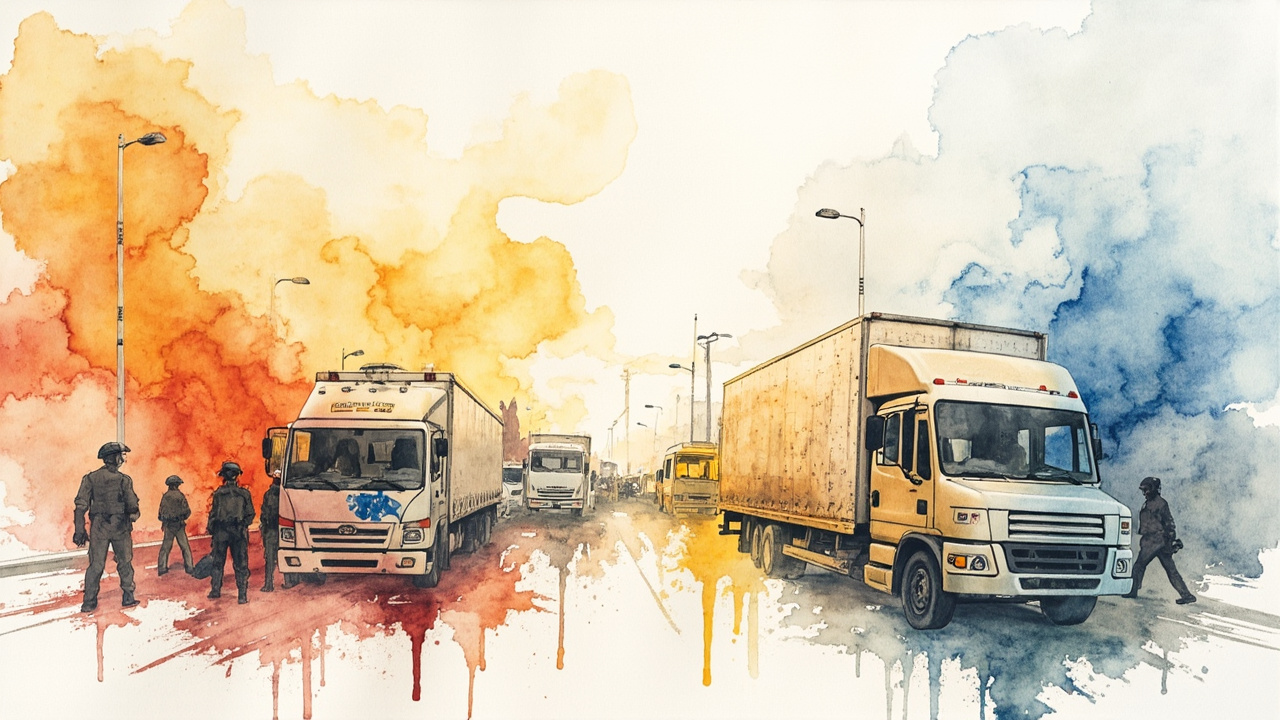
The Executive Branch extended the state of emergency in Metropolitan Lima of the department of Lima and in the Constitutional Province of Callao for 60 calendar days, starting October 28, 2026. The decision was formalized through Supreme Decree No. 142-2026-PCM, published today in the Official Gazette El Peruano (Year XLIII, No. 19596, Legal Norms section), signed by President Keiko Sofía Fujimori Higuchi and endorsed by the Council of Ministers.
The instrument, issued by the Presidency of the Council of Ministers, extends the measure originally declared by Supreme Decree No. 123-2026-PCM, published on August 28, 2026, which also set a sixty-day term. Counting from October 28, the 60 calendar days of the extension run until December 26, 2026. The regulation was issued at the Government House on October 23, 2026, and endorsed by Luis Fernando Galarreta Velarde, President of the Council of Ministers; Rafael Jorge Belaunde Llosa, Minister of Defense; César Augusto Astudillo Salcedo, Minister of the Interior; Elmer Rafael Cuba Bustinza, Minister of Economy and Finance; Ernesto Julio Álvarez Miranda, Minister of Justice and Human Rights; and José Angello Tangherlini Casal, Minister of Transport and Communications.
The extension is based on numeral 1 of Article 137 of the Political Constitution of Peru, which empowers the President of the Republic, with the agreement of the Council of Ministers, to decree a state of emergency and restrict or suspend constitutional rights. Pursuant to that same provision, the measure requires the approval of the Senate, a procedure that the decree lists as fulfilled along with the approving vote of the Council of Ministers.
Persistence of contract killing and extortion
The decree maintains that the extension responds to the “persistence of criminal action and citizen insecurity” derived from the commission of crimes of homicide, contract killing (sicariato), extortion, and other situations of violence in the included jurisdictions. The National Police of Peru maintains control of internal order, with support actions from the Armed Forces, and determines the intervention zones based on intelligence, indicators, statistics, and crime maps.
The request was formulated by the General Command of the National Police of Peru through Official Letter No. 1034-2026-CG PNP/SEC., dated October 14, 2026, and was based on classified documents:
- Report No. 195-2026-COMOPPOL PNP/DIRNOS-EM.UNIPLA, dated October 12, 2026.
- Report No. 024-2026-DIRNOS PNP/RP LIMA CENTRO/EM-UNIPLEDU-AREPLOPE, dated October 10, 2026, from the Lima Centro Police Region.
- Report No. 059-2026-DIRNOS PNP/REGPOL-CALLAO-EM-UNIPLEDU.OFIPLOPE, dated October 7, 2026, from the Callao Police Region.
- Opinion No. 1586-A-2026-SECEJE/DIRASJUR DIVDJPN, dated October 14, 2026, from the Legal Advisory Directorate of the National Police of Peru.
Restricted rights and permits for mass events
During the extension, the exercise of constitutional rights relating to the inviolability of the home, freedom of movement throughout the national territory, freedom of assembly, and personal liberty and security, as included in numerals 9, 11, 12, and 24, paragraph f), of Article 2 of the Constitution, is restricted or suspended.
For religious, cultural, sporting, and non-sporting activities of a mass and public nature, the corresponding permit must be requested from the competent authorities, who will evaluate it according to Article 4 of the New Regulation for Technical Safety Inspections in Buildings, approved by Supreme Decree No. 002-2018-PCM. Activities that are not of a mass nature may be carried out without prior permission.
PNP-FFAA Unified Command and territorial control
The regulation modifies Article 5 of Supreme Decree No. 123-2026-PCM and orders the formation, within 24 hours of coming into effect, of the Unified Operational Coordination Command (CCO), the PNP-FFAA Unified Command against Organized Crime, the District Coordination Committees (CCD), the Intelligence Committee (CI), the Oversight Committee (CF), and the Strategic Communication Committee (CCE), with a permanent coordination center operating 24 hours a day, 7 days a week.
The Unified Command is defined as an integrated, temporary, functional, and focused task force, under the strategic direction of the Minister of the Interior in coordination with the Minister of Defense, and the operational leadership of the National Police of Peru. The Armed Forces provide intelligence, tactical logistical support, transport, aerial surveillance technology and communications, and the deployment of special forces from the Peruvian Army, the Peruvian Navy, and the Peruvian Air Force.
The decree also establishes accountability obligations: within five business days following the end of the state of emergency, the CCO shall inform the head of the Ministry of the Interior, through the General Command of the National Police of Peru, regarding the results obtained, and the final report shall be submitted to the Presidency of the Republic with the corresponding recommendations. Implementation will be financed using the budget credits of the involved entities.
The extension keeps the measures of articles 4, 5, and 6 of Supreme Decree No. 123-2026-PCM and its final complementary provisions in effect, and specifies that the measures of numeral 6.1 of that decree are complementary to those of Supreme Decree No. 128-2026-PCM, which declares a state of emergency in high-danger penitentiary establishments nationwide.
The scope of the measure is significant for the residents of the capital and the primary port: for 60 more days, the police may intervene with military support in the areas they determine, and authorities may restrict circulation, meetings, and entry into homes, while mass events remain subject to prior authorization. The decree bears document code 2568123-1.
Source: Official Gazette El Peruano, Year XLIII, No. 19596, Sunday, October 25, 2026, Legal Norms section, page 3 (official reference: S.D. No. 142-2026-PCM).