BOP de Granada · 07 Oct 2026 · 13 vistas
Dehesas Viejas will fine uncleaned plots up to 3,000 euros
Por FactBox Admin
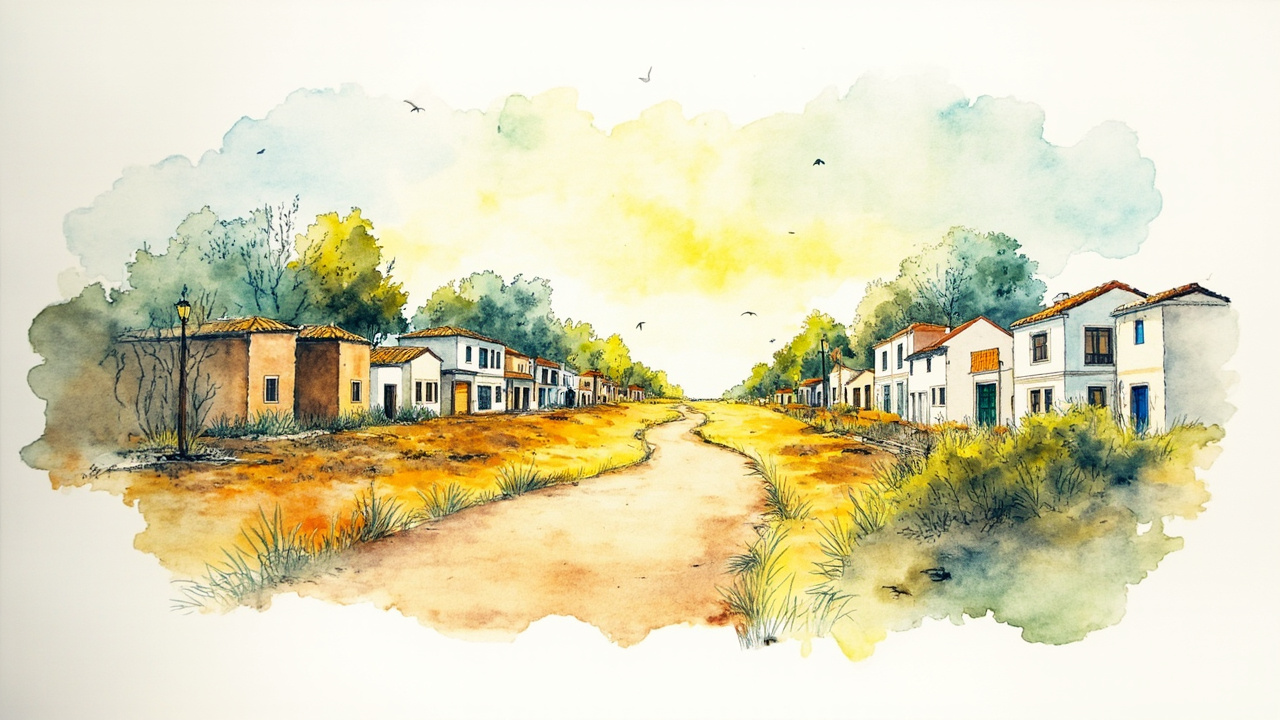
The Dehesas Viejas City Council has definitively approved the municipal ordinance regulating the cleaning of land, plots, and parcels in urban, developable, and rural soil, a text that mandates clearing before April 1st of each year and penalizes non-compliance with fines of up to 3,000 euros. The agreement is published in the Official Gazette of the Province of Granada number 194, dated October 7, 2026, with the official reference BOP-GRA-2026-194011. The regulation also empowers the Council to carry out the work subsidiarily and charge the cost to the owner.
The Plenary of the Dehesas Viejas City Council initially approved the ordinance on July 14, 2026 and, as no claims were filed during the public exhibition period, the agreement was automatically elevated to definitive. The announcement is signed by the mayor-president, Emilio Aguilar González, in Dehesas Viejas on September 25, 2026, and is made public in compliance with article 70.2 of Law 7/1985, of April 2, Regulating the Bases of the Local Regime.
The statement of reasons justifies the regulation based on the increase in parcels and plots that do not receive adequate treatment for their conservation under minimum conditions of safety, health, hygiene, and public ornament, a situation that, according to the text, projects a poor image of the municipality and generates conflicts with neighboring owners. The departments of Environment, along with Urban Planning and Works and Services, had already been warning the owners of these parcels. The ordinance is issued under the protection of articles 84 and 139 of Law 7/1985, articles 6 and 15 of Legislative Royal Decree 7/2015, and article 144 of Law 7/2021, of December 1, for the promotion of the sustainability of the territory of Andalusia.
Obligation to clear before April 1st
Article 5 establishes a permanent cleaning obligation, but sets a specific deadline: land, plots, and parcels must be properly cleaned before April 1st of each year and maintained as such throughout the year, especially during the summer period. The regulation requires the removal of vegetation and flammable materials or those susceptible to causing fires, and expressly prohibits carrying out clearing work through burning. The felling of tree masses, shrub vegetation, or isolated trees is not considered cleaning and remains subject to a municipal license.
The obligated parties are:
- All natural or legal persons who own or possess land, plots, and parcels within the municipal district by any title.
- Developers, builders, or technicians carrying out urban actions on parcels or plots.
- Third parties who violate the prohibition against dumping waste.
In the event of a separation of direct and beneficial ownership, the obligation falls upon the holder of the beneficial ownership; if rights of use, usufruct, or lease exist, the user, usufructuary, or lessee shall be liable. Article 6 prohibits the dumping of any type of waste on municipal land except in authorized areas, such as green points or eco-parks.
Ten-day notice and subsidiary execution at the owner’s expense
Article 8 details the procedure. Technical personnel or police officers issue an inspection report that allows the competent councilor to send an informative note to the obligated parties, providing a period of ten business days to comply. If they fail to do so, proceedings are initiated ex officio or at the request of any interested party; the interested party is notified to submit allegations within ten days and, if these are dismissed, the execution of the necessary operations is ordered.
If non-compliance persists, the City Council may resort to the forced execution provided for in Law 39/2015, with a prior hearing of ten days. The expenses, damages, and losses resulting from the subsidiary execution shall be borne by the obligated subject and are collectible via administrative enforcement. The Single Annex of the ordinance establishes the unit price per square meter for the cleaning and clearing of plots, which serves as a reference for valuing these actions.
Fines from 750 to 3,000 euros depending on severity
The sanctioning regime distinguishes three scales:
- Minor infractions: fine of up to 750 euros.
- Serious infractions: fine from 750.01 euros up to 1,500 euros.
- Very serious infractions: fine from 1,500.01 euros up to 3,000 euros.
Serious infractions include, among other behaviors, the failure to maintain land in an adequate state of cleanliness, the absence of conditions of safety, health, public ornament, or decorum, the failure to fulfill the duty to keep the land free of weeds or material that facilitates the spread of fire, and the commission of a second minor infraction within a period of one year. Sanctions are compatible with the requirement to restore the altered situation, the compensation for damages, and the restoration of legality. Article 16 warns that the infraction may in no case result in an economic benefit for the offender: if the fine plus the cost of restoration is lower than that benefit, the amount shall be increased until it is reached.
Entry into force and appeal process
The final provision establishes that the ordinance shall enter into force after the period provided for in Article 65.2 of Law 7/1985 and shall remain in effect until its modification or repeal. An administrative appeal may be filed against the agreement before the Administrative Litigation Chamber of the High Court of Justice of Granada within two months from the day following the publication of the announcement, in accordance with Article 46 of Law 29/1998, of July 13.
The regulation affects all landowners in the municipality, not only plots in the urban center, and introduces for the first time an annual clearing calendar and a system of fines with subsidiary execution. For owners of rural and developable plots, the April 1 deadline and the repercussion of expenses via enforcement proceedings are the two elements with the greatest practical impact.
Source: Official Gazette of the Province of Granada, No. 194, of October 7, 2026, Section I (Local Administration), pp. 39-46 (official reference: BOP-GRA-2026-194011).