Moniteur Belge · 15 Oct 2026 · 11 vistas
Drug testing in prison: refusal of sample will count as a positive test
Por FactBox Admin
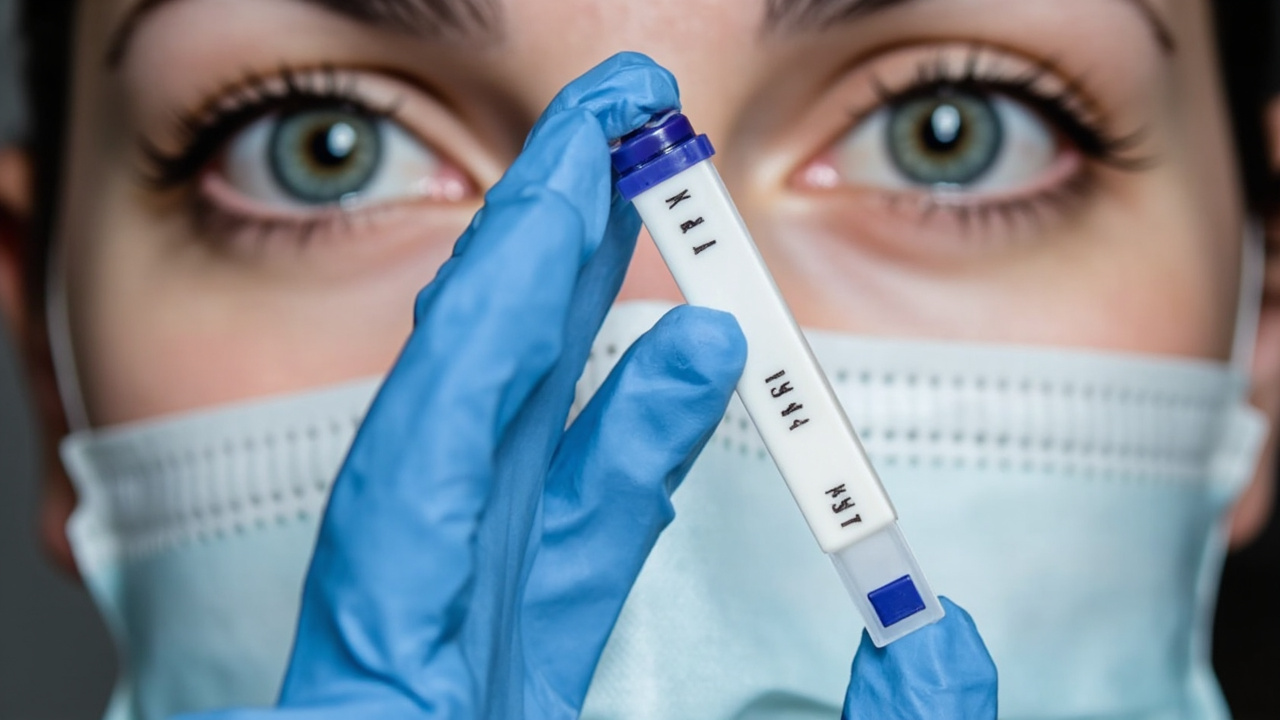
The Belgian Official Gazette (Moniteur belge) of October 15, 2026, publishes the royal decree of September 22, 2026, implementing Article 109/1 of the framework law of January 12, 2005, concerning the prison administration and the legal status of detainees, regarding the performance of drug screening tests in prison (C − 2026/007469, p. 55288). Signed by King Philippe and the Minister of Justice A. Verlinden, the text establishes the procedures for urine and saliva tests, re-examination, and follow-up monitoring, and equates the refusal to provide a sample with a positive test. It enters into force on December 1, 2026.
The decree implements Article 109/1 of the framework law of January 12, 2005, which entrusts the King with establishing the procedures for the test. The project was submitted to the Data Protection Authority (opinion no. 86/2026) and the Council of State (opinion no. 79.146/16), both issued on April 30, 2026; a second request for an opinion was struck from the roll on September 1, 2026 (opinion no. 79.989/16-1/V). The Central Prison Surveillance Council had issued its opinion on September 15, 2025.
The report to the King justifies the system through early detection of consumption, objective findings avoiding denials, the protection of the social climate, and the preventive and deterrent effect. The decree consists of 7 chapters.
Two testing scenarios
- Individualized indications of the consumption of illicit substances: the director may decide on a test to maintain order or security; the decision is reasoned, communicated orally before the test, and in writing no later than 24 hours after.
- Computerized random sampling decided by the director, which must be fair, unbiased, transparent, and auditable; the FPS Justice ensures monitoring and support.
- A previous positive test cannot, on its own, constitute a sufficient individual indication.
- The decree does not set a maximum percentage of detainees who can be included in a sample; the FPS Justice will provide guidelines on this matter.
Urine by default, saliva by exception
- The urine test is the standard method; the saliva test is used only in exceptional circumstances of a medical nature, by decision of the director following medical advice.
- The test is performed by a staff member of the same sex as the detainee, in the presence of at least one other staff member of the same sex as a witness; a prior search of clothing is provided for.
- If the detainee cannot immediately provide a sample, they have a maximum of 2 hours, which may be extended for medical reasons.
- The detainee is informed in writing of the result within 24 hours, as well as the possibility of requesting a re-examination; the sample is kept cold and destroyed after 14 days if it is not transferred to the INCC.
Refusal, re-examination and follow-up
- Refusal to provide a urine or saliva sample, or the inability to produce a sample after the deadline, results in the consequences of a positive test.
- The prisoner may request a re-examination within 24 hours following written notification, via a form available in prison; the costs are borne by the prisoner, unless the re-examination reveals no illicit substances.
- A positive test automatically triggers a single follow-up check, at the earliest after the expiration of the detection period and at the latest two months later; the result of the re-examination must be awaited.
- In the event of a refusal of re-examination by the director, the result is maintained, but only the consequence of the automatic follow-up check applies, to the exclusion of a disciplinary sanction.
Data and guarantees
- The FPS Justice is responsible for data processing; the National Institute of Criminology and Forensic Science is responsible for the anonymized data of the re-examination and scientific research.
- The data (identification number, director’s decision, date and time, type and code of the test, result, etc.) are kept in the prisoner’s file.
- A test not performed, manipulated, or stored in accordance with the procedure is considered invalid; no consequence is attached to a positive result explainable by consumption prior to detention or by prescribed medication.
- A data protection impact assessment will be carried out.
The decree will apply to conventional prisons as well as detention centers. For prisoners, it frames an intrusive system — direct visual monitoring, prior search, cost of re-examination — while providing safeguards: staff training, prohibition of vexatious character, exclusion of disciplinary sanction in case of refusal of re-examination, and destruction of samples after fourteen days.
Source: Belgian Official Gazette of October 15, 2026, royal decree of September 22, 2026, C − 2026/007469, p. 55288.