Diario Oficial de Castilla-La Mancha · 01 Oct 2026 · 21 vistas
Castilla-La Mancha approves new aid for sanitary defense groups
Por FactBox Admin
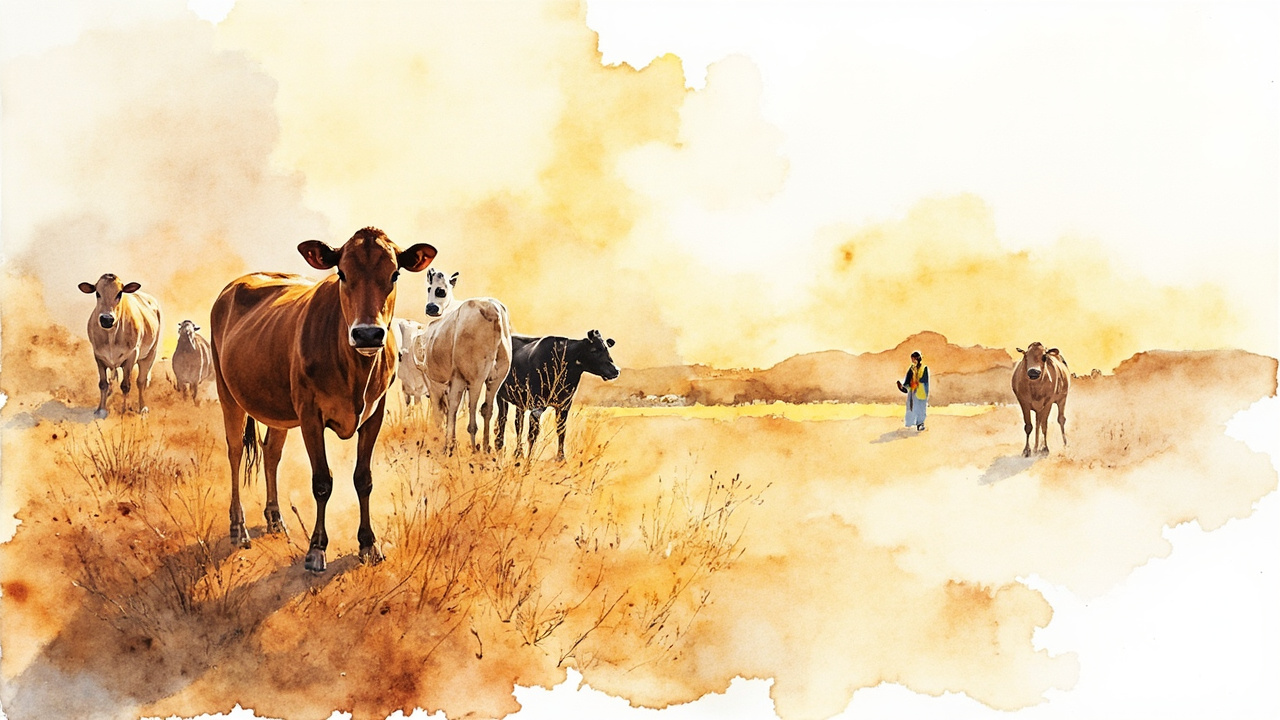
The Regional Ministry of Agriculture, Livestock and Rural Development of Castilla-La Mancha has approved Order 136/2026, of September 24, which establishes the new regulatory bases for aid to livestock health defense groups (ADSG). The regulation is published in the Official Gazette of Castilla-La Mancha (DOCM) number 189, of October 1, 2026, with the reference [2026/6971], and repeals Order 115/2024, of July 5. The grants will be awarded on a competitive basis and will be financed exclusively with the own funds of the Regional Government of Castilla-La Mancha.
The text is based on Law 8/2003, of April 24, on Animal Health, and Decree 35/2019, of April 30, which regulates the ADSG and their regional registry. At the state level, it complies with Royal Decree 81/2015, of February 13, and at the European level with Article 26 of Commission Regulation (EU) 2022/2472, of December 14, 2022, with registration number SA.115333.
The Regional Ministry justifies the repeal of Order 115/2024 due to the detection, during its application, of elements to be improved to achieve the objective of the aid, and appeals for greater legal certainty. The final beneficiaries are the small and medium-sized livestock farms integrated into an ADSG, although the grant is channeled through the associations themselves, which are the ones executing the eligible activity.
Competitive bidding and allocation of credit
The procedure will be initiated ex officio through a call for applications approved by the head of the General Directorate competent in animal health matters and published in the National Grants Database and in the DOCM. The deadline for submitting applications will be set in each call and shall not be less than ten days.
If the credit is insufficient to cover 100% of the maximum aid, a distribution in two tranches will be applied: 95% of the available credit will be prorated among all admissible applications and the remaining 5% will be distributed in proportion to the score obtained. No application may exceed 100% of the maximum aid.
The grants are compatible with other aid for the same purpose, but the total may not exceed 100% of the eligible expenditure, in accordance with Article 26.13 of Regulation (EU) 2022/2472.
Requirements for groups and farms
ADSGs must be officially recognized by the autonomous community and registered in the national and regional registries, develop a common health program under the direction of a qualified veterinarian, have SME status, and be up to date with tax obligations, Social Security, and the repayment of subsidies. In the event of a merger of several groups, the recognition requirement will not apply if the resulting ADSG is recognized before July 15 of the year of the call.
Integrated holdings must, among other conditions:
- Be registered in the General Registry of Livestock Holdings (REGA).
- Be holdings of active livestock producers with SME status.
- Comply with the mandatory health controls and actions of the national eradication, control, and surveillance programs.
Only activities carried out in holdings that have submitted the mandatory annual census declaration by March 1 will be eligible for subsidies.
Up to 75 points: census, veterinarians, and women
Applications will be ranked with a maximum of 75 points:
- Number of holdings and livestock census: up to 45 points (20 for the number of holdings and 25 for LSU).
- Number of veterinarians: up to 15 points, at a rate of 5 points per professional, with a minimum of 5,000 LSU and 20 computable holdings.
- Presence of women in decision-making bodies: up to 15 points (10 if at least 50% of the board of directors are women and 5 if the presidency is held by a woman).
The computable census will be that declared before March 1 of the year of the call, and the conversion to LSU will be made according to the table in Annex I, which assigns, for example, 1 LSU per bovine over 24 months, 0.15 per breeding sheep or goat, and 0.96 per sow in a closed cycle.
Eligible actions and electronic processing
The grants will finance the minimum mandatory health programs, voluntary programs, and the National Animal Disease Eradication Programs (PNEEA). Eligible items include:
- Health controls, diagnostic tests, laboratory analysis, and other disease detection measures.
- Purchase and administration of vaccines, veterinary medicines, biocides, and other zoosanitary products.
- Establishment or improvement of biosecurity measures.
The application and all procedures must be submitted exclusively by electronic means through the headquarters of the Junta de Comunidades de Castilla-La Mancha. The resolution corresponds to the head of the General Directorate of Agricultural Planning, within a maximum period of six months from the publication of the call, with negative administrative silence. Payment will be made in a single installment via bank transfer.
The regulation comes into force on the day following its publication in the DOCM, that is, October 2, 2026, and is signed by the counselor Julián Martínez Lizán. For cattle, sheep, goat, and pig farms integrated into a Health Defense Group (ADSG), the new framework conditions access to aid upon compliance with the common health program and the census declaration, and reinforces the priority of larger groups and those with women in their decision-making bodies.
Source: Official Gazette of Castilla-La Mancha (DOCM), no. 189, October 1, 2026, section I (General Provisions), pp. 33504-33514 (official reference: 2026/6971).