Moniteur Belge · 16 Oct 2026 · 3 vistas
4.25-tonne electric vans treated as 3.5-tonne vehicles
Por FactBox Admin
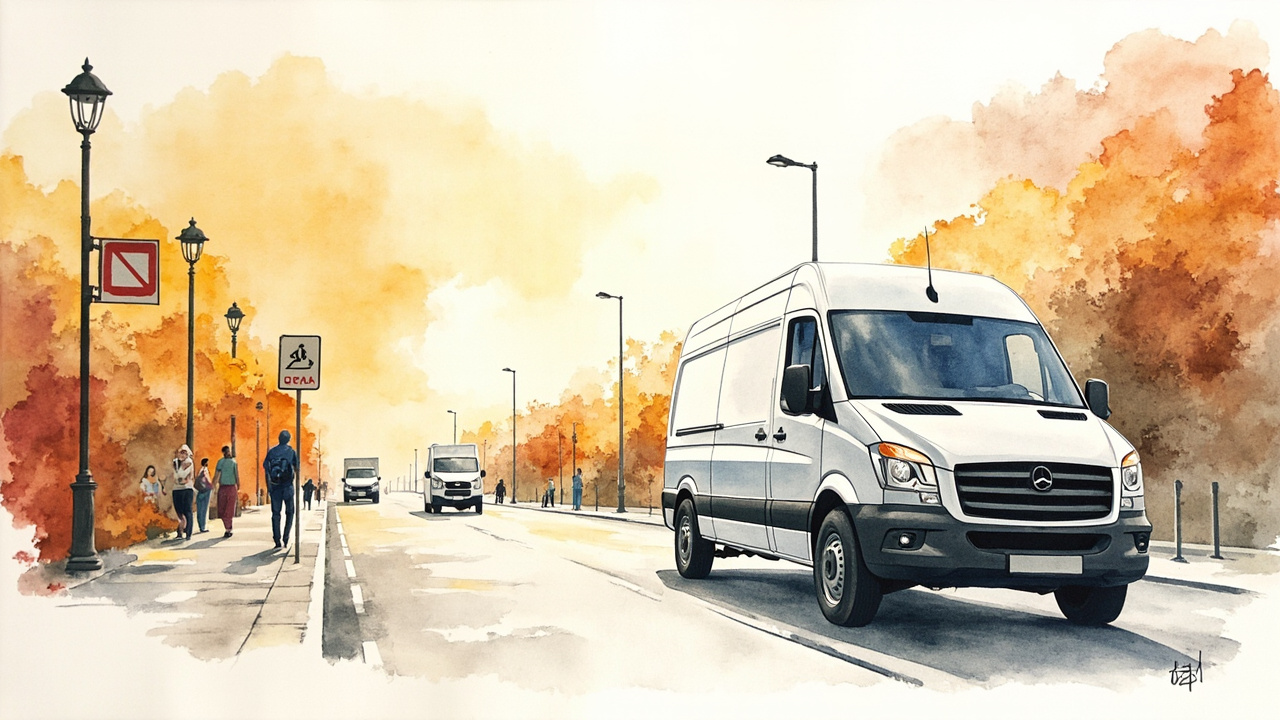
Fully electric or hydrogen-powered vans with a maximum authorized mass not exceeding 4.25 tonnes are now assimilated to 3.5-tonne vans. The measure is set out in the Royal Decree of October 8, 2026, relating to the stimulation of the use of these vehicles, signed by King Philippe and published in the Belgian Official Gazette of October 16, 2026 (No. 236, 2nd edition), page 55756, under reference C − 2026/006941.
The text originates from the Federal Public Service Mobility and Transport. It amends the Royal Decree of December 1, 1975, establishing the general regulations on road traffic police and the use of public roads, last amended by the Royal Decree of October 2, 2023, by inserting point 2.75 into Article 2. This provision defines for the first time a “van” as any motor vehicle designed and constructed for the transport of goods whose maximum authorized mass does not exceed 3,500 kg.
The decree is based on the law relating to road traffic police, coordinated on March 16, 1968. Its recitals invoke Article 6, paragraph 4, point c), of Directive 2006/126/EC of December 20, 2006, on driving licences, which allows the possibility of driving vans up to 4.25 tonnes equipped with an alternative propulsion system with a category B licence, as well as Article 4, paragraph 4, of Directive 96/53/EC of July 25, 1996. The Council of State issued its opinion 79.972/4 on September 16, 2026, and the regional governments were involved in the procedure.
Three cumulative conditions
The assimilation only applies if the vehicle meets several criteria:
- be powered entirely by electricity or hydrogen, these substitute fuels being those referred to in Article 2, a) and b), of Directive 96/53/EC;
- have been subject to type-approval under Regulation (EU) 2018/858;
- have a maximum authorized mass exceeding 3,500 kg, without exceeding 4,250 kg.
Hybrids, CNG, LNG, and LPG excluded from the regime
The derogatory regime explicitly excludes hybrid, compressed natural gas (CNG), liquefied natural gas (LNG), and liquefied petroleum gas (LPG) powertrains, although Directive 96/53/EC mentions them. The recital justifies this exclusion by the fact that the gain of these powertrains in terms of CO2 emissions is too low under real-world operating conditions to justify derogatory treatment. Only zero-emission vehicles therefore benefit from the assimilation.
Category B licence, but C21 signal maintained
The assimilation to a 3.5-tonne van places these vehicles in the category accessible to holders of a category B license, in accordance with the possibility opened by Directive 2006/126/EC. Drivers of these heavier vans must, however, still comply with signal C21, which prohibits access to drivers of vehicles whose gross vehicle weight exceeds the indicated mass. The decree specifies that the purpose of this signal is to protect the road infrastructure: the assimilation therefore does not apply to its enforcement.
Entry into force and adaptation of signage
The text enters into force on the first day of the month following the expiration of a ten-day period starting the day after its publication in the Belgian Official Gazette, namely November 1, 2026. Furthermore, the decree adapts the legend of signal E9c: in the Dutch text, the words “lichte vrachtauto’s” are replaced by “bestelwagens”. It was signed in Brussels on October 8, 2026, by King Philippe and countersigned by the Minister of Mobility, J.-L. Crucke.
For artisans, delivery drivers, and small and medium-sized enterprises transitioning to zero-emission mobility, the stake is concrete: electric or hydrogen vans that are heavier, often due to the batteries, remain drivable with an ordinary category B license, without additional training or examinations. The trade-off is twofold: non-electric alternative powertrains remain excluded, and the tonnage limitations indicated by C21 continue to apply on fragile roads.
Source: Belgian Official Gazette of October 16, 2026, No. 236, p. 55756 — royal decree of October 8, 2026, C − 2026/006941.