EUR-Lex · 04 Nov 2026 · 7 vistas
Brussels opens in-depth probe into Romania's Cernavodă nuclear aid package
Por FactBox Admin
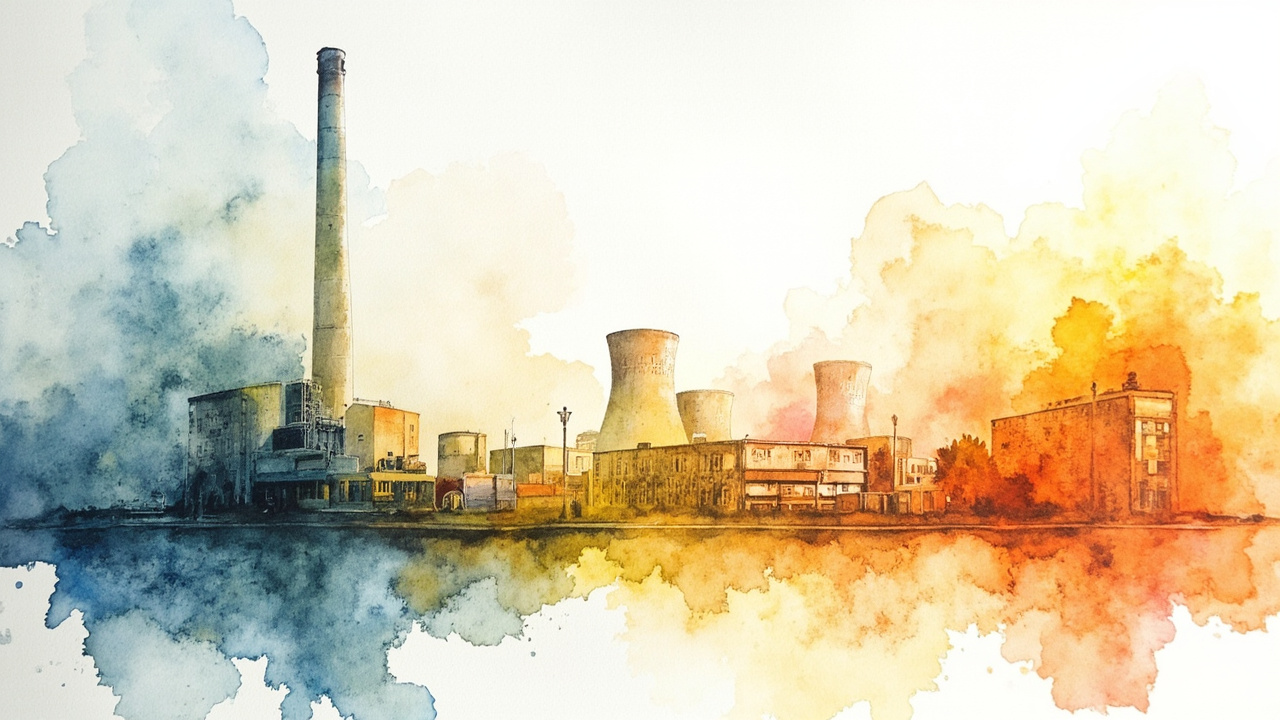
The European Commission has opened the formal State aid investigation into Romania’s support package for the refurbishment and lifetime extension of Unit 1 of the Cernavodă nuclear power plant, a decision taken in a letter addressed to the Romanian authorities on 16 April 2026. The opening of the procedure under Article 108(2) TFEU was published in the Official Journal of the European Union of 4 November 2026 under case SA.117704 (2025/N), together with an invitation to interested parties to comment. The Commission states that it has doubts on the appropriateness and proportionality of the aid and on whether distortions of competition will be kept to a minimum.
From notification to formal investigation
Romania notified the measure on 5 January 2026 under Article 108(3) TFEU, after pre-notification contacts. The Commission requested additional information on 5 March 2026, which the Romanian authorities supplied on 23 March 2026, and Romania agreed by letter of 28 November 2025 to have the decision adopted and notified in English.
The beneficiary is Nuclearelectrica National Company S.A. (SNN), listed on the Bucharest Stock Exchange and 82.49% held by the Romanian State through the Ministry of Energy. SNN operates two CANDU reactors at Cernavodă and accounted for 21.1% of Romania’s electricity generation in 2024, around 10 TWh.
In its opening decision the Commission concludes that the measures constitute aid within the meaning of Article 107(1) TFEU, that a market failure exists and that support is necessary for the activity. It nevertheless opens the procedure because it cannot yet confirm compatibility with Article 107(3)(c) TFEU.
The aid package under scrutiny
The notified intervention comprises four elements:
- A two-way contract for difference (CfD) running for 30 years, providing stable revenues to the plant.
- A non-reimbursable grant of EUR 600 million from the EU Modernisation Fund or, failing that, loans from the State budget or backed by additional State guarantees.
- 80% State guarantees for the loans taken to finance the investment, covering principal, capitalised interest and fees during construction, with drawdown between 2027 and 2030.
- A protection mechanism for regulatory changes during construction and operation.
The project’s overnight cost is put at EUR 2.998 billion, rising to EUR 3.584 billion including inflation and capitalised financing costs, against a total CAPEX estimated at EUR 3.180 billion. The base-case strike price is estimated at [80-100] EUR/MWh at 2024 prices; without the EUR 600 million grant it would rise to [90-110] EUR/MWh. Unit 1 is due to stop producing in September 2027 for a 33-month outage and to restart in May 2030, returning about 700 MW net and some 10% of national generation for a further 30 years.
Where the Commission sees problems
Beyond proportionality, the Commission questions the CfD design: it considers that deflating the reference price below the market index hides the true level of support, that including intra-group portfolio transfers and PPA prices in the reference price weakens incentives to negotiate profit-maximising contracts, and that the mechanism does not push SNN to operate efficiently on the market. It also wants binding detail on the commitment to sell at least 80% of output on organised markets, warning that aid could spill over to consumers through below-market bilateral contracts, and it cannot yet confirm that the CfD complies with Article 19d(2) of the Electricity Regulation. CfD settlements would be managed by OPCOM, the Romanian power exchange, as counterparty, through a Liquidity Fund financed by end-consumers.
How to comment
Interested parties, including competitors and energy consumers, may submit observations within one month of publication:
- By post to the European Commission, Directorate-General Competition, State Aid Greffe, 1049 Bruxelles/Brussel, Belgium.
- By email to Stateaidgreffe@ec.europa.eu.
- Comments are forwarded to Romania; confidential treatment of the author’s identity or of parts of the submission may be requested in writing with reasons.
The Commission recalls that Article 108(3) TFEU has suspensory effect and points to Article 16 of Council Regulation (EU) 2015/1589, under which unlawful aid may be recovered. Interested parties in EEA countries will be informed through the EEA Supplement, and the EFTA Surveillance Authority will receive a copy.
The outcome matters well beyond Romania: Unit 1 supplies roughly a tenth of the country’s power and the plant is interconnected with Bulgaria and Hungary, so the temporary loss of 700 MW of baseload capacity during the outage can move regional prices. The case also tests how far contract-for-difference support for existing nuclear capacity can be squared with the EU’s electricity market design.
Source: Official Journal of the European Union, C/2026/5796, 4 November 2026, C series (State aid – Romania), p. 1/49 (official reference: SA.117704 (2025/N)).