Boletín Oficial del Principado de Asturias · 26 Oct 2026 · 5 vistas
Asturias declares the Asturian Popular Theater a Heritage Site of Cultural Interest
Por FactBox Admin
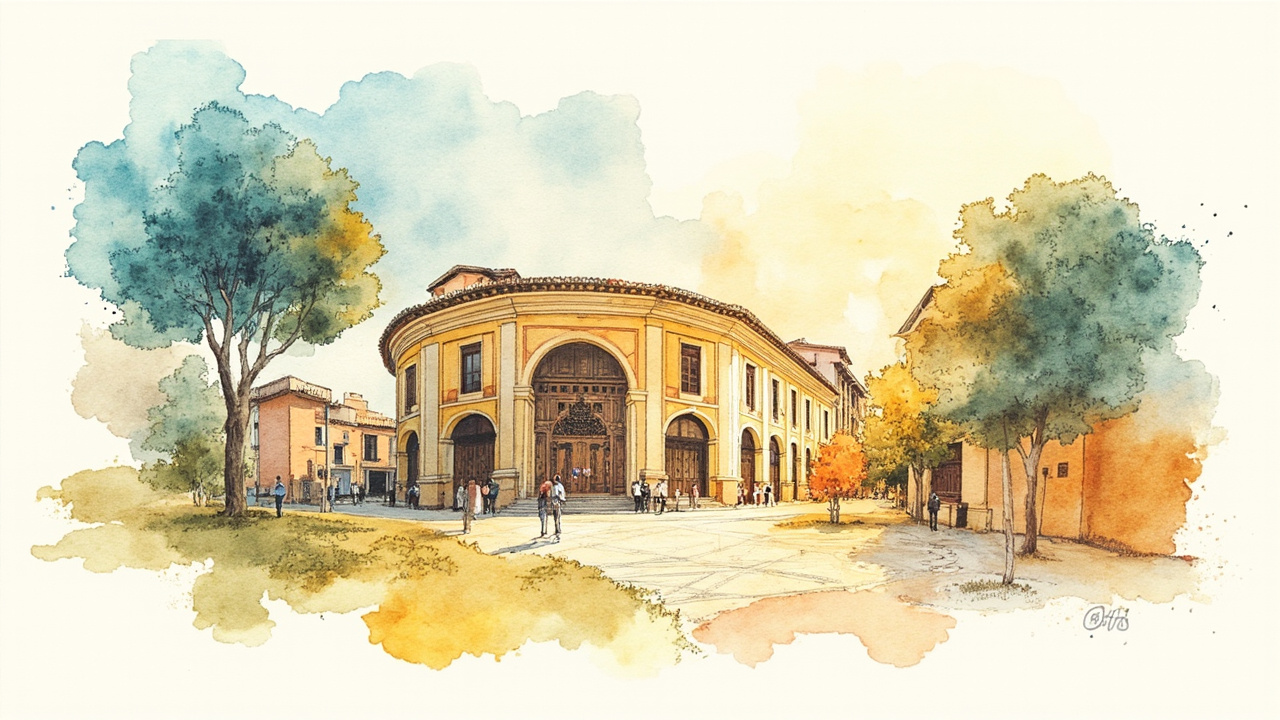
The Governing Council of the Principality of Asturias has declared the Asturian Popular Theater – Asturian Costume Theater (Teatro Popular Asturiano – Teatro Costumbrista Asturiano) as an Asset of Cultural Interest of an intangible nature, a scenic phenomenon and sociocultural movement with over a hundred years of existence. The decision is formalized in Decree 78/2026, dated October 13, published in the Official Gazette of the Principality of Asturias (BOPA) no. 207, dated October 26, 2026, in section I of General Provisions. The text enters into force the day following its publication, that is, October 27.
The decree, signed by the President of the Principality, Adrián Barbón Rodríguez, and the Councilor for Culture, Linguistic Policy, and Sport, Ana Vanessa Gutiérrez González, is issued at the proposal of this department and following the agreement of the Governing Council in its meeting on October 13, 2026. The declaration is supported by article 1.3 of Law 16/1985, on Spanish Historical Heritage, and article 10 of the Law of the Principality of Asturias 1/2001, of March 6, on Cultural Heritage, the regulation governing the processing of the file.
A scenic phenomenon born around 1920
The preamble defines the asset as the set of dramaturgical works conveyed in Asturian and their performances, produced and staged by the non-privileged strata of society and primarily aimed at people of that same social condition. Added to this artistic fact is the surrounding sociocultural framework, which has remained uninterrupted from its beginnings, around 1920, to the present.
Among the values justifying the protection, the decree lists:
- The marked popular and community character, with the non-privileged strata as protagonists, producers, reproducers, and spectators.
- The link with Asturian society and its identity visions.
- The maintenance of Asturian as the linguistic vehicle.
- The particularity and richness of its literary corpus and its scenic expression.
- Its longevity, exceeding a century, and its current validity.
- Its autochthony and singularity, as a cultural fact born in Asturias and exclusive to the community.
The proceedings were initiated by Resolution of February 5, 2025, from the Department of Culture, Linguistic Policy, and Sport, published in the BOPA on February 28, 2025.
Three favorable reports and a disputed name
The processing included a request for reports from four advisory institutions, in accordance with article 6 of Law 1/2001. Three of them issued favorable opinions:
- The Royal Academy of History, in an academic session on April 4, 2025, which highlighted the increase in authors and the monograph by Inaciu Galán and Sergio Buelga as documentary support.
- The Royal Institute of Asturian Studies (RIDEA), via a report dated May 21, 2025.
- The University of Oviedo, with a report submitted on June 12, 2025, which emphasized the need for the declaration to include effective guardianship measures.
The Royal Academy of Fine Arts of San Fernando (RABASF) did not submit a report. On September 18, 2025, the public information process was opened, and a hearing was granted to the Federation of Theater Associations of the Principality of Asturias and, the following day, to the City Council of Carreño.
The only written submission received was from the Board of Trustees of the Prendes de Candás Theater, on September 25, 2025, which requested to replace the designation Asturian Popular Theater with Asturian Costume Theater (Teatro Costumbrista Asturiano). The Permanent Commission of the Cultural Heritage Council of Asturias, on January 29, 2026, and the Plenary of said body, on February 4, 2026, endorsed the double formula: “Asturian Popular Theater – Asturian Costume Theater.”
Guardianship, dissemination, and entry into force
The second article of the decree establishes five lines of action for the safeguarding of the asset:
- Support for stable groups, cultural associations, and artistic sections that sustain the movement.
- Articulation of collaboration channels with the Federation of Amateur Theater Associations of the Principality of Asturias (FETEAS).
- Support for the creation and preservation of popular theater in the Asturian language.
- Development of tools that encourage studies on the manifestation.
- Campaigns to promote its knowledge and valuation among the Asturian citizenry.
The regulation also orders its publication in the BOPA and in the Official State Gazette, in accordance with Article 19 of Law 1/2001.
The declaration places a scenic practice sustained by amateur companies, neighborhood associations, and city councils at the highest level of regional protection, and makes the Asturian language an inseparable part of the protected asset. The decree commits the regional Administration to the theatrical and linguistic sector at a time when the text itself recognizes an increase in authors and scenic experiences.
Source: Official Gazette of the Principality of Asturias, no. 207 of October 26, 2026, section I (General Provisions), pp. 1-2 (official reference: Code 2026-08641).