Registro Oficial del Ecuador · 28 Oct 2026 · 6 vistas
Arajuno introduces new ordinance to control the exploitation of aggregates and stone
Por FactBox Admin
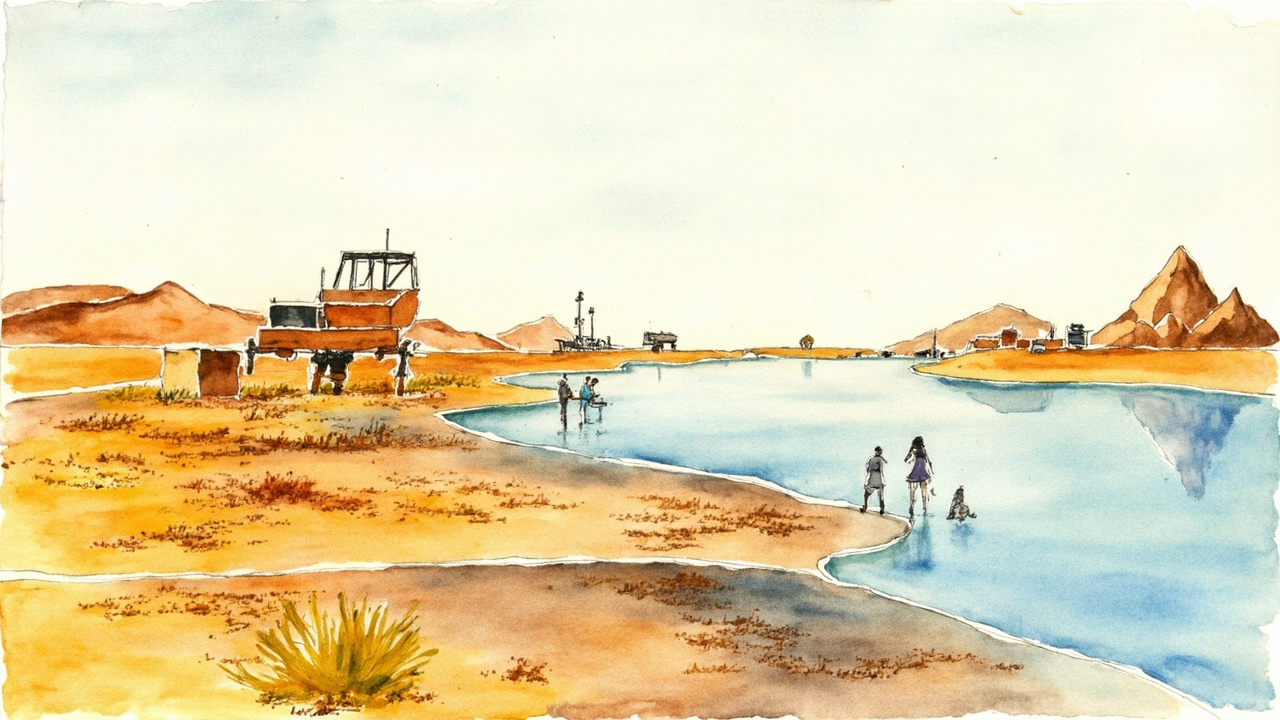
The Municipal Council of the Decentralized Autonomous Municipal, Intercultural, and Plurinational Government of the Arajuno Canton approved Ordinance No. 015-GADMIPA-2026, a substitute regulation that regulates, authorizes, and controls the exploitation, transport, processing, and storage of aggregate and stone materials in riverbeds, lakes, and quarries of the Amazonian canton. The regulation is contained in the Official Registry, Special Edition No. 1717 of Wednesday, October 28, 2026, and was sanctioned by Mayor Darwin Francisco Tanguila Andy through Resolution No. 692-CM-GADMIPA-2026, dated October 7, 2026. The text replaces Ordinance No. 001-2022 and establishes a one-year transition period for its effective application.
Legislative Process and Scope
The Municipal Council discussed and approved the text in two ordinary sessions: the first debate on September 16, 2026, and the second and final debate on October 8, 2026, according to the certification signed by General Secretary Paul César Cerda López. The ordinance declares its mandatory application to natural or legal persons, public, private, community, or self-managed entities operating in the canton, and expressly extends to mining title holders, operators, transporters, owners of processing plants and collection centers, contractors, and “other linked actors.”
The invoked framework includes the Constitution of the Republic, the COOTAD, the Mining Law and its General Regulation, the Organic Environmental Code, and Resolution No. 0004-CNC-2014 of the National Council of Competencies. The text recalls that the Ministry of the Environment accredited the municipality as the Responsible Application Environmental Authority through Ministerial Resolution No. 553, published in the Official Registry Special Edition No. 732 on September 14, 2016.
Production Limits and Deadlines by Regime
The ordinance sets differentiated characterization parameters for artisanal mining and small-scale mining:
- Alluvial or unconsolidated materials: up to 100 m³/day in artisanal mining and up to 800 m³/day in small-scale mining.
- Open pit in hard rocks (quarry): up to 50 tons/day and up to 500 tons/day, respectively.
- Operation area: up to 6 hectares in alluvial and 4 in quarries for artisanal mining; up to 300 hectares in small-scale mining.
- Term: artisanal permits for up to 10 years; concessions for up to 25 years, renewable for equal periods.
- Processing fee: 2 unified basic salaries for the small-scale mining concession and 4 for the authorization or renewal of exploitation, processing, and storage.
Titles are prohibited in areas of the National System of Protected Areas, protective forests, water protection zones, intangible areas, heritage zones, and sectors declared as risk areas or incompatible with the PDOT and the PUGS.
Royalties, patents, and destination of resources
Small-scale mining concessionaires shall pay a royalty of 3% of production costs, in accordance with Article 93 of the Mining Law, with semi-annual settlement: the first semester until September and the second until March. The annual conservation patent is set at 2% of one unified basic salary per mining hectare, payable by March of each year, and non-payment is grounds for expiration.
Royalties will be collected at municipal windows and will be for the “direct benefit” of the GADMIPA. Resources will be prioritized for mining and environmental control, protection of water sources, restoration, risk management, and local development projects. Holders of artisanal permits are exempt from royalties and patents, although they do pay fees for administrative services subsequent to the permit.
Sanctions of up to 20 basic salaries and community guardianship
The sanctioning regime is detailed in Table No. 4, with fines expressed in unified basic salaries:
- Minor infractions: from 1 SBU, for example, for lack of technical, preventive, environmental, or security signage.
- Serious infractions: 5 SBU, for impeding inspections, failing to comply with technical parameters, operating material without accredited origin, or failing to comply with environmental measures.
- Very serious infractions: 10 SBU for exceeding authorized volumes and 20 SBU for exploiting outside the limits or coordinates of the title, creating serious risk, or continuing activities despite a current suspension.
The instructing function corresponds to the Directorate of Public Works and the resolving function to the Municipal Commissariat, with a mandatory separation of functions. Standing is recognized for “any natural or legal person, commune, community, people, or nationality” to report violations of the rights of nature, and transporters are required to carry mobilization guides issued by the mining holders.
One year of waiting before full application
The First Transitory Provision stipulates that procedures, registries, fees, and the sanctioning regime will enter into effective application one year after publication in the Official Registry; until then, Ordinance No. 001-2022 will remain in force insofar as it does not oppose superior regulations. Within 180 days, the Human Talent Administration Unit must present a report on the specialized technical team—at least one professional in mining engineering or geology—required to exercise the competence.
The regulation reaches a canton where extraction from rivers and quarries sustains a large part of the local construction activity and where the ordinance expressly recognizes the “intercultural and plurinational” reality. Its impact will depend on the institutional capacity to certify origins, collect royalties, and impose sanctions: the text itself conditions the effectiveness of the system on the availability of technical personnel, which is only planned for the end of the transition period.
Source: Official Registry, Special Edition No. 1717, October 28, 2026 (official reference: Ordinance No. 015-GADMIPA-2026).