La Gaceta — Diario Oficial · 22 Oct 2026 · 8 vistas
Alvarado regulates street vending and the seizure of unlicensed merchandise
Por FactBox Admin
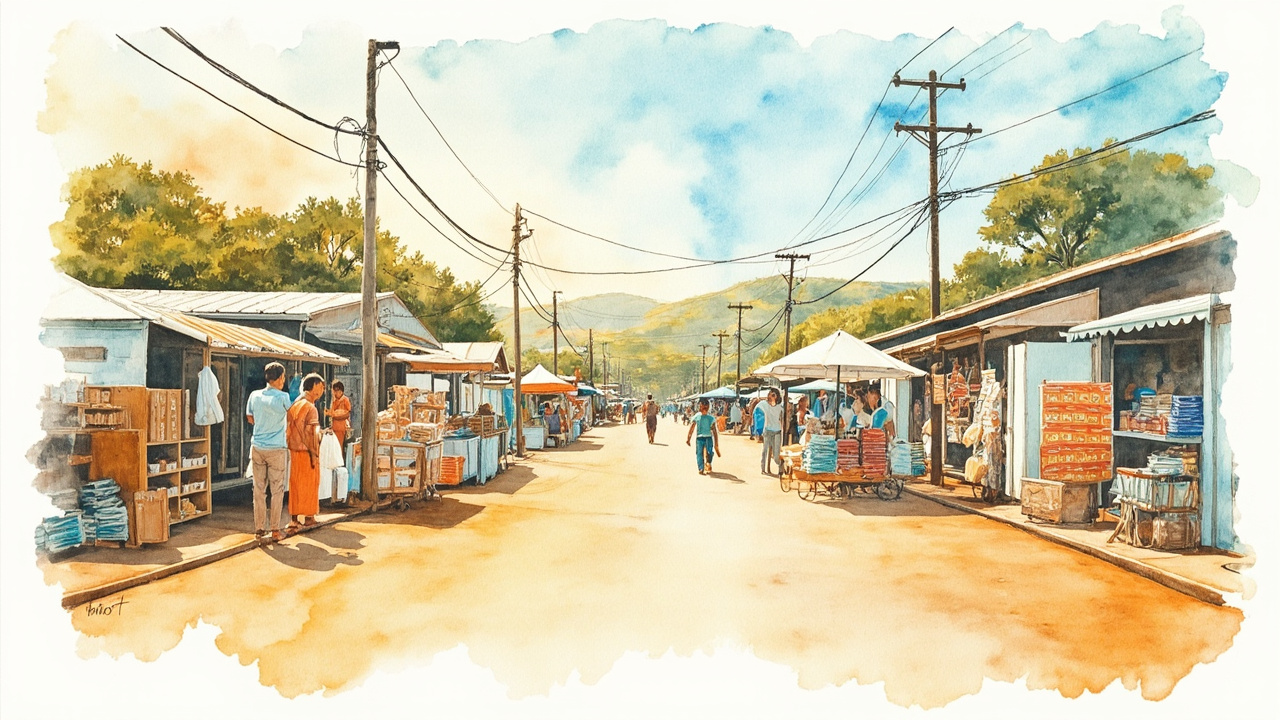
As of this Thursday, October 22, 2026, the Municipality of Alvarado has two new regulations to organize mobile commerce and the seizure of unlicensed merchandise in the districts of Pacayas and Capellades. The Municipal Council of Alvarado approved both instruments in September, and their full text appears in La Gaceta No. 200 of this date, with official references IN202601134118 and IN202601134187.
The first of the texts is the Regulation for the Regulation of Mobile Commerce of the Municipality of Alvarado, issued under article 43 of the Municipal Code and the Special Law for Mobile Commerce, No. 10,254. Its scope is limited to establishments operating temporarily in public or private areas of a cantonal nature in Pacayas and Capellades, using modified motor vehicles for the sale and preparation of food or beverages and for the sale of goods and services through non-credit transactions.
The regulation distinguishes between two types of special temporary commercial licenses: one for operating on property of a public-cantonal nature and another for property of a private nature. In the first case, the authorization does not create a real right or possessory action and implies a precarious use permit, revocable for reasons of public interest; in the second, the zoning of the canton’s Regulatory Plan must be complied with.
One-year license and fee of 20% of the base salary
- Maximum license term: one year (12 months), renewable for an equal period.
- Municipal resolution: 10 calendar days, extendable up to 20 additional calendar days upon notified technical justifications.
- Annual fee: equivalent to 20% of the base salary established by Law No. 7337 of May 5, 1993, paid in monthly installments in advance.
- Procedure: jurisdiction of the Tax Administration, with the approval of the Technical Unit for Road Management (UTGV) regarding the requested location.
The requirements of article 11 include the sanitary operating permit from the Ministry of Health, the veterinary operation certificate from SENASA when products of animal origin are marketed, the occupational risk policy from the National Insurance Institute, registration with the Ministry of Finance, being up to date with the Costa Rican Social Security Fund and the municipality, the food handling course, and the liquefied petroleum gas permit when applicable.
Prohibitions, suspensions, and revocation
Article 18 prohibits, among other behaviors:
- throwing food waste or garbage on public roads or neighboring properties;
- disposing of wastewater in the gutters and drains of the streets;
- totally or partially closing cantonal roads or unauthorized public spaces;
- infringing upon freedom of movement and accessibility for people;
- exercising the activity as a street vendor, varying from the authorized site;
- selling and consuming alcoholic beverages;
- moving without municipal authorization.
Licenses may be suspended for non-payment, failure to comply with requirements or schedules, closure of roads, or change in the granting conditions, and revoked for failing to meet technical criteria, interrupting pedestrian circulation, death or resignation of the licensee, abandonment of the activity for more than one quarter, use for illicit activities, or failure to renew.
Seizures with the accompaniment of the Public Force
The second text, Regulation for the Seizure of Merchandise, Products and/or Goods Marketed without a Commercial License, empowers municipal officials and inspectors to seize merchandise offered on public roads or private property, in coordination with other institutions and accompanied by officers of the Public Force to protect their integrity and ensure that the procedure is carried out in an orderly manner.
The record must include the form number, place, time and date, issuing official, offender’s data, detailed inventory of the merchandise, and signatures. Perishable products are donated or discarded immediately; non-perishable products may be recovered by presenting invoices or a suitable document no later than the third business day following notification, through a one-time return record, which does not apply in cases of recidivism.
Third seizure and definitive cancellation
The sanctioning regime ranges from closure and seizure to the destruction of products, and provides that the license be temporarily suspended and definitively cancelled upon the third seizure, following an ordinary administrative procedure in accordance with the General Law of Public Administration, No. 6227. It also refers to Law No. 9047 for liquors, Law No. 8039 on intellectual property, and Law No. 6683 on copyright.
Both regulations take effect from their second publication in La Gaceta and repeal previous versions. The one regarding mobile commerce was approved in ordinary session No. 171 on September 14, 2026 (Article V, point 3, subsection 3.1) and the one regarding seizures in ordinary session No. 173 on September 21, 2026 (Article VII, point 2, subsection 2.9), both signed by the Secretary of the Council, Vivian Leandro Figueroa.
For the merchants of Pacayas and Capellades, the publication establishes clear rules for cost, location, and permanence for the first time, while for neighbors, it enables a mechanism for the removal of merchandise and the closure of illegal stalls with police support. The regulation also transfers to the municipality the burden of safeguarding seized items and resolving return requests, with short deadlines and open administrative files.
Source: La Gaceta, No. 200, Thursday, October 22, 2026, Regulations section, pp. 53-60 (official references: IN202601134118 and IN202601134187).