La Gaceta — Diario Oficial · 27 Oct 2026 · 5 vistas
Alajuela: new regulations for the Tuetal Norte cemetery set rates and deadlines
Por FactBox Admin
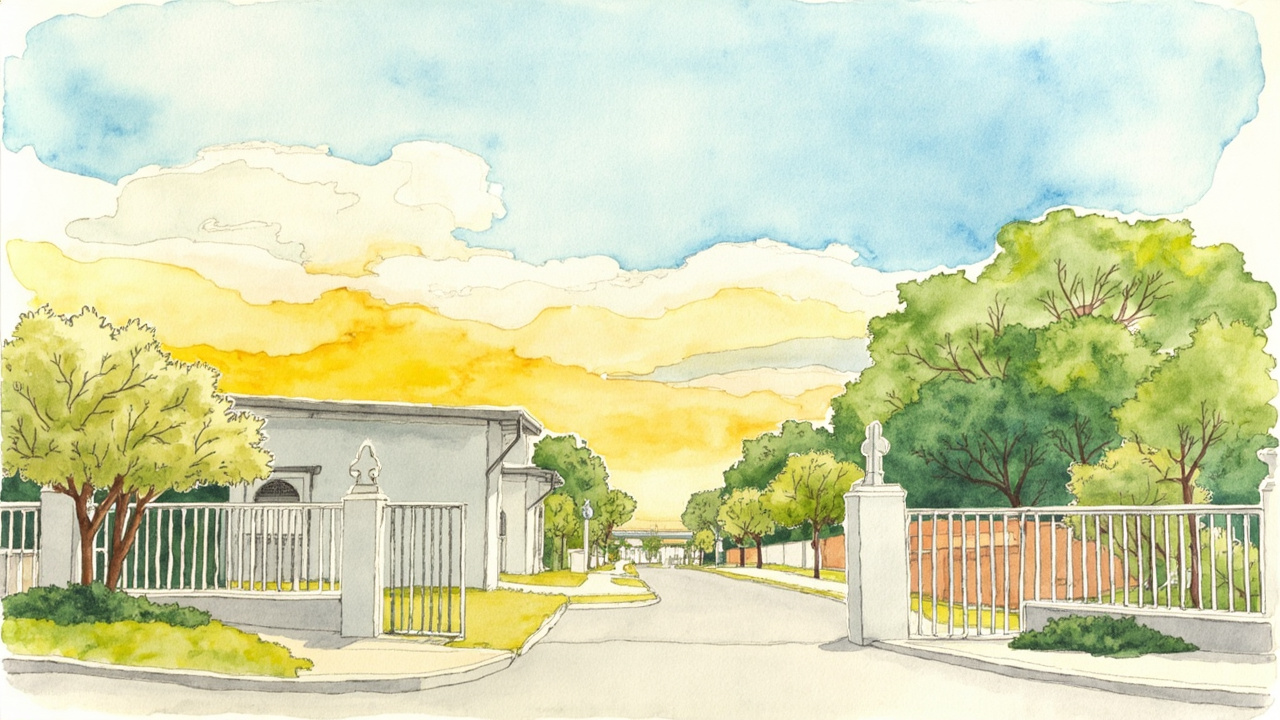
The Administrative Board of the Tuetal Norte Cemetery of Alajuela has, as of October 27, its own Internal Regulation, consisting of 111 articles distributed across fifteen chapters, which governs the administration of the cemetery, its fees, precarious use permits, extensions, exhumations, and the figure of honorary mausoleums. The publication appears in La Gaceta No. 203 of Tuesday, October 27, 2026, in the Regulations section, under the official reference IN202601134698. The text was approved by the Integral Development Association of Tuetal Norte de Alajuela and by the Board itself.
The regulatory framework and the origin of the text
The regulation is based on the General Cemetery Regulation, Executive Decree No. 32833-S, published in La Gaceta No. 244 on December 19, 2005, and its reform via Executive Decree No. 42474-S of 2020. Among other norms, the following are declared applicable: Decree Law No. XXIV of July 19, 1884, Decree Law No. 704 of September 7, 1949, Law No. 6000, the General Health Law No. 5395, the Civil Code, and the Labor Code.
The authorization to publish is contained in minute number 344, from the extraordinary session of the Board of Directors of the Integral Development Association of Tuetal Norte, dated October 19, 2026, which authorized notary Melissa Sanabria Saborío to carry out the publication procedures. Article 111 stipulates that the regulation governs from the moment of its approval and publication and repeals any previous provision that opposes it.
A seven-member board and fee-based financing
The surveillance, conservation, and administration of the cemetery are the responsibility of the Board, appointed by the Integral Development Association or, in its absence, by the permit holders in an assembly. Its composition and operating rules are:
- Seven members: president, secretary, treasurer, three members-at-large, and one auditor.
- A three-year term, with the possibility of total or partial reelection.
- Ad honorem performance and a prohibition of kinship or affinity ties up to the third degree among its members.
- Ordinary sessions once a month and extraordinary sessions by call of the president or three members, with 24 hours’ notice.
- Loss of office for three or more unjustified absences, serious misconduct, commission of crimes, or misuse of resources.
Article 5 empowers the Board to define, charge, and collect fees for burial, exhumation, maintenance, construction and repair permits for vaults, certifications, allocation and extension of niches, opening of niches, and burial of anatomopathological waste, as well as to set fines for late payment. The general maintenance fee is charged to all permit holders, except those with a niche allocation for burial; arrears are calculated based on the Basic Passive Rate of the National Banking System, with a minimum of seven percent per year, and expire after ten years in accordance with Article 868 of the Civil Code.
Precarious permits, terms, and exhumations
The precarious use permit is defined as a unilateral act of the Board that grants an exclusive but precarious right: it does not confer ownership or a real right, it cannot be seized, and it cannot be transferred, assigned, sold, leased, or donated, as the State maintains direct ownership. The terms and modalities are:
- Validity of no less than five years nor more than 45 years, without indefinite renewal.
- Cash payment at the Treasury or one-year financing: one quarter upon submitting the application and three equal payments every four months.
- Breach of financing: the application is considered withdrawn and the amount paid is returned minus five percent for damages.
- Revocation due to non-payment for five consecutive years, abandonment of use, or expiration of the term.
- Lot types: single lots of 1.10 by 2.50 meters (up to two niches), double lots of 1.85 by 2.50 meters (four to six niches), and special lots.
- Common niches of 56 centimeters high, 65 wide, and 250 long; plaques of 12 by 30 centimeters.
Regarding sanitary matters, burials are carried out from 8:00 to 16:30 hours, with a request made at least six hours before the burial, and require a death certificate, the applicant’s ID, signed authorization from the permit holder, and up-to-date maintenance payments. Ordinary exhumations proceed five years after burial; extraordinary exhumations require a court order or permission from the Ministry of Health. Upon expiration of a niche permit, the holder has 30 calendar days to request exhumation and, in justified cases, the Board may extend it ex officio for up to two years. The use of vases with water is prohibited by sanitary order, and arrangements must be made with materials that do not accumulate liquid.
Mausoleums of honor and expenditure control
Chapter XII creates the distinction of Mausoleum of Honor for abandoned vaults containing the remains of people distinguished by their service to the community, declared once at least ten years have passed since the burial. No permits will be granted for these vaults, the distinction is revoked if the remains are moved, and their arrangement and maintenance are the responsibility of the Board. The regulation also allows for the free authorization of burials for people with duly proven limited resources and the exemption of burial fees for individuals or institutions of social benefit.
The text also establishes internal controls: a digital registry of permits, burials, exhumations, and transfers; electronic backup of the database; an annual report to permit holders; and a separate account for resources as long as the Board does not have legal personality. All inquiries must be submitted in writing, and the Board responds within five days following the next ordinary session.
Impact for the residents of Tuetal Norte
For the inhabitants of Tuetal Norte and for those who have relatives buried in that cemetery, the regulation converts into written and enforceable rules what previously depended on administrative practices: how much a permit costs, how it is paid, when an exhumation can take place, and what happens if a vault is abandoned. The regulation published in La Gaceta No. 203 establishes for the first time a revocation procedure with notification and the right to oppose, and subjects the management of the cemetery to the oversight of the Municipality of Alajuela, the Comptroller General of the Republic, and the Ministry of Health.
Source: La Gaceta, No. 203 of Tuesday, October 27, 2026, Regulations section – Municipalities, pp. 72-79 (official reference: IN202601134698).