BOP de Girona · 14 Aug 2026 · 12 vistas
Torre d'en Reig: the County Council initiates the proceedings to declare it a local heritage asset.
Por FactBox Admin
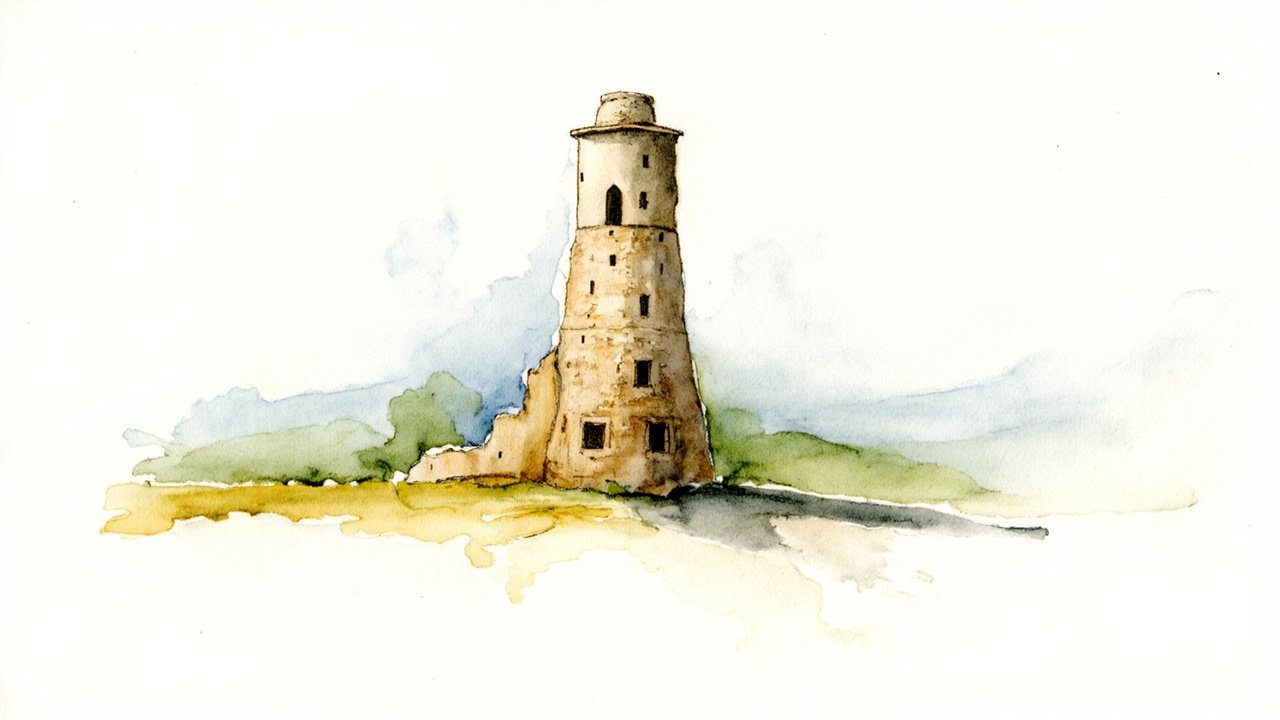
The Plenary of the Comarcal Council of Alt Empordà agreed, at its ordinary session of 28 July 2026, to initiate the procedure for the declaration, where applicable, as a cultural asset of local interest (BCIL) of the Torre d’en Reig in Vilabertran. The agreement was published in the Official Bulletin of the Province of Girona of 14 August 2026 (edict 7221, CVE BOP-2026_0_156_7221) and subjects the procedure to public information for twenty working days.
The procedure arises from the request that the Town Council of Vilabertran submitted on 7 April 2026 to protect the building at Carrer Josep Reig i Palau, 10, municipally owned. Since the municipality has fewer than 5,000 inhabitants, Article 17 of Law 9/1993, of 30 September, on Catalan cultural heritage attributes the competence to declare the BCIL to the Plenary of the comarcal council, with the prior report of a cultural heritage technician.
A 1909 building linked to the art of Empordà
The Torre d’en Reig is an early 20th-century construction, dated 1909, in a modernist style with Gaudí-inspired lines, commissioned by the forest engineer Josep Reig i Palau, son of Vilabertran and responsible for the reforestation of the dunes of Empúries. After his death, the house passed to the watercolourist Ramon Reig, who used it as a second residence. Its historical value is also linked to the cultural life of the comarca:
- The Reig family received visits from the Dalí family, Joan Xirau, Ramon Turró, Alexandre Deulofeu and Met Miravitlles.
- According to the writings of Anna Maria Dalí, Salvador Dalí and Ramon Reig spent Sunday afternoons painting in the garden of the tower.
- The Town Council of Vilabertran bought the property on 9 July 1959 for 400,000 pesetas, paid to the family over ten years.
- On 15 January 1961 the building was inaugurated as the town hall, peace court, medical dispensary and schools; in 1999 the Government of Catalonia collaborated in its restoration.
Singular architectural values
The building combines a quadrangular floor plan with a ground floor, two storeys and attic, five attached bodies and a large circular tower at the north-western end, with a tiled roof. The decoration with glazed ceramics and plant motifs, the colourful stained glass windows, the exterior ramp with rockwork balustrade and the segmental-arch portal with trencadís are the most notable elements of the construction.
The report by the architect of the Technical Assistance Service of the Comarcal Council of Alt Empordà, issued on 19 June 2026, assesses the cataloguing favourably and stresses that the declaration as a BCIL would reinforce the protection already included in the general urban development plan of Vilabertran. On the same day, the technical officer from the Culture area also issued a favourable report.
Twenty days of public information
The agreement opens a period of public information of twenty working days, with announcements in the BOP of Girona, in the DOGC, in a newspaper with greater circulation in the area, and on the notice board of the corporation, in accordance with article 10.3 of Law 26/2010. If no objections are filed, the initial agreement will become final without the need for a new agreement by the Plenary.
- The declaration will entail the registration of the property in the Catalan Cultural Heritage Catalog at the expense of the Department of Culture.
- Against the final agreement, an administrative contentious appeal may be filed before the Court of Instance of Girona within two months.
- The edict, electronically signed on 31 July 2026, is a procedural act that cannot be challenged independently.
Impact of protection
If the declaration succeeds, the Torre d’en Reig will be subject to the protection regime for cultural assets of local interest, which will condition any future intervention on the building and guarantee its comprehensive conservation. For Vilabertran, a municipality of fewer than 5,000 inhabitants, the cataloging means protecting one of its most cherished heritage symbols, closely linked to the artistic memory of Empordà.