관보 (Republic of Korea Official Gazette) · 16 Sep 2026 · 2 vistas
South Korea unveils agrivoltaics implementing rules ahead of December law
Por FactBox Admin
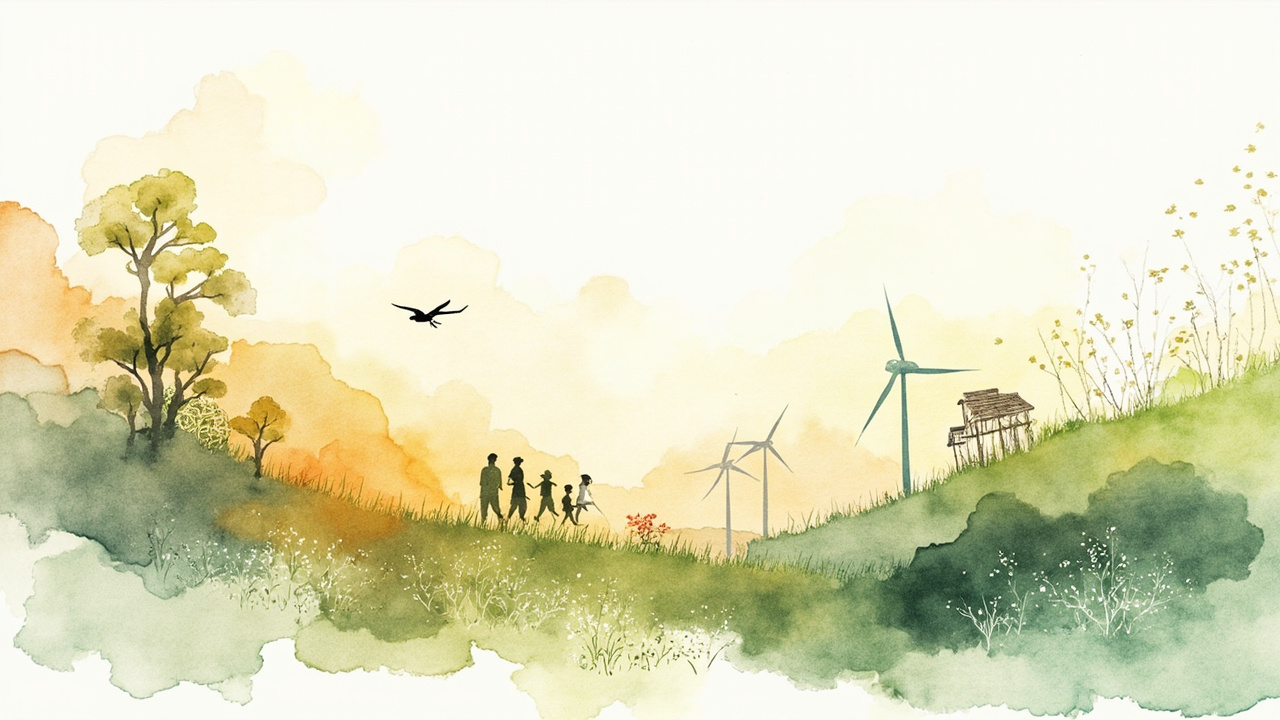
The Ministry of Agriculture, Food and Rural Affairs (MAFRA) has formally pre-announced the draft enforcement decree and enforcement rules that will implement the new Act on the Promotion and Support of Agrivoltaic Power Generation (Act No. 21804), published in the Republic of Korea Official Gazette (관보) No. 21323 of 16 September 2026. The two notices — 농림축산식품부공고 제2026-487호 (enforcement decree) and 농림축산식품부공고 제2026-488호 (enforcement rules) — set out the operating framework for agrivoltaics, which pairs solar generation with continued farming on the same land. Public comments are invited until 28 September 2026 through the National Participation Legislation Center (opinion.lawmaking.go.kr).
The parent law, promulgated on 16 June 2026 and due to take effect on 17 December 2026, aims to preserve the agricultural production base while raising the incomes of farmers and rural residents and expanding renewable-energy output. The implementing texts translate that mandate into concrete licensing, duration, farming-continuity and community-benefit rules.
Who may operate an agrivoltaic project
The draft decree defines the scope of “agrivoltaic power-generation facilities” and restricts who can obtain a generation licence.
- Farmers must have resided for at least three years in the town, township or district (eup·myeon·dong) where the facility is located, or in an adjacent one, and must prove their farming activity.
- Young farmers are exempt from the three-year farming-and-residence condition.
- Resident-participation cooperatives must have at least 10 members, each residing for at least one year in the facility’s locality or an adjacent one.
- Agricultural corporations eligible inside renewable-energy districts are limited to farming cooperatives (yeongnong-johap) and agricultural companies pursuing projects on state-managed reclaimed land.
Project term, licensing and farming continuity
A generation licence runs for a maximum of 23 years — an initial five years plus up to six extensions of three years each. The decree and rules detail the application forms, the resident-consultation process (public notice, inspection and explanatory meetings), and the licensing criteria applied by mayors, county governors and district heads, who may also cap project size and attach conditions.
To keep agrivoltaics genuinely agricultural, operators must farm at least 80% of the project site using ordinary cultivation methods, verifiable in an objective manner. The rules specify the evidence for continuous farming, the grounds for temporary suspension, and the crops that may not be grown in parallel with generation. Operators must keep and submit farming-verification records, and local authorities must check compliance at least once a year.
Community benefit and enforcement
Resident-participation cooperatives and agricultural corporations in renewable-energy districts must draw up a community-benefit plan, channelling returns into energy-welfare support, agricultural infrastructure and joint-farming activities, and community-life services. The rules set out the plan’s required detail.
- Non-compliance triggers corrective orders, business suspension or licence revocation, followed by site-restoration obligations.
- Fines (gwajeongeum) are calculated for failure to meet farming duties, and whistle-blower rewards are provided.
- A standard farmland-lease contract and explanatory guide will be issued to protect tenant farmers.
- Korea Rural Community Corporation (농어촌공사), the Rural Development Administration-affiliated agencies (농진원) and the Korea Agency of Education, Promotion and Information Service in Food, Agriculture, Forestry and Fisheries (농정원) are designated as comprehensive support centres and supervision agencies.
- A comprehensive information system will be built, and a biennial fact-finding survey is mandated.
The decree also streamlines licensing for facilities built under earlier agrivoltaic demonstration and pilot projects, and delegates MAFRA powers to the head of the National Agricultural Products Quality Management Service (농관원) and to local authorities.
Why it matters
With the law taking effect in December, these draft rules will determine how agrivoltaics actually operates on Korean farmland — balancing solar generation against the obligation to keep farming. For farmers, cooperatives and rural communities, the three-year residence rule, the 23-year project ceiling and the mandatory community-benefit mechanism directly shape who can invest, how long projects last, and how much of the revenue stays in the countryside.
Source: Republic of Korea Official Gazette (관보), No. 21323, 16 September 2026, Section I (official reference: 농림축산식품부공고 제2026-487호 and 농림축산식품부공고 제2026-488호).