관보 (Republic of Korea Official Gazette) · 02 Sep 2026 · 12 vistas
South Korea Previews Green Shipping Route Decree and Rule
Por FactBox Admin
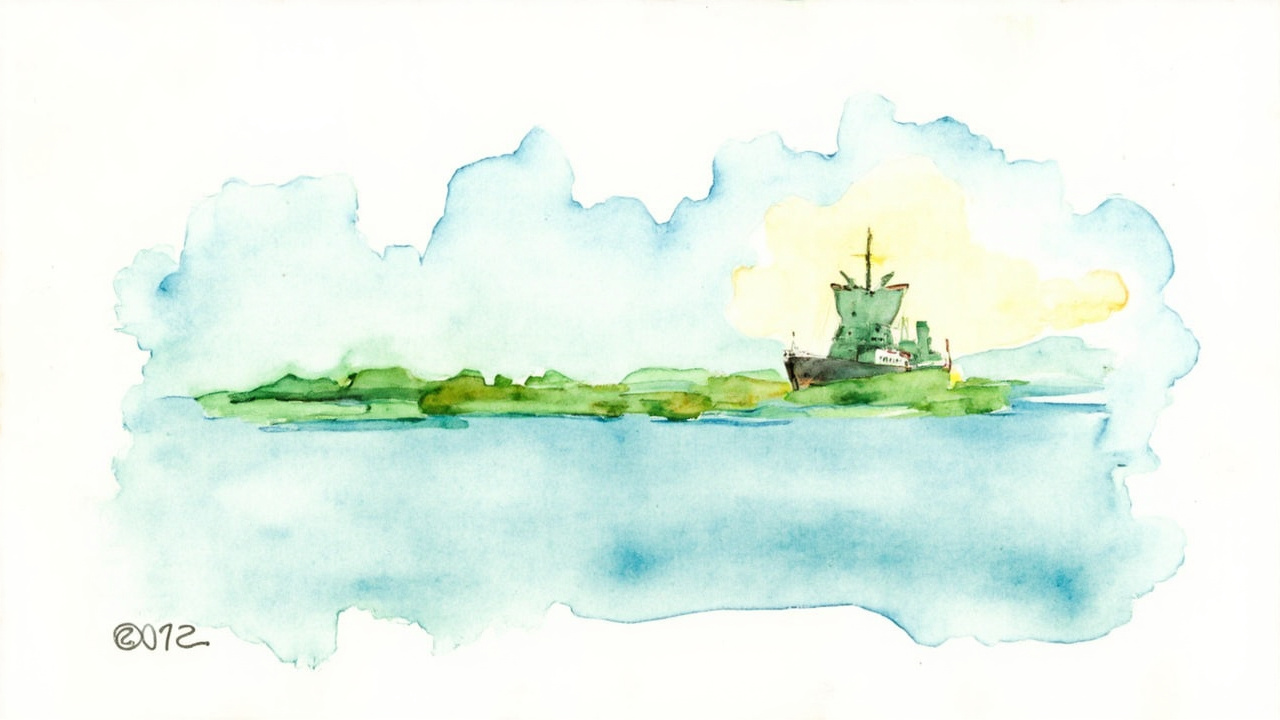
The Ministry of Oceans and Fisheries has opened a legislative preview of the enforcement decree and enforcement rule that will implement the Special Act on Support for the Establishment of Green Shipping Routes (Act No. 21513), published in the Republic of Korea Official Gazette (Gwanbo) No. 21313 of 2 September 2026. The two notices — 해양수산부공고 제2026-1285호 (decree) and 해양수산부공고 제2026-1286호 (rule) — were issued by the Minister of Oceans and Fisheries under Article 41 of the Administrative Procedures Act, with public comments accepted until 13 October 2026.
The move responds to the International Maritime Organization (IMO)’s tightening greenhouse-gas reduction rules for international shipping and the global expansion of Green Shipping Corridors. The enabling law, promulgated on 31 March 2026, delegates the detailed content of the green-route master plan, the composition and operation of a support council, and the entrustment of related tasks to subordinate legislation.
Decree: master plan, support council and entrustment
The draft enforcement decree adds items to the green-route master plan, including international cooperation and response to international standards, the collection, management and sharing of route-related data, and the discovery of preliminary green routes and their conversion into full green routes (draft Article 2).
It also sets operating rules for the support council, covering members’ terms, the acting chairperson, balanced regional composition and regional meetings (draft Article 3). Under draft Article 4, the ministry may entrust research, information management, professional training and international-cooperation support to specialized institutions, with rules on the scope, designation and public notice of the entrusted bodies.
Rule: green ships, eco-ports and route designation
The draft enforcement rule defines the categories of green ships, covering vessels powered by methanol, hydrogen, ammonia, biofuel or renewable synthetic fuel, electric- and fuel-cell-propelled ships, hybrid vessels, and any ship the minister recognizes as having equivalent or better environmental performance (draft Article 2).
It also specifies the requirements for environmentally friendly ports and the items to be gazetted when a green route or preliminary green route is designated:
- Eco-port requirements (draft Article 3): ports equipped with eco-friendly fuel supply systems, or with shore-power and other electricity supply systems.
- Route designation notice (draft Article 4): the route’s name, origin, destination and ports of call, and ship type and power source; ship type and power source may be omitted for preliminary routes, and changes or cancellations must also be gazetted.
- Fuel support scope (draft Article 5): low- and zero-carbon fuels eligible for memorandum-of-understanding support.
- Council meetings (draft Article 6): convening, quorum and voting, secretariat operations, and hearing stakeholders and experts.
- Workforce training (draft Article 7): international education, training and exchange programmes, and the building of professional-workforce information and statistics.
Impact on the shipping and port industry
The two instruments give the maritime and port sectors a concrete regulatory framework for decarbonization, defining which ships and ports qualify as “green” and how routes are designated, gazetted and supported. Comments may be submitted online through the National Participation Legislation Center or in writing to the Minister of Oceans and Fisheries, with details available from the ministry’s Maritime Industry and Technology Division (051-773-5835).
Source: Republic of Korea Official Gazette (Gwanbo), No. 21313, 2 September 2026, Announcements section (official reference: 해양수산부공고 제2026-1285호 and 제2026-1286호).