Boletín Oficial de la Comunidad de Madrid · 23 Oct 2026 · 3 vistas
Somosierra declares the 1808 battlefield a Historic Site
Por FactBox Admin
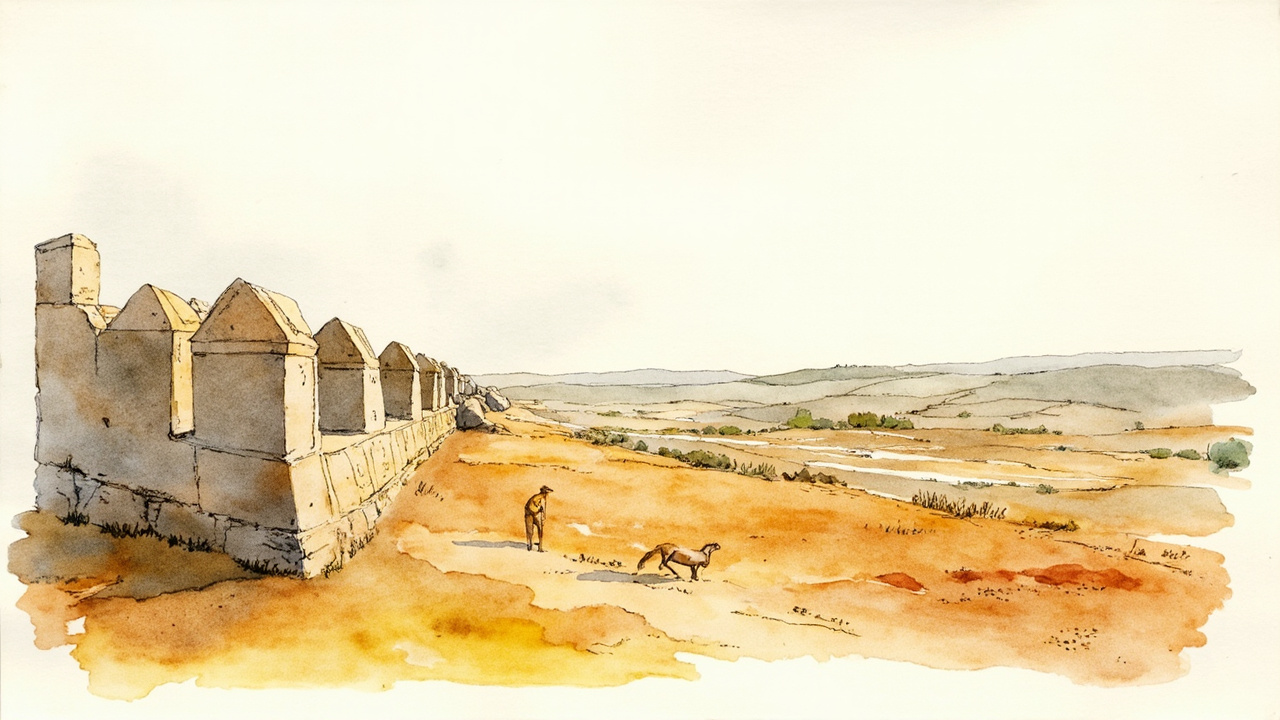
The Governing Council of the Community of Madrid has declared the Somosierra Battlefield (30-XI-1808) a Property of Cultural Interest, under the category of Historic Site. The decision is formalized in Decree 88/2026, of October 21, published in the OFFICIAL GAZETTE OF THE COMMUNITY OF MADRID (B.O.C.M.) no. 253, of October 23, 2026, in its section I.C) Other Provisions, with reference BOCM-20261023-25. The regulation takes effect from the day following its publication.
The decree, promoted by the Ministry of Culture, Tourism and Sport, is based on Law 8/2023, of March 30, on the Cultural Heritage of the Community of Madrid, and culminates a file initiated on November 5, 2025, by resolution of the General Directorate of Cultural Heritage and the Spanish Language Office. The text justifies the protection because Somosierra was “a decisive battle of the War of Independence, the only one fought in open field in the Community of Madrid and the only one personally led by Napoleon Bonaparte in Spain.”
The processing included the publication in the B.O.C.M. on November 19, 2025, which opened a month of public information, and the notification to the Somosierra City Council for display on the notice board. The Royal Academy of History issued a favorable report on January 23, 2026, while the Autonomous University of Madrid and the Complutense University of Madrid did not submit a report, and are therefore considered favorable according to article 20.3 of the regional law. The Plenary of the Regional Council of Cultural Heritage gave its approval by majority on November 20, 2025, and the nineteen written allegations received were dismissed. The property was preventively registered with codes BI0032094 and RBIC-2025-000011.
A perimeter of 2,800 meters between two roads
The protected area is the strip comprised between the layouts of the current A-1 highway and the old Madrid-Burgos road on the northern slope of the pass, with a length of 2,800 meters and a maximum width of 260 meters. The pass saddle is located at an altitude of 1,444 meters, between the Lozoya valley and the Ayllón massif.
The declaration lists as integral parts:
- The battlefield itself, including the remains of the stone bridge over the Duratón river.
- The French fort or redoubt erected by order of Napoleon Bonaparte after the combat, with two staggered platforms of approximately 25 x 43 meters, a ditch about 5 meters wide, and an approximate surface area of 3,000 square meters.
- The Hermitage of Our Lady of Solitude, built in 1654, with a rectangular floor plan of 8 x 17 meters, integrated into the Spanish defensive system.
- The archaeological assets and remains present on the surface or in the subsoil.
The protection area is delimited to the south and southeast of the polygon, in the areas with the potential to harbor remains, and does not extend to the north because the municipality borders the province of Segovia. The materials recovered in the 1998 and 2000 campaigns are preserved in the Archaeological and Paleontological Museum of the Community of Madrid, the Army Museum, and the Somosierra City Council.
Without prior urban protection and with the hermitage cataloged
The battlefield and the fort lack urban protection: the land is classified as non-urbanizable of special forestry and landscape protection, wasteland, or for agricultural use. Only the hermitage appeared in the Catalog of Protected Assets of the 1993 Subsidiary Norms of the municipality, with grade 2 structural protection.
The conditions of the declaration are mandatory for the local entity and prevail over urban regulations, which must be adjusted through the appropriate modifications, according to article 25 of Law 8/2023. Compatible uses are considered to be those that maintain the character of the site without altering its topography or landscape, and any future use shall be subordinate to not endangering the protected values.
The decree describes a fort entirely filled in and covered in brush, with the northern slope damaged by runoff, and a hermitage in good condition although with widespread dampness in the walls and ceiling.
The Polish charge that opened the way to Madrid
On November 30, 1808, the Somosierra pass pitted about 9,000 Spanish defenders, mostly inexperienced and with scarce weaponry, commanded by General San Juan, with about 400 riders, 200 artillerymen, and 16 pieces of artillery. Facing them, the Grande Armée deployed three infantry regiments with more than 7,500 personnel, 2,500 riders, four squadrons of Polish light cavalry with 678 riders, and two reserve divisions with 10,000 men.
Around eleven in the morning, once the fog had cleared, Napoleon Bonaparte ordered the charge of the Polish cavalry against the batteries staggered along the route. The action lasted only a few minutes and decided the battle, but of the slightly more than 150 riders who took part in it, more than half became casualties. Madrid capitulated on December 14, 1808.
The declaration comes nearly 218 years after the combat and makes Somosierra the first war site in the region protected under this category, which forces the City Council to adapt its planning and limits any intervention in the pass. The file, processed under internal reference (03/17.131/26), also opens the way for future excavations in a terrain that the Royal Academy of History considers well-preserved and “for the most part free of obstacles” for its visit and understanding.
Source: OFFICIAL GAZETTE OF THE COMMUNITY OF MADRID, no. 253, October 23, 2026, section I.C) Other Provisions, pages 141-162 (official reference: BOCM-20261023-25).
Fuente: Boletín Oficial de la Comunidad de Madrid · Boletín Oficial de la Comunidad de Madrid de 2026-10-23