Diario Oficial El Peruano · 28 Oct 2026 · 3 vistas
PRODUCE authorizes second exploratory giant squid fishery from November 1 to 30
Por FactBox Admin
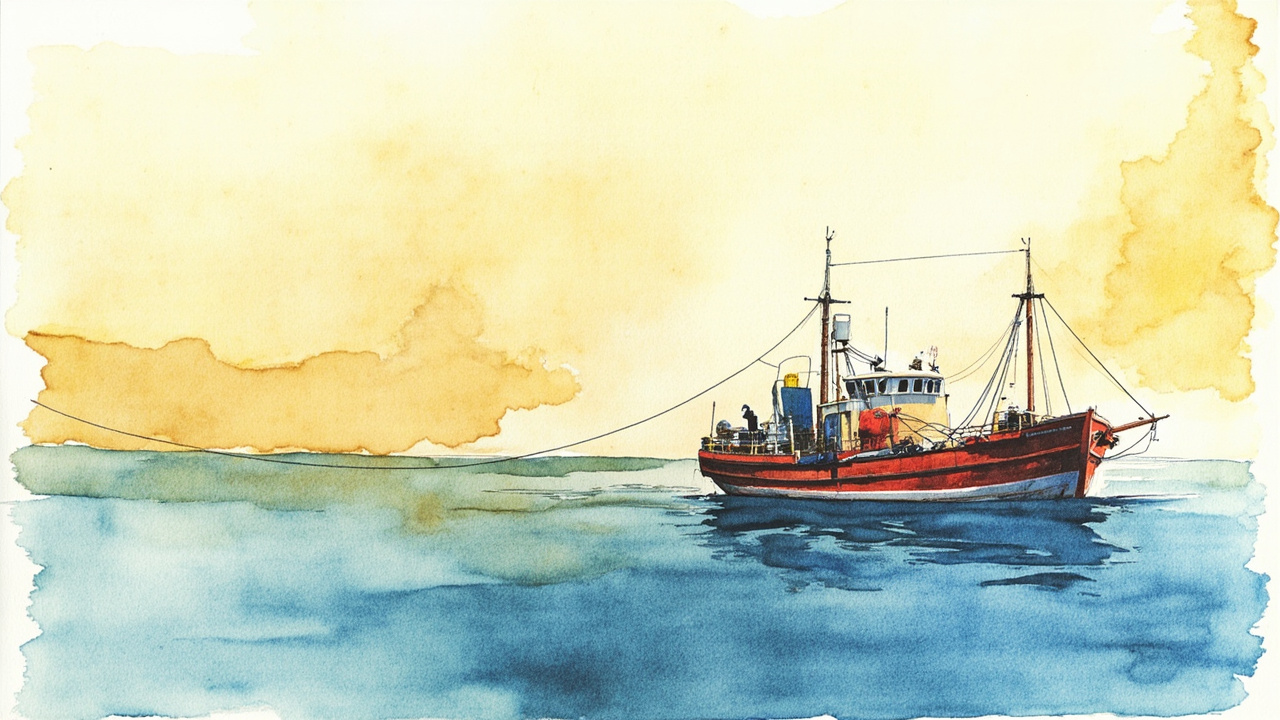
The Ministry of Production (PRODUCE) authorized the Institute of the Sea of Peru (IMARPE) to carry out the second exploratory fishing of the giant squid or pota resource (Dosidicus gigas) within the maritime area of national jurisdiction, from November 1 to November 30, 2026. The decision was formalized through Ministerial Resolution No. 00382-2026-PRODUCE, published this Wednesday, October 28, 2026, in the Legal Norms section of the Official Gazette El Peruano. The activity involves fishing vessels with a hold capacity of up to 32.6 m3 and takes place during the El Niño 2026-2027 event.
The resolution, signed by Minister Juan Carlos Requejo Alemán on October 27, 2026, is based on the Fisheries Management Regulation for the Giant Squid or Pota resource, approved by Supreme Decree No. 003-2025-PRODUCE, and Ministerial Resolution No. 00348-2026-PRODUCE, which established an adaptive approach strategy for the fishery and authorized IMARPE to conduct the first exploratory fishing, with further exploratory fishing permitted until December 31, 2026.
The stated objective is to evaluate the main biological-fishery indicators in the primary distribution and fishing zones of the resource during November 2026. According to Official Letter No. 2036-2026-IMARPE/PE, mature females were recorded throughout the evaluated period during the first exploratory fishing in October, which could favor future recruitment if environmental conditions allow for reproductive success; therefore, it was considered pertinent to continue the research to determine if the observed changes persist. The technical evaluation was supported by reports No. 00000813-2026-PRODUCE/DGPARPA and No. 00001451-2026-PRODUCE/OGAJ.
Conditions for vessels up to 32.6 m3
Participating shipowners must comply, among others, with the following requirements:
- Possess valid fishing permits and sanitary authorizations; vessels with permit applications in process may not participate.
- Perform a maximum of two fishing trips during the second exploratory fishery.
- Use squid lines, i.e., lines and hooks fishing gear.
- Have the Satellite Tracking System for Fishing Vessels (SISESAT) equipment operational or be registered in the list of Ministerial Resolution No. 00304-2026-PRODUCE.
- Inform PRODUCE of the fishing zones, quantities extracted, destination of the resource, and transport vehicle, using the “Landing Format.”
- Land catches at the points authorized by the General Directorate of Supervision, Inspection, and Sanction (DGSFS-PA), according to Directorial Resolution No. 00111-2026-PRODUCE/DGSFS-PA.
- Embark scientific observers from IMARPE when required and deliver a minimum of two whole, non-eviscerated samples at the landing points.
Artisanal fleet and continuity of landings
The regulation also enables vessels with a hold capacity of less than 10 m3, mentioned in Ministerial Resolution No. 00339-2026-PRODUCE, provided they comply with the conditions of Article 2. Their catches during the two operations are not counted as part of the assigned catch limit.
Additionally, vessels that participated in the first exploratory fishery and departed for their first or second operation during October 2026 may land the catches from that operation in November 2026. IMARPE monitors the activity and sends the scientific basis to PRODUCE to suspend or conclude it, totally or partially, for conservation reasons; its final report must be submitted within a maximum period of seven calendar days.
Surveillance, suspension, and sanctions
The DGSFS-PA will adopt monitoring, control, and surveillance measures, count the landings, and coordinate the supervision of artisanal fishing with regional government agencies. Through a directorial resolution, it may conclude or suspend the exploratory fishery when IMARPE recommends it due to biological-fishery or environmental factors.
Shipowners who fail to comply with the conditions will be excluded from the research activity, without prejudice to the initiation of the administrative sanctioning procedure in accordance with Decree Law No. 25977, General Fishing Law, its Regulation approved by Supreme Decree No. 012-2001-PE, and Supreme Decree No. 017-2017-PRODUCE. Dissemination and inspection actions involve the General Directorate of Policies and Regulatory Analysis in Fishing and Aquaculture, the General Directorate of Artisanal Fishing, the General Directorate of Fishing for Direct and Indirect Human Consumption, and the General Directorate of Captaincies and Coast Guards of the Peruvian Navy.
The measure is key for the sector because it defines, in the midst of the El Niño 2026-2027 event season, who can extract giant squid until November 30 and under which traceability rules. The information collected by IMARPE will allow for the adjustment of the management of a fishery for direct human consumption with a strong artisanal weight, while the maximum total allowable catch limit for the resource for 2026—set at 82,321 tons for the period from August 30 to December 31—remains in effect.
Source: Official Gazette El Peruano, October 28, 2026, Legal Norms section, pp. 19-22 (official reference: Ministerial Resolution No. 00382-2026-PRODUCE, registry 2569040-1).