Registro Oficial del Ecuador · 15 Sep 2026 · 9 vistas
Plan ESCUDO: Ecuador regulates police action in schools
Por FactBox Admin
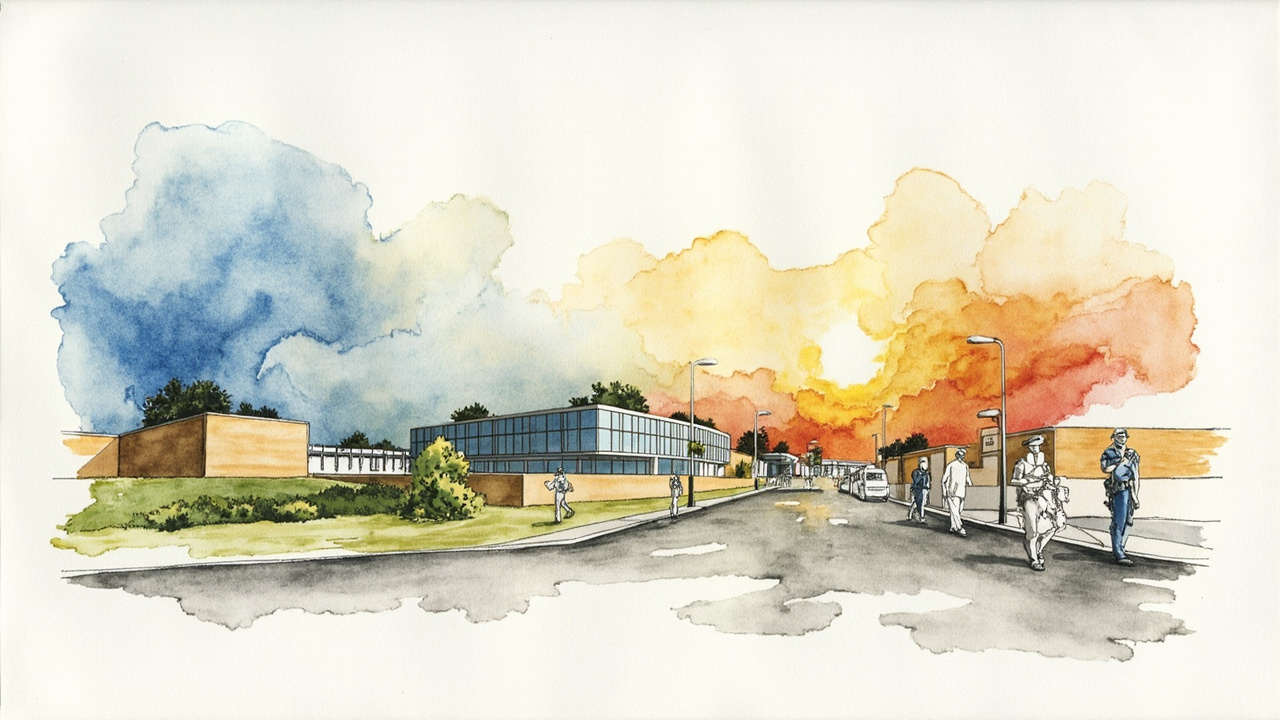
The ministries of Education, Sport and Culture and of the Interior issued Interministerial Agreement MINEDEC-MDI-2026-006-AI, signed on August 28, 2026, in Quito, which approves the “General Guidelines for the Action of the National Police in Educational Institutions – ESCUDO Plan.” The regulation was published in the Official Registry No. 369 on Tuesday, September 15, 2026, and entered into force upon its issuance.
The instrument was signed by the Minister of Education, Sport and Culture, Gilda Natalia Alcívar García, and the Minister of the Interior, John Reimberg Oviedo. Its purpose is to establish a legal, technical, and operational framework for the planning, coordination, execution, monitoring, and evaluation of police actions within educational centers, guaranteeing the security of the community and the comprehensive protection of girls, boys, and adolescents.
Scope and inter-institutional articulation
The guidelines are of mandatory application for all decentralized levels and the central staff of the Ministry of Education, Sport and Culture, educational institutions nationwide, and all units and dependencies of the Ministry of the Interior and the National Police of Ecuador. Coordination between the three entities does not imply functional subordination or transfer of competencies: each institution is responsible for its own attributions.
Police action will be executed through preventive, control, and inter-institutional coordination actions, following a request and coordination with the authority of the National Education System. In every intervention involving minors, a specialized and differentiated approach will be applied, with reinforced observance of the best interests of the child, non-revictimization, confidentiality, and dignity.
Intervening units
The ESCUDO Plan defines the dependencies participating in its execution:
- Police units: General Police Sub-command, General Directorate of Citizen Security and Public Order, General Directorate of Investigation, and General Directorate of Police Intelligence.
- Educational units: Directorate of Citizenship, Law and School Coexistence, Directorate of Risk Management, Undersecretariats of Education of Quito and Guayaquil, Zonal Coordinations, District Directorates, highest authorities of the campuses, Student Counseling Departments (DECE), and teachers.
Phases of police action
The guidelines structure the intervention into three phases. In the Preparatory Phase (Before), the highest authority of the Zonal Coordination or District Directorate formally communicates the existence of an alert or danger situation to the Police District Chief, and a record of the inter-institutional preparatory meeting is drawn up. In the Execution Phase (During), the Police identify themselves to the educational authority, may perform non-invasive superficial searches of adolescents when legal requirements are met, and coordinate with the DECE regarding their presence during the procedure. In the Evaluation Phase (After), the Operational Coordination Departments prepare the evaluation reports of the operational instruments.
The regulation provides for specific safeguards: boys and girls shall not be subject to apprehension and shall be delivered to their legal representatives; in case of doubt regarding age, it is presumed that the person is a girl or boy; and apprehended adolescents shall be transferred to the Specialized Prosecutor’s Office for Juvenile Justice, while adults shall be taken to the Flagrancy Unit.
Regulatory Background
The ESCUDO Plan is part of a chain of previous instruments: the Safe and Protective Educational Communities Program (PCESP) (Agreement MINEDUC-MDI-001-2024), the Coordinated Response Protocol for Active Shooter – Student Code (MINEDEC-MDI-2026-002-AI), the Protocol for the Comprehensive Protection of the Educational Community (MINEDEC-MDI-2026-003-AI), and the Protocol for the Safeguarding of the Rights of Girls, Boys, and Adolescents (MDI-DMI-2026-0059). The implementation, monitoring, and evaluation of the agreement were entrusted to both ministries, in coordination with the National Police, the Attorney General’s Office, and the ECU 911 Integrated Security Service.
The publication of the ESCUDO Plan makes mandatory a police action that until now was governed by dispersed criteria, and provides principals, teachers, and police officers with a single protocol to prevent and respond to weapons, controlled substances, and other risks in schools. For families and the educational community, the regulation implies a predictable framework for school security that prioritizes the best interests of the child and the continuity of the educational service.
Source: Official Registry of Ecuador, No. 369, Quito, Tuesday, September 15, 2026, section I (Executive Branch), p. 2 (official reference: Interministerial Agreement MINEDEC-MDI-2026-006-AI).