BOE · 27 Oct 2026 · 3 vistas
Democratic Memory declares the San Lucas Masonic temple a Site of Memory
Por FactBox Admin
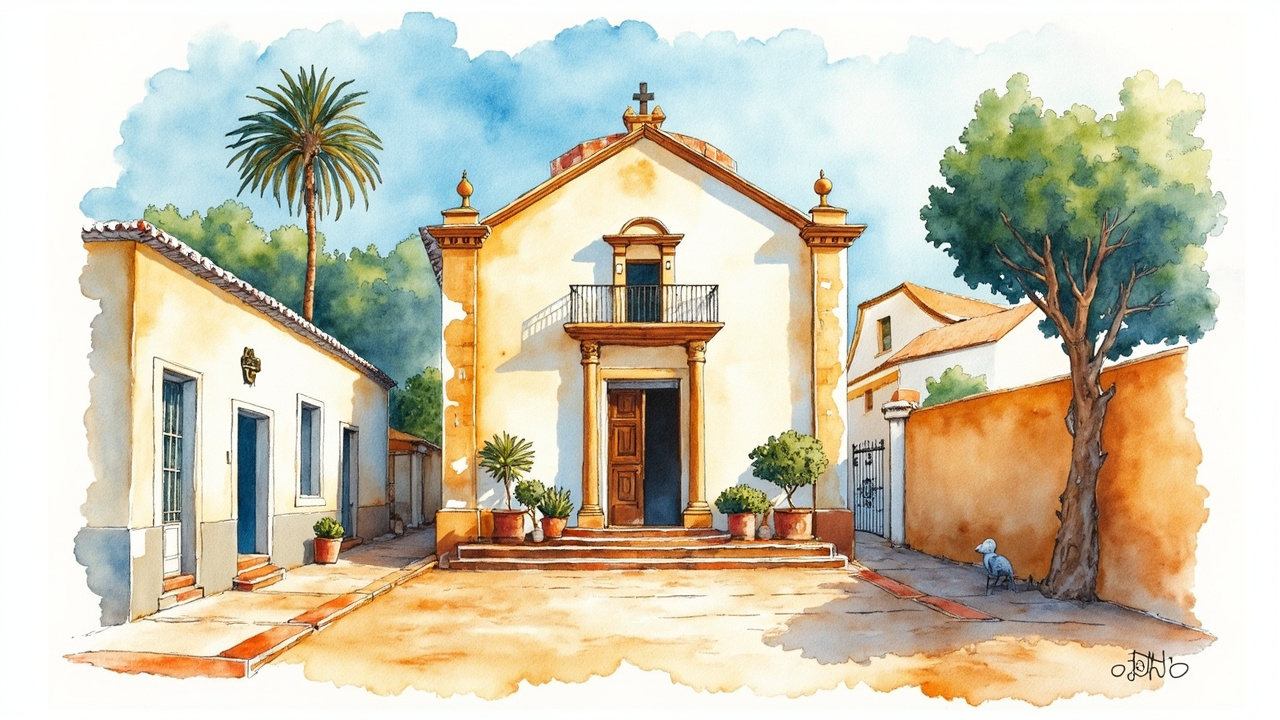
The Secretary of State for Democratic Memory has declared the “Masonic Temple of San Lucas Street, Santa Cruz de Tenerife” a Site of Democratic Memory, according to the resolution signed on October 22, 2026, and published in the Official State Gazette on Tuesday, October 27, 2026 (no. 266, Sec. III, page 143666, reference BOE-A-2026-22513). The declaration was agreed upon by the Secretary of State, Fernando Martínez López, at the proposal of the competent general directorate, in accordance with article 50.4 of Law 20/2022, of October 19, on Democratic Memory. The property belongs to the City Council of Santa Cruz de Tenerife and had already been protected as an Asset of Cultural Interest in the category of Monument since November 6, 2007 (RI-51-0010945).
A file opened a year ago
The procedure was initiated by an agreement published in the BOE on January 9, 2026 (BOE-A-2026-535), with a preventive annotation in the Inventory of Sites of Democratic Memory. On January 14, 2026, a hearing process was opened for the Tenerife city council, and on April 22, 2026, the file was submitted for public information for 20 days (BOE-B-2026-12570). The processing complied with Law 20/2022 and Law 39/2015, of October 1, on the Common Administrative Procedure.
The resolution is based on precedents specific to the Canary Islands: on April 11, 2024, the Technical Commission for Historical Memory of the Government of the Canary Islands unanimously agreed to initiate the declaration as a Monument of Historical Memory of the Canary Islands, under Law 5/2018, of December 14. Additionally, on January 9, 2025, a general protocol was signed between the Ministry of Territorial Policy and Democratic Memory and the City Council of Santa Cruz de Tenerife to promote research and dissemination of the history of Freemasonry.
The Añaza lodge and the largest Masonic center in Spain
The Añaza lodge was established in Santa Cruz de Tenerife on August 8, 1895. It passed through the Grande Oriente Ibérico, the Grande Oriente Nacional de España, the Grand Lodge of the Canary Islands (1923) and, since 1931, it was divided into Añaza no. 270—affiliated with the Gran Oriente Español—and Añaza no. 1, whose members were expelled from the temple. Añaza 270 remained in San Lucas until the military uprising of 1936, when it was dissolved and its assets confiscated.
- Construction began in 1899 according to the project of the Tenerife architect Manuel de Cámara y Cruz.
- The Lodge Room and main interior spaces were inaugurated in 1904.
- Facade and ornamentation completed in 1923, with Egyptian inspiration and Masonic symbology.
- Considered the largest center of Freemasonry in Spain until the military occupation of 1936.
- Free secular school for adults created by the lodge in 1909, in addition to conferences and its own newspaper.
Repression, torture, and human remains
According to the resolution, on July 19, 1936, a paramilitary group raided the temple and seized all archives, which were to be sent to Salamanca by Lieutenant Colonel Del Campo Tabernilla, appointed as special judge to persecute Freemasonry. The building served as the headquarters of the Falange until 1939, then as a Quartermaster Park, and later as a military pharmacy. With the Law for the Repression of Freemasonry and Communism, dated March 1, 1940, the temple became a center for interrogations and torture; in 2009, during repairs, human remains were discovered that corroborate the testimonies of the victims.
The text identifies the property as a site of “serious human rights violations and crimes against humanity,” and links the Canarian case to the general repression: prisoner camps such as Fyffes, Paso Alto, and Gando, “floating prisons” in the port of Santa Cruz, and hundreds of disappeared persons in volcanic wells or thrown into the sea. Franco’s war proclamation was signed precisely in Santa Cruz de Tenerife.
Dissemination measures and appeals process
- Identification: “Masonic Temple of San Lucas Street, Santa Cruz de Tenerife,” with coordinates 28°28'07.6"N 16°15'10.3"W.
- No specific protection measures other than the general ones regarding durability, identification, explanation, and signage.
- Audiovisual and digital resources, plaques, panels, and an interpretive memorial marker, with geolocation and a file on the State Secretariat portal.
- Integration of the site into international circuits for the construction of democratic memory.
- Compatible uses: the declaration does not alter the current use of the building.
- Appeals: reinstatement within one month or contentious-administrative appeal before the Contentious-Administrative Chamber of the National Court.
Effects from publication
The declaration takes effect from the date of publication of the resolution in the BOE and mandates the registration of the asset in the Inventory of Sites of Democratic Memory. For Santa Cruz de Tenerife, this means officially recognizing a building that had been marked for nearly a century by confiscation and repressive use, and opens the way for its memorial signage and educational projection. The measure comes at a time when the property, already protected as a monument, faces the challenge of preserving a deteriorated facade and turning its history into a public narrative of tolerance and reparation.
Source: Official State Gazette, no. 266, October 27, 2026, Sec. III, p. 143666 (official reference: BOE-A-2026-22513).