Diari Oficial de la Generalitat de Catalunya · 25 Aug 2026 · 10 vistas
Ambient green light on the road between Cantallops and Sant Climent Sescebes
Por FactBox Admin
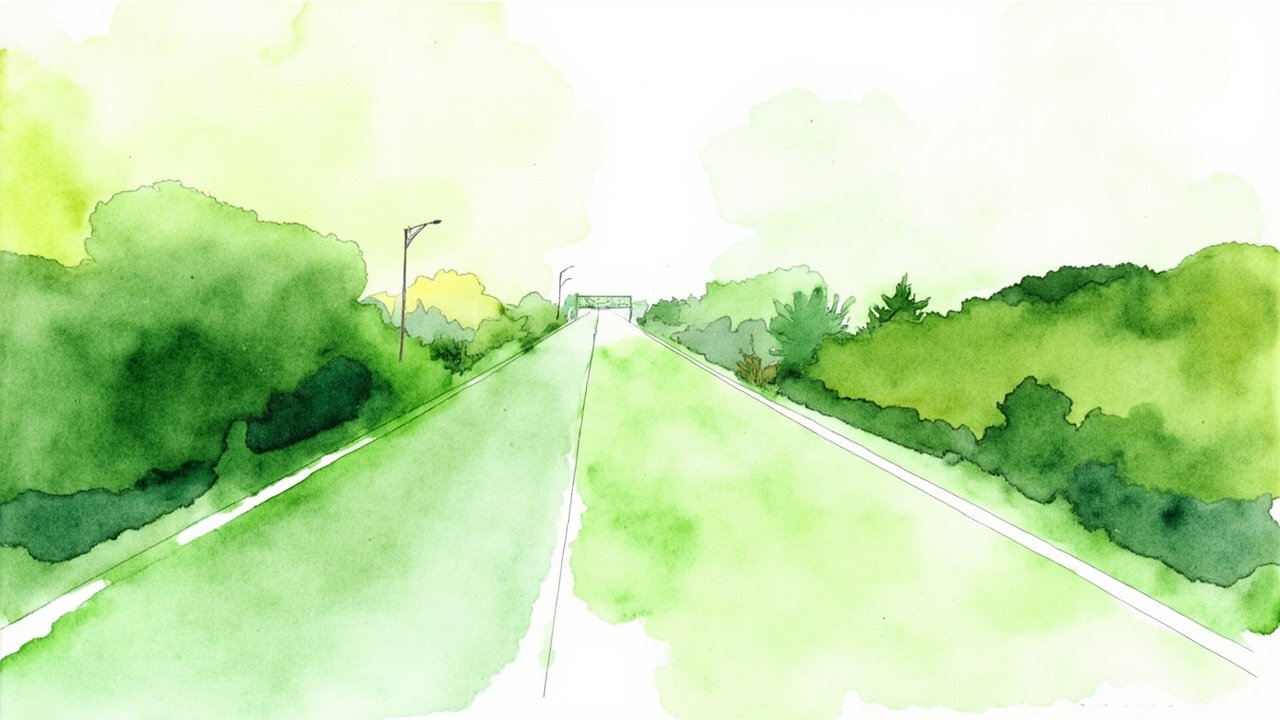
The Department of Territory, Housing and Ecological Transition has issued a favorable strategic environmental statement for the regularization of the road system along the current route of the local road from Cantallops to Sant Climent Sescebes, approximately 7.2 km in length. The decision is detailed in Resolution TER/4962/2024, dated August 26, published in the Official Gazette of the Generalitat de Catalunya (DOGC) no. 9737, dated August 25, 2026, with reference CVE-DOGC-A-26230039-2026.
The resolution affects subsidiary regulation modification number 6 for Cantallops and number 10 for Sant Climent Sescebes (file OTAAGI20210029), promoted by the two town councils to consolidate a communication route with the local road GI-602 and allow for the subsequent transfer of the road to the Provincial Council of Girona. The document, processed by the Alt Empordà County Council, was subject to public consultation for 45 days and has passed an ordinary strategic environmental assessment.
A route that crosses protected habitats
The road runs along the foot of the Albera range and borders the Natura 2000 ES5120009 Basses de l’Albera special protection area, about 400 meters from the municipality of Cantallops. The area is critical for the conservation of the Hermann’s tortoise (Testudo hermanni), a species listed as “endangered” by Decree 172/2022, and hosts seven habitats of community interest, including the priority habitat 3170 Mediterranean temporary ponds*.
- The route crosses passage zones for the Hermann’s tortoise and other herpetofauna.
- The quillworts Isoetes velatum and I. setaceum and the herb Utricularia australis are present.
- The area is an expansion zone for the European polecat (Mustela putorius) and the Aesculapian snake (Elaphe longissima).
- The municipalities are declared high forest fire risk areas by Decree 64/1995.
Four alternatives, a conditioned selection
The environmental study analyzed four alternative routes in addition to the zero option. The promoter selected alternative 3, which corresponds to the existing paved route (partially opened in 2007), as it has the lowest environmental impact, provided that the current section and route are not widened. The Biodiversity and Natural Environment Section ratified this option with conditions.
- Alternative 1: historic path from Cantallops to Bell-lloc, approx. 6.4 km, the one with the highest impact due to ecological fragmentation.
- Alternative 2: Old Requesens path, approx. 9.4 km, discarded due to the longer paving and fire risk.
- Alternative 3: existing paved route, approx. 7.2 km, selected.
- Alternative 4: 2004 route, approx. 6.3 km, discarded as it borders the Torrelles stream and a Natura 2000 space.
Conditions and corrective measures
The declaration sets a five-year deadline from the approval and transfer to the Diputació de Girona to draft and execute priority projects for wildlife crossings and connectivity improvement, the recovery of temporary ponds and hay meadows, and signage and speed reduction. The regulations prohibit the use of herbicides, pesticides, and fungicides along the edges, as well as road lighting, and mandate an annual mowing plan and an invasive species control plan.
The resolution, signed by the Director General of Environmental Policies and Natural Environment, Marc Vilahur Chiaraviglio, will expire if the modification is not approved within a maximum period of two years from publication. The declaration opens the door to the consolidation of a communication route demanded by both city councils, but conditions its development on the effective protection of one of the most sensitive habitats in Alt Empordà.
Source: Official Gazette of the Generalitat de Catalunya, no. 9737, August 25, 2026, Announcements section (official reference: CVE-DOGC-A-26230039-2024).