Boletín Oficial del Territorio Histórico de Álava · 21 Sep 2026 · 2 vistas
Álava subjects the Labastida tourist accommodation to an ordinary environmental assessment
Por FactBox Admin
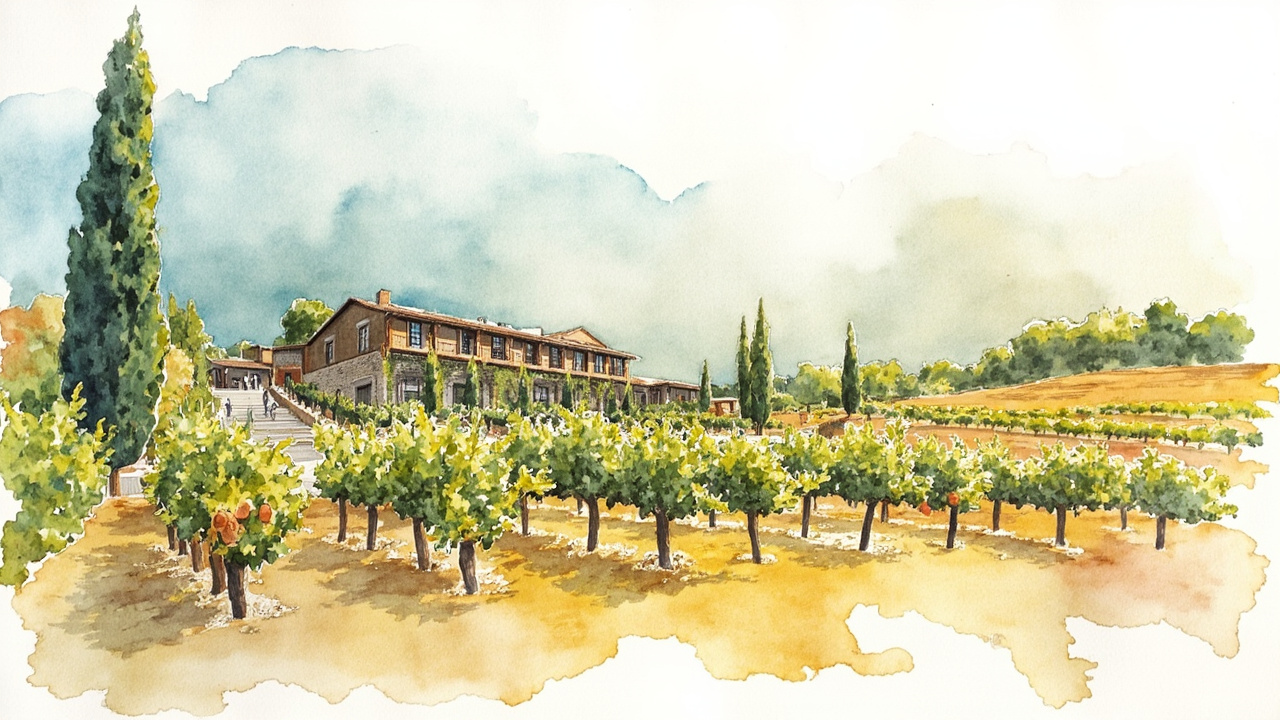
The Provincial Council of Álava has resolved to subject the special plan that would allow the implementation of an interpretive rural tourist accommodation in a vineyard in Labastida to an ordinary strategic environmental assessment. The decision is contained in Provincial Order 301/2026, of September 4, published in the Official Gazette of the Historical Territory of Álava (BOTHA) number 108, of September 21, 2026 (official reference 2026-02601). The environmental body concludes that the plan would have significant effects on the environment, particularly on the landscape and cultural heritage.
The special plan is promoted by a private individual and its final approval corresponds to the Department of Territorial Planning of the Provincial Council of Álava, while the environmental body is the Department of Economic Development and Sustainability. The processing is governed by Law 21/2013, of December 9, on Environmental Assessment, and Law 10/2021, of December 9, on Environmental Administration of the Basque Country. The strategic environmental report that supports the resolution was issued on August 6, 2026, and is contained in file 25/83 of the Environmental Sustainability Service.
Three plots and rehabilitated containers
The scope is limited to three non-urbanizable land plots located approximately 600 meters south of the urban center of Labastida, in the Rioja Alavesa region, with a total area of 10,491 square meters. These are lands without crops, buildings, or infrastructure, as the vineyards they once housed were removed.
- Plot 50 of polygon 3.
- Plot 64 of polygon 3.
- Plot 65 of polygon 3.
The plan completes the planning of the General Urban Development Plan (PGOU) of Labastida and provides for prefabricated constructions made from rehabilitated shipping containers, with three types of accommodation: studio, apartment, and accessible apartment. It also defines the necessary infrastructure: water supply from a new connection, electrical connection, two septic tanks with ground discharge, and direct rainwater discharge. Of the three alternatives studied, the one that places the apartments in the lowest area of the scope was selected, as it requires fewer earthworks and meets accessibility conditions.
Adverse reports from heritage organizations
The consultation phase, lasting one month, was directed to public administrations and interested parties, including URA-Basque Water Agency, the Directorate of Cultural Heritage of the Basque Government, the Directorate of Agriculture and Livestock of the Basque Government, the Labastida City Council, the Cuadrilla of Rioja Alavesa, and various ecological and agricultural associations.
The Directorate of Cultural Heritage of the Basque Government reports that the action is not consistent with the maintenance of the image and values of the area, considering that the use of accommodation not linked to agricultural exploitation generates an inadmissible impact on non-urbanizable land. In the same vein, the Historical-Architectural Heritage Service of the Provincial Council of Álava points out that the introduction of tourist uses in an eminently agrarian environment does not contribute to conserving the values of the cultural landscape and that the buildings are foreign to the typologies of the wine and vineyard landscape.
Both reports invoke Decree 89/2014, of June 3, which classifies the Cultural Landscape of the Wine and Vineyard of Rioja Alavesa as a cultural asset, under the category of monumental ensemble (BOPV number 111, of June 13, 2014), and Law 6/2019, of May 9, on Basque Cultural Heritage. The site is located in an area of terracing and cultivation banks expressly recognized by the decree.
Conditions on water, agriculture, and fauna
The URA-Basque Water Agency requires justification for the impossibility of connecting to the municipality’s general sanitation network and a detailed description of the proposed autonomous system, in addition to processing the discharge authorization before the Ebro Hydrographic Confederation. It also requests an estimate of new consumption demands and a report from the Rioja Alavesa Water Consortium regarding the sufficiency of the supply.
The Directorate of Agriculture of the Provincial Council of Álava considers the plan favorable, but conditioned upon obtaining the declaration of public interest for the project and compliance with sectoral regulations, given that it affects soils of high agrological value. The Museums and Archaeology Service recommends an archaeological survey prior to urbanization.
The environmental report further warns of the presence of xerophilous grasslands of Brachypodium retusum, a habitat cataloged as a priority of community interest 6220*, and a pair of European bee-eaters (Merops apiaster), cataloged as of special interest, in an area of interest for the European bee-eater, a vulnerable species with a management plan approved by Provincial Decree 22/2000, of March 7.
The resolution, signed by deputy Saray Zárate Fernández de Landa and the Director of Natural Environment María José Madeira García, mandates the preparation of a strategic environmental study and a scoping document, with public information and consultations of at least 45 days. The report is mandatory and binding and will be notified to the Labastida City Council and the Directorate of Territorial Planning.
The case gains relevance because it sets the environmental benchmark that any tourist accommodation initiative on non-developable land in Rioja Alavesa must meet: the environmental body requires a thorough review of location alternatives and an assessment of options on urban or adjacent land, understanding that the action could set a precedent for the transformation of the protected agricultural landscape.
Source: Official Gazette of the Historical Territory of Álava (BOTHA), no. 108, September 21, 2026, section I, pp. 1-13 (official reference: 2026-02601).