Boletín Oficial de La Rioja · 22 Oct 2026 · 3 vistas
La Rioja eliminates the two previous harvests required to authorize vineyard removals
Por FactBox Admin
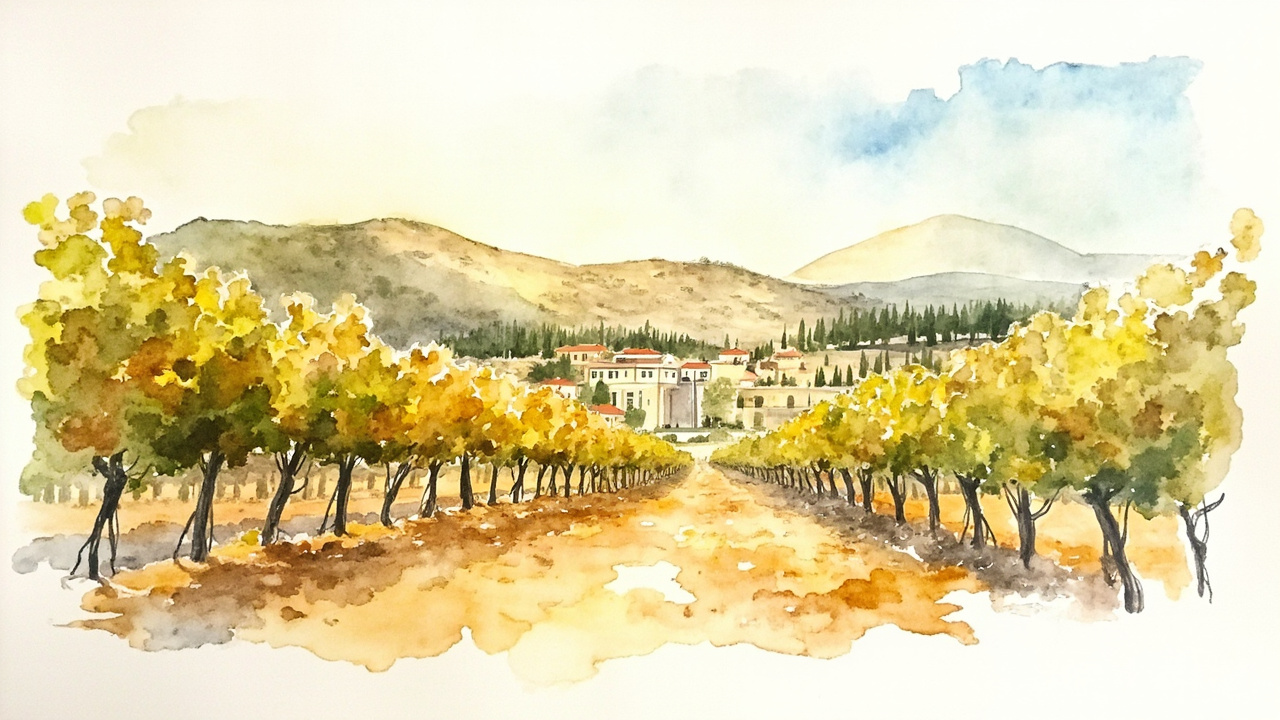
The Governing Council of La Rioja has approved Decree 24/2026, of October 20, which modifies Decree 66/2022, of December 28, regarding the viticultural potential of La Rioja. The new regulation removes the obligation for an applicant for a vineyard planting to prove they have held the plot for the previous two harvests when they are not the owner. The text is published in the Official Gazette of La Rioja (Boletín Oficial de La Rioja) no. 204, of Thursday, October 22, 2026, in section I of General Provisions, with the official reference BOR-A-20261022-I–85.
The regulatory framework of the modification
The intervention is based on the exclusive competence in agricultural matters that article 8.one.19 of the Statute of Autonomy of La Rioja, approved by Organic Law 3/1982, of June 9, attributes to the Autonomous Community. The regulatory development is supported by Law 1/2017, of January 3, on the Control of the Viticultural Potential of La Rioja, which led to Decree 66/2022.
The preamble justifies the change based on the “structural challenges” of the sector: the management of productive potential, the improvement of competitiveness, and the exploration of new market niches, along with environmental and socioeconomic reasons. The Executive recognizes that the requirement of two previous harvests “in practice does not avoid the creation of artificial conditions, which was the purpose for which it was proposed.”
The processing included the opinion of the Consultative Council of La Rioja, meeting on October 20, 2026, and the signatures of President Gonzalo Capellán de Miguel and the Councilor for Agriculture, Livestock, Rural World, and Environment, Noemí Manzanos Martínez.
Which articles are modified
The decree consists of a single article with three sections that rewrite an equal number of provisions of Decree 66/2022:
- Article 4.3: planting will be authorized when the applicant is not the owner of the plot provided they prove the express consent of the owner, under the terms of the Sole Additional Provision.
- Article 7.3: if the availability of the surface area comes from a lease agreement or another legally admitted tenure document, the applicant must likewise prove the express consent of the owner for the planting.
- Article 26.3.b: in land consolidation processes, other vineyards of the holding located outside the perimeter may be planted and those received may be maintained, requiring the express consent of the owner when the plots to be planted do not belong to the interested party.
Application calendar
The Sole Transitional Provision establishes the applicable regime: the provisions of the decree will apply to applications submitted from August 1, 2026, that is, during the 2026-2027 viticultural campaign. The preamble explains that this retroactivity is adopted “for reasons of equity and legal certainty.”
The Final Provision establishes that Decree 24/2026 will enter into force on the day following its publication in the Official Gazette of La Rioja, namely, October 23, 2026. The document consists of two pages, occupying pages 17735 and 17736 of the gazette, and bears the identifier 202610200125099.
Impact for wineries and grape growers
The change directly affects wineries, grape growers, and plot owners operating within the Riojan Vineyard Registry. Those who uproot vineyards without owning the land will no longer have to prove two previous campaigns of tenure, but will require the express consent of the owner, a requirement that is reinforced in cases of leasing and land consolidation. The modification arrives with the 2026-2027 campaign already underway, meaning it applies to files submitted since August 1 and relieves the documentary burden on applicants without eliminating the owner’s control over the uprooting.
Source: Official Gazette of La Rioja, no. 204, of October 22, 2026, section I. General Provisions, pp. 17735-17736 (official reference: BOR-A-20261022-I–85).